
49.00 $ Brain Memory Keeper Ingredients: What Is Inside This Brain Health Supplement? Naples
- Location: Naples, Florida, United States
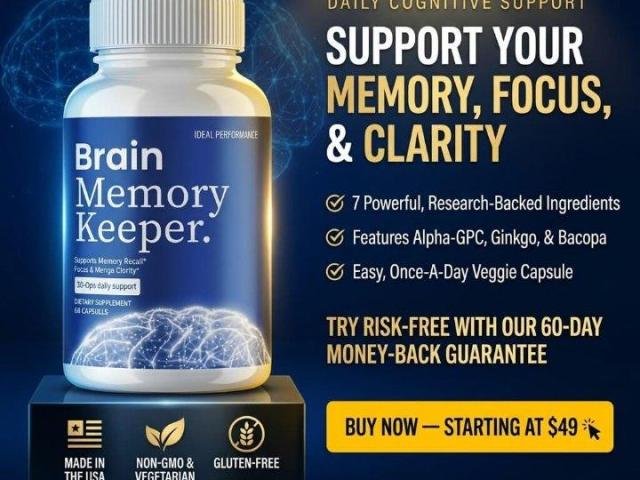
Brain Memory Keeper is sold online as a daily capsule for memory, focus, and mental clarity. Before you spend $49 to $69 a bottle, you should know what is inside. This guide covers Brain Memory Keeper ingredients: what is inside this brain health supplement, what the research says about each one, and who should talk to a doctor first.

As a coach, I care about results you can count on, and your safety comes first. One ingredient in this formula has a long list of drug interactions, so please read the safety section before you buy.
Quick Answer: Brain Memory Keeper lists seven ingredients: alpha-GPC, ginkgo, Bacopa, phosphatidylserine, N-acetyl L-carnitine, St. John's Wort, and L-glutamine. The per-capsule amounts weren't disclosed on the pages we reviewed.NIH says evidence that supplements prevent dementia is lacking, and St. John's Wort interacts with many medicines.
👉 Learn More About “Brain Memory Keeper” on the Official Website
Brain Memory Keeper Ingredients: What Is Inside This Brain Health Supplement According to the Label?
The ingredient list below comes from a sponsored article distributed by the brand and from a website using the product name. I could not find a Supplement Facts panel with amounts on either page.
The brand says to take one capsule a day after breakfast. It also makes claims such as vegetarian, non-GMO, gluten-free, and a 60-day money-back guarantee. Those are the seller's statements, not independent findings.

Why the missing amounts matter
A dose is the difference between a meaningful amount and a sprinkle. When amounts are missing, you cannot compare the capsule with the doses used in research. You also cannot tell how much of an ingredient with drug interactions you would be taking.
Ask for a full Supplement Facts panel before you buy. If you can't get one, that is useful information in itself.
Who makes it? Check carefully
The pages I reviewed name "Brain Memory Keeper" as the brand but do not name a separate manufacturer. One says the product is made in an "FDA-registered, GMP-certified U.S. facility." That describes a facility, not an approval of the product.
The FDA says it isnot authorized to approve dietary supplements for safety and effectiveness before they are marketed. That is true of every supplement, not just this one.
I also found at least six websites with near-identical names, and the pages I opened named different retailers. If you decide to buy, confirm the seller, the return terms, and the company's contact information first.
👉 Learn More About “Brain Memory Keeper” on the Official Website
What the Research Says About Each Ingredient
Let's go one by one. I only describe findings I could confirm on NIH-linked or peer-reviewed pages. Where I could not confirm strong evidence, I say so.
The big picture first
NCCIH, part of the NIH, says supplements are often promoted for memory and brain health, and a few trials show modest effects. It also says thatdirect evidence that supplements can prevent Alzheimer's disease or other forms of dementia is lacking.
That sentence frames everything below. A seven-ingredient blend does not get a pass just because it has many parts.
1. Ginkgo biloba (24% extract)
Ginkgo is the best-known herb in memory supplements, so it has been studied a lot. NCCIH states that ginkgohas not been shown to help prevent dementia. In the NCCIH-funded GEM study, which followed more than 3,000 people aged 75 or older for a median of six years, dementia and Alzheimer's rates did not differ from placebo.
The page notes a possible modest benefit for existing dementia symptoms, but says the evidence is inconsistent. A second NCCIH page says there isno conclusive evidence that ginkgo can prevent or slow dementia or cognitive decline.
On safety, leaf extract is likely safe by mouth in moderate amounts for most adults. Common side effects include dizziness, stomach problems, and headache. NCCIH adds that ginkgomay increase the risk of bleeding in people taking anticoagulants such as warfarin.
2. St. John's Wort (0.3% extract)
This is the ingredient that surprised me most. St. John's Wort is known as a mood herb, not a memory herb. NCCIH says studies suggest it may help mild or moderate depression, and its listed uses do not include memory.
The bigger issue is safety. NCCIH reports that St. John's Wort canweaken the effects of many medicines, including:
-
Some antidepressants
-
Birth control pills
-
Warfarin, a blood thinner
-
Some anti-seizure drugs
-
Some heart medicines, such as digoxin
-
Some HIV drugs
-
Some cancer drugs
-
Certain statins, such as simvastatin
-
Cyclosporine, used after organ transplants
It can also cause serious serotonin-related side effects when combined with certain antidepressants or other drugs that affect serotonin. Other reported side effects include diarrhea, dizziness, trouble sleeping, restlessness, and severe skin reactions after sun exposure with large oral doses. The page says it may be unsafe in pregnancy, and breastfeeding infants may develop colic, drowsiness, and lethargy.
Common Mistake: Treating a supplement as harmless because it is sold without a prescription. If you take any daily medicine, a product with St. John's Wort needs a pharmacist's review before the first capsule. Bring the bottle or a photo of the label.
The brand's own disclaimer reportedly warns that St. John's Wort has a high risk of interacting with prescription drugs, and that ginkgo and N-acetyl L-carnitine may interact with blood thinners. I'd take that warning seriously.
3. Alpha-GPC
Alpha-GPC is a form of choline. A 2026 narrative review in Neuropsychiatric Disease and Treatment looked atL-alpha-GPC in cognitive decline. It covered trials in people with Alzheimer's disease, mild cognitive impairment, vascular dementia, and Parkinson's-related cognitive decline.
The authors describe the evidence as heterogeneous and say more robust validation is still required. Oral doses in those trials included 600 mg a day and 1,200 mg a day, and one used 400 mg three times daily. Because Brain Memory Keeper does not disclose its amount, you cannot tell how it compares.
Two more cautions from that review. First, it does not evaluate healthy adults as a clinical question, so the findings do not show a benefit for people with normal memory. Second, it lists possible side effects including fishy body odor, stomach discomfort, low blood pressure, sweating, and possible liver dysfunction. It also discusses an epidemiological finding of higher stroke risk among people prescribed alpha-GPC, which the authors did not resolve.
The review also has limits of its own: small studies, short follow-up, and some trials without a placebo group. Treat it as a map of what has been tried, not proof that a capsule will sharpen your memory.
4. Bacopa monnieri, phosphatidylserine, N-acetyl L-carnitine, and L-glutamine
These four are the hardest to judge. The research databases I could reach while preparing this article blocked automated access, so I could not open a primary study to confirm what each one does in healthy adults.
Here is what I can say with confidence. None of the NIH sources I reviewed for this article describes any of the four as proven to prevent or treat memory loss. And the brand's own pages give no amounts, so even a good study of one of them could not be matched to this capsule.
If you want to dig deeper, ask your pharmacist or doctor to look up each ingredient in a drug-interaction database. That takes a few minutes and is free in many pharmacies.

Brain Memory Keeper Ingredients: What Is Inside This Brain Health Supplement? Pros and Cons
Pros
-
The formula lists its ingredients by name, so you can check each one with your doctor.
-
It is a once-a-day capsule, which is easy to remember.
-
The brand reportedly offers a 60-day return policy
-
The brand-linked pages include an FDA disclaimer and some drug-interaction warnings.
Cons
-
Amounts per capsule were not disclosed on the pages I reviewed.
-
No independent human study of this exact product was found
-
NIH sources do not support ginkgo for preventing dementia or cognitive decline.
-
St. John's Wort adds a wide range of drug interaction risks that most memory products do not carry.
-
The manufacturer is not clearly named, and multiple look-alike sites exist.
-
At about $49 to $69 per bottle, the cost adds up over months.
👉 Learn More About “Brain Memory Keeper” on the Official Website
What "Memory Support" Claims Can and Can't Promise
The brand says the capsule supports memory recall, focus, and mental clarity, mainly by supporting acetylcholine, a brain chemical involved in learning and memory. It also states that its claims have not been evaluated by the FDA and that the product is not meant to diagnose, treat, cure, or prevent any disease.
That second statement matters. "Supports memory" is a general wellness phrase, not a promise of a measurable result. It does not mean the product has been shown to raise test scores, prevent forgetfulness, or slow cognitive decline. Read every memory claim with that gap in mind, and be wary of any page that suggests otherwise.
Price and Value: What a Month Costs
The seller-linked pages list three bundles. Based on those pages, a 30-capsule bottle costs about $69 plus $9.99 shipping, three bottles run $59 each with free U.S. shipping, and six bottles run $49 each. The pages also show a "regular price" of $99 a bottle, which makes the discounts look larger.
Here is what those bundles work out to per day, assuming one capsule daily:
Notice how the deals push you toward buying months of product at once. That is a normal sales tactic, but it is the opposite of what I'd suggest for something with unproven benefits and possible drug interactions. If you try it at all, a single bottle and a clear return policy are safer.
Questions to ask about the guarantee
A money-back promise is only as good as the company behind it. Before ordering, find answers to these:
-
Who processes the refund, the brand or a payment company? (The pages I read named different retailers.)
-
Do you have to return the bottle, or the empty bottle only?
-
How long does a refund take, and who do you contact?
-
Does the 60 days start on the order date or the delivery date?
If you cannot find a physical address and a working phone number, treat that as a warning sign.
Alternatives to Consider
You have several options that cost less and carry less risk.
Talk to your doctor first. A short visit can rule out treatable causes of forgetfulness. NCCIH lists depression, adverse medication reactions, and thyroid, liver, or kidney problems as examples of conditions that can impair memory.
Move more. The CDC activity guidelines above cost nothing and have the clearest support for brain health. A daily walk beats a bottle in my book.
Use food, not capsules. NCCIH says omega-3 findings are most consistent for diet, such as fish intake, and not for supplement form. Meals built around fish, beans, vegetables, and whole grains are a low-risk place to start.
Ask about single-purpose products only with a pharmacist. If a doctor suggests a specific nutrient because a blood test showed a shortfall, a one-ingredient product is easier to check for interactions than a seven-ingredient blend. Nothing in this article is a recommendation to take any supplement.
How to read any supplement label
The FDA says it works to ensure that supplements aresafe, well-manufactured, and accurately labeled, and advises consumers to talk to their doctor, pharmacist, or other health care professional before deciding to buy or use one. Use this quick checklist at the shelf or on a product page:
-
Look for a full Supplement Facts panel with an amount for every ingredient.
-
Check serving size, and how many servings are in the bottle.
-
Be wary of any label that bundles ingredients without amounts.
-
Look for an FDA disclaimer. It's normal, and its absence is a red flag.
-
Note every ingredient with a known drug interaction and ask your pharmacist about it.
Coach's Tip: Take a clear photo of the Supplement Facts panel and save it in your phone's favorites. When you see a doctor, a dentist, or a surgeon, show them. Many people forget to mention supplements, and the ones they forget are often the ones that matter.
👉 Learn More About “Brain Memory Keeper” on the Official Website
Who Should Skip It, and Who Should Ask First
Skip the product, or at least speak with a doctor or pharmacist first, if any of these apply:
-
You take any prescription medicine, especially blood thinners, antidepressants, birth control pills, anti-seizure drugs, heart medicines, transplant drugs, or cancer treatments.
-
You are pregnant, planning to become pregnant, or breastfeeding.
-
You have a bleeding disorder or surgery coming up.
-
You have liver disease, or you are dealing with depression or anxiety.
-
You are noticing memory changes that are new, getting worse, or affecting daily life.
That last point matters most. NCCIH advises that memory loss should not be delayed by trying supplements, because treatable conditions can affect memory, including depression, medication reactions, and thyroid, liver, or kidney problems.
Coach's Tip: Keep a one-page "memory log" for two weeks before you try anything new. Write down what you forget, when it happens, how you slept, and what you ate. This gives your doctor something concrete to work with, and it often reveals patterns like poor sleep.
What Actually Supports Memory: Movement, Sleep, and Smart Habits
If a capsule isn't the answer, what is? The strongest, safest tool I can point to is regular physical activity. The CDC says thatphysical activity can improve memory, and that short bursts of activity can boost brain functions such as memory and thinking skills. It also says regular activity can reduce the risk of cognitive decline and dementia.
The same CDC page says adults should get at least 150 minutes of moderate-intensity activity each week, or 75 minutes of vigorous activity. Adults also need muscle-strengthening activities on two or more days a week, and adults 65 and older need balance activities. TheCDC adult activity guidelines say going beyond those minimums gives even greater health benefits.
A brain-friendly weekly plan
A brisk walk is one where you can talk but not sing. Thirty minutes covers about 1.5 miles (2.4 km) at a typical brisk pace. Walking with a friend adds a social boost, which is a nice bonus.
Warm-up (5 minutes)
Start with a slow walk in place or around the room for two minutes. Then do 10 arm circles each direction, 10 gentle hip circles each direction, and 8 slow sit-to-stands with no weight. Your body should feel warm and loose, not tired.
Full-body strength workout
Rest 60 to 90 seconds between sets. Pick a weight that leaves two good reps in reserve.

How the sit-to-stand should feel: Sit near the front edge of a sturdy chair with your feet about hip-width apart. Lean slightly forward, press through your heels, and stand tall. Lower slowly over three seconds. You should feel your thighs and glutes working, with no pinching in your knees or back.
Easier version (regression): Use a higher seat, or push lightly off your thighs. Do 2 sets of 6. For the single-leg stand, keep your fingertips on a counter.
Harder version (progression): Hold a dumbbell at your chest, slow the lowering phase to four seconds, or stand on one leg with your eyes closed near a wall for safety. Add a fourth set after four weeks.
Common Mistake: Letting your knees cave inward as you stand. Think about pushing your knees gently toward your pinky toes, and slow down if form slips.

Cool-down (3-5 minutes)
Finish with a slow walk for two minutes, then a gentle calf stretch and a seated hamstring stretch, holding each for 20 to 30 seconds per side. Breathe slowly through your nose. If you can, sit quietly for one minute and notice how you feel. A calm finish makes it easier to show up again on your next training day.
Other habits that help
Sleep. Aim for a regular bedtime and wake time. Poor sleep makes anyone feel forgetful, and no capsule fixes that.
Eat real food. NCCIH notes that omega-3 fatty acids show the most consistent positive findings in studies of diet and cognitive decline, often measured through fish intake. It also says that omega-3s in supplement form have not been shown to be helpful in treating Alzheimer's disease. So build meals around fish, beans, vegetables, and whole grains first.
Check for treatable causes. Ask your doctor about thyroid, vitamin B12, medicines, mood, and hearing. Forgetfulness often has an ordinary, fixable cause.
How to Decide: A Simple Checklist
Use this list before you buy any memory supplement, including this one.
-
Get the full label. You need the ingredient names and amounts for each capsule.
-
Confirm who makes it. Look for a named manufacturer, a street address, and a working phone number.
-
Show it to a pharmacist. Ask about interactions with every medicine you take.
-
Ask what the studies tested. Studies on patients with dementia do not tell you what happens in healthy people.
-
Read the return policy. Know the exact terms before you pay.
-
Set a trial limit. If you do try one, track sleep, mood, and memory for a few weeks, and stop if you feel worse.
👉 Learn More About “Brain Memory Keeper” on the Official Website
FAQ
What is in Brain Memory Keeper?
The brand lists alpha-GPC, ginkgo biloba leaf extract, Bacopa monnieri leaf extract, phosphatidylserine, N-acetyl L-carnitine, St. John's Wort extract, and L-glutamine. The pages reviewed did not show amounts per capsule. Check the physical bottle's Supplement Facts panel before you buy.
Does Brain Memory Keeper really work?
No independent study of this exact product turned up in my search. NIH sources say direct evidence that supplements prevent dementia is lacking, and ginkgo has not been shown to prevent it. Some people may notice effects, but you can't count on one. A doctor can help you weigh it.
Is Brain Memory Keeper FDA approved?
No supplement is approved by the FDA before it goes on sale. The FDA says it is not authorized to approve dietary supplements for safety and effectiveness before marketing. A claim that a facility is registered does not mean the product itself was reviewed. Look for the FDA disclaimer on the label.
Is Brain Memory Keeper safe with medications?
It may not be. NCCIH reports that St. John's Wort can weaken many medicines, including birth control pills, warfarin, some antidepressants, and transplant drugs. Ginkgo may raise bleeding risk with blood thinners. Talk to your doctor or pharmacist before taking this product with any prescription.
Who should not take a brain health supplement?
People who are pregnant or breastfeeding, take prescription medicines, have bleeding or liver problems, or have new or worsening memory changes should talk with a doctor first. NCCIH advises not delaying care for memory loss, because treatable conditions can cause it.
What actually helps memory?
Regular physical activity has the clearest support. The CDC says it can improve memory and reduce the risk of cognitive decline, and recommends 150 minutes of moderate activity weekly plus two strength days. Good sleep, balanced meals, and a doctor's checkup for treatable causes also matter.
Conclusion
So, what is inside this brain health supplement? Brain Memory Keeper ingredients: what is inside this brain health supplement comes down to seven named ingredients, no disclosed amounts, limited confirmed evidence, and a St. John's Wort component with a long list of drug interactions. I can't recommend it without a full label, a named manufacturer, and your doctor's approval.
The surest ways to support memory are the ones you control today: walk most days, lift twice a week, sleep well, and have unexplained memory changes checked. If you're still curious about this capsule, take the bottle to your pharmacist first.
This article is for general information and is not a substitute for advice from a doctor or physical therapist.
👉 Learn More About “Brain Memory Keeper” on the Official Website
Useful information
- Avoid scams by acting locally or paying with PayPal
- Never pay with Western Union, Moneygram or other anonymous payment services
- Don't buy or sell outside of your country. Don't accept cashier cheques from outside your country
- This site is never involved in any transaction, and does not handle payments, shipping, guarantee transactions, provide escrow services, or offer "buyer protection" or "seller certification"
Related listings
-
 The Brain Song: Nutrition for Your MindBrain & Memory - Miami Beach (Florida) - October 18, 2026 39.00 $
Research Team: Investigation Team Medical Review: Medical Advisory Board Publication Publisher: Independent Research Institute BUY NOW :OFFICIAL WEBSITE Understanding The Brain Song: Nutrition for Your Mind requires looking at how ...
-
 Brain Wellness: Small Steps, Big HabitsBrain & Memory - Miramar (Florida) - October 18, 2026 39.00 $
Research Team: Investigation Team Medical Review: Medical Advisory Board Publication Publisher: Independent Research Institute BUY NOW :OFFICIAL WEBSITE Keeping your mind sharp, focused, and resilient does not require drastic lifes...
-
 Make Brain Wellness Part of Your Daily Routine: A Coach’s Guide to Cognitive FitnessBrain & Memory - Miami Lakes (Florida) - October 18, 2026 39.00 $
Research Team: Investigation Team Medical Review: Medical Advisory Board Publication Publisher: Independent Research Institute BUY NOW :OFFICIAL WEBSITE When most people start a workout program, they focus on physical goals like bu...