
39.00 $ Cognizil Reviews 2026: Ingredients, Price & What to Know Before Buying Newark
- Location: Newark, New Jersey, United States
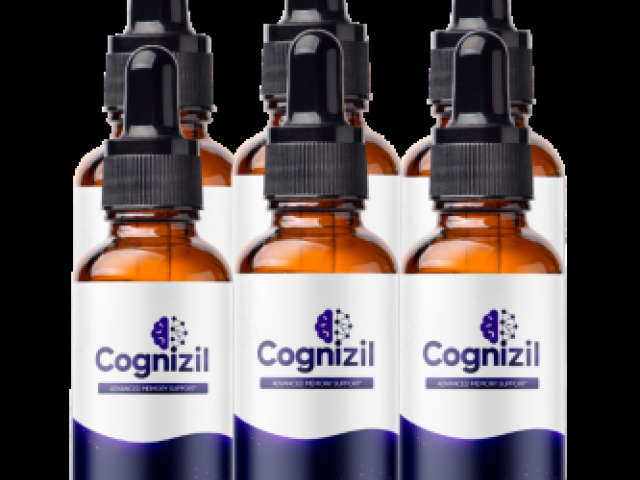
Cognizil is a cognitive-support supplement sold in packages from $158 to $294 with a 60-day guarantee, marketed for memory, focus, and mental clarity.
Most supplement reviews have to speculate about whether a proprietary blend contains meaningful doses. Cognizil doesn’t require speculation. The published label shows a 22-ingredient proprietary blend totalling 15.47 mg, plus 7 mcg of chromium.
That number is the entire review. For context: Bacopa monnieri’s clinically studied dose is around 300 mg. Ginkgo biloba’s is 120–240 mg. If the entire 15.47 mg blend were a single one of those ingredients, it would still be a fraction of a research dose. Split 22 ways, each ingredient averages about 0.7 milligrams.
What’s genuinely unusual is that the brand appears to acknowledge this. One official brand page states: “We’re direct that its 22-ingredient proprietary blend totals just 15.47mg, which means individual per-ingredient amounts can’t be meaningfully known from the label — and we’d rather tell you that upfront.”
This review covers what that means, the contradictions between different Cognizil pages, the pricing, and what actually supports cognition instead.

👉Check current Cognizil pricing and package options »
⚠️ Verify the Product and Label Before You Order
Before anything else — there are genuine inconsistencies across Cognizil’s own materials that you should resolve before buying.
1. Capsules or liquid drops? The checkout page describes “convenient, non-stimulant capsules.” But the product label and multiple product listings describe Cognizil as a liquid supplement in a 30 ml dropper bottle, with a serving of one full dropper. Those are different products.
2. “Non-stimulant” versus guarana. The checkout page says non-stimulant. Reported ingredient listings include guarana, which is a caffeine source. The label reportedly does not state the caffeine amount. If you’re caffeine-sensitive or take it in the evening, this matters.
3. Conflicting ingredient lists. Different sites using the Cognizil name list completely different formulas:
-
One retail listing: Brahmi, collagen type II, motherwort, vitamin C, grape seed, gotu kola, stone root
-
One site: ginkgo biloba, bacopa, huperzine A, phosphatidylserine
-
Another: apple cider vinegar, apple pectin, beet root powder
-
The label itself: chromium 7 mcg plus a 22-ingredient, 15.47 mg blend including guarana
Some of these are almost certainly scraped or spam sites rather than the real product — but it means you cannot rely on third-party ingredient descriptions, including summaries of them.
4. Refund windows differ between pages. The checkout you were shown says 60 days. Other seller pages have described different windows. Confirm the terms that apply to your specific order and keep the confirmation email.
Request the full Supplement Facts panel directly from the seller before ordering. That’s the only way to know what you’re buying.
The Core Problem: 15.47 mg Across 22 Ingredients
This section is the review. Everything else is detail.
What the number means
A proprietary blend lets a manufacturer list ingredients without disclosing individual amounts — only the combined total. Here, that total is 15.47 mg for 22 ingredients.
To put 15.47 mg in perspective: a single standard 325 mg aspirin tablet is 21 times heavier than the entire active blend in this product. A typical grain of rice weighs roughly 20–30 mg.
Average per ingredient: about 0.70 mg.
Now compare that to the doses used in the research these ingredients are known for:
Read that column carefully. Even if the entire blend consisted of nothing but one ingredient, it would not reach a research dose for any of them. Divided among 22, the individual amounts are somewhere around half a milligram to two milligrams each.
This is what the supplement industry calls “fairy dusting” — including an ingredient in amounts too small to have any plausible effect, so it can appear on the label. The term exists because the practice is common. What’s uncommon is a case this stark.
Two possible exceptions
To be fair, a couple of ingredients are active at microgram or low-milligram levels:
-
Huperzine A is typically dosed at 50–200 mcg (0.05–0.2 mg). If present at a meaningful amount, it could be pharmacologically active — it’s an acetylcholinesterase inhibitor with real contraindications.
-
Vitamin B12 is active in microgram amounts.
But with no individual breakdown, you can’t know whether these are present at functional levels or as trace amounts like everything else.
The chromium
Separately listed at 7 mcg. The Daily Value for chromium is 35 mcg, so this provides about 20% DV. Chromium’s research concerns glucose metabolism, not cognition, and 7 mcg is a trivial amount regardless.
👉View Cognizil’s package options and label details »
The Ingredients: What They’d Do at Real Doses
Since the published ingredient reports vary, treat this section as covering ingredients commonly reported in Cognizil, with the critical caveat that at 0.7 mg average, none of this applies.
Ingredients with genuine cognitive research
Bacopa Monnieri — the best-evidenced cognitive botanical available. Multiple randomized controlled trials show improvements in memory acquisition and delayed recall. Requires 300 mg daily and 8–12 weeks to work. Bacopa is also slow-acting by nature; there’s no version of it that works at trace doses.
Citicoline — genuinely well-researched for attention and memory, with reasonable human data. Studied at 250–500 mg.
Ginkgo Biloba — the most-studied, with disappointing results. The large GEM study (3,000+ older adults) found ginkgo did not reduce dementia incidence or slow cognitive decline. Also carries bleeding risk at real doses.
Phosphatidylserine — reasonable evidence for memory in older adults at 100–300 mg.
Panax Ginseng — some evidence for fatigue and mental energy at 200–400 mg.
Gotu Kola — traditional cognitive use, limited modern human evidence, studied at 500–1,000 mg.
Ingredients that raise questions
Guarana — a caffeine source. Caffeine genuinely does improve alertness, so this is the ingredient most likely to produce a felt effect. But it contradicts the “non-stimulant” claim, and with the caffeine content undisclosed you can’t dose-manage it.
Huperzine A — pharmacologically real as an acetylcholinesterase inhibitor. Also carries genuine contraindications: caution with asthma, COPD, slow heart rate, epilepsy, ulcers, and cholinergic medications. Not an ingredient that should be in an undisclosed blend.
Collagen Type II — joint health ingredient. No cognitive rationale.
Motherwort — traditional cardiac/anxiety herb. May affect heart rhythm and interact with cardiac medications. No cognitive evidence.
Stone Root — traditional circulatory/varicose vein herb. No cognitive evidence.
Apple cider vinegar, apple pectin, beet root — appear on at least one Cognizil-branded site. Beet root has nitric-oxide research relevant to blood flow; the others have no cognitive rationale.
Ingredient verdict
The honest summary: the ingredient selection includes genuinely well-researched compounds. The amounts make that irrelevant. You cannot deliver 300 mg of bacopa inside a 15.47 mg blend, and no formulation technique changes that.
Does Cognizil Work? What to Realistically Expect
What might produce a felt effect
Caffeine from guarana — if present in meaningful amounts, you may notice alertness. This is the single most likely source of any subjective effect, and it’s also the one the product says it doesn’t have.
Placebo — genuine and worth naming without dismissiveness. Expecting to focus better measurably improves reported focus. If taking a daily supplement makes you more deliberate about your work, the downstream effect is real even when the mechanism isn’t.
Correcting a deficiency — if any vitamin or mineral present addresses a genuine gap, that’s real. But at these amounts, unlikely.
What isn’t realistic
-
Memory improvement from bacopa, citicoline, or phosphatidylserine at trace doses
-
Protection against cognitive decline or dementia
-
Any effect matching the research on the named ingredients
-
“Nitric oxide production to improve cerebral blood flow” as some third-party pages claim
Realistic timeline
Days 1–7. Any caffeine effect is immediate. Beyond that, nothing.
Weeks 2–8. This is when bacopa’s effects would appear at 300 mg. At trace doses, there’s no mechanism for change.
Months 2–3. Whatever you experience is established. Assess inside the 60-day guarantee.
How to test it honestly
Self-assessed cognition is notoriously unreliable and biased toward whatever you paid for. If you test it:
-
Use an objective measure — a digit span test, a word-list recall test, or a free cognitive testing app that tracks scores.
-
Baseline before starting, then at 4 and 8 weeks, same time of day.
-
Track one practical metric too — how often you lose your keys or forget names, per week.
-
Note caffeine effects separately from cognitive effects. Feeling alert is not the same as remembering better.
-
Change nothing else during the window.
-
Decide inside the 60 days.
Safety and Side Effects
At these doses, serious effects are unlikely — but there are real reasons for caution.
Possible
-
Caffeine effects — jitteriness, sleep disruption, elevated heart rate from guarana, with an undisclosed amount
-
GI upset or nausea
-
Headache
-
Taste issues if it’s the liquid formulation
Genuine concerns
The undisclosed caffeine is the practical one. If you take this in the evening, or alongside coffee, or you’re caffeine-sensitive, hypertensive, or have an arrhythmia, not knowing the amount is a real problem.
Huperzine A, if meaningfully present, has cholinergic activity with real contraindications — asthma, COPD, bradycardia, epilepsy, ulcers, and interactions with cholinergic and glaucoma medications.
Motherwort may affect heart rhythm and interact with cardiac medications.
Ginkgo has antiplatelet activity at real doses.
The underlying problem: you cannot assess interaction risk for a blend whose contents you can’t quantify. A pharmacist can’t advise you properly on a 22-ingredient undisclosed mixture.
Who should be cautious
-
Anyone caffeine-sensitive or with hypertension, arrhythmia, or anxiety
-
Anyone on cardiac, cholinergic, or glaucoma medication
-
Anyone with asthma, COPD, epilepsy, or ulcers (huperzine A)
-
Anyone on blood thinners (ginkgo)
-
Pregnant or breastfeeding women
-
Anyone scheduled for surgery within two weeks
-
Anyone under 18
⚠️ Memory Problems Deserve a Real Workup
This matters more than the supplement, and it’s the most useful part of this review.
Several causes of memory and concentration difficulty are treatable and reversible — but only once identified:
-
Vitamin B12 deficiency — genuinely common over 50, in vegetarians, and in anyone on metformin or long-term acid reducers. A cheap blood test finds it, and correction can reverse symptoms.
-
Thyroid dysfunction — hypothyroidism frequently causes brain fog. A simple panel finds it.
-
Sleep apnea — chronically fragmented sleep severely impairs memory consolidation, and it’s very commonly undiagnosed.
-
Depression — can present primarily as cognitive difficulty.
-
Medication side effects — anticholinergics, benzodiazepines, some sleep aids.
-
Alcohol use.
See a doctor if you or your family notice:
-
Memory problems interfering with work or daily tasks
-
Getting lost in familiar places
-
Trouble finding common words or following conversations
-
Poor judgement or unusual financial decisions
-
Personality or mood changes
-
Repeating questions within a short period
-
Symptoms worsening noticeably over months
A B12 test and a thyroid panel cost a fraction of one Cognizil package and can identify something genuinely fixable. That’s the first step, not a supplement.
👉See the current pricing and guarantee terms »
Price: What It Costs
A 60-day money-back guarantee is stated on this page, processed through BuyGoods.
Is it fair value? This is where the dose finding becomes concrete.
You are paying 49–79 per bottle for 15.47 mg of active blend per serving.
Compare that to buying the evidence-backed ingredients individually at doses the research actually used:
Roughly $30–45/month gets you all four at researched doses — versus $49–79/month for trace amounts of 22 things.
And a B12 test plus a thyroid panel — which might actually identify why your memory feels off — typically costs less than a single bottle.
Structural issue: the best per-unit price requires $294 upfront for 180 days against a 60-day guarantee. Four months of unrefundable product.
Buying notes
-
Request the full Supplement Facts panel before ordering. Confirm the caffeine content specifically.
-
Clarify capsules versus liquid drops — the page and the label disagree.
-
Confirm which refund window applies to your order — different Cognizil pages state different terms. Get it in writing and keep your confirmation email.
-
BuyGoods is the retailer — their disclaimer explicitly notes their role doesn’t constitute endorsement or review of the product or its claims.
-
Start with the smallest package — the only tier aligned with a 60-day guarantee.
-
Don’t take it in the evening until you know the caffeine content.
What Actually Supports Cognition
Substantially stronger evidence, and most of it is free.
1. Rule out the treatable causes. A B12 test, a thyroid panel, and sleep apnea screening if you snore. These three find a meaningful share of reversible memory problems and cost very little. This is genuinely the highest-value step available.
2. Sleep, 7–9 hours. Memory consolidation happens during sleep — that’s the actual mechanism, not a metaphor. Nothing in the nootropic market approaches the cognitive impact of fixing poor sleep.
3. Aerobic exercise. The best-evidenced intervention for cognitive health. Regular cardiovascular activity is associated with better executive function and supports hippocampal volume — the brain region most involved in memory.
4. Treat hearing loss. Untreated hearing loss is associated with accelerated cognitive decline in observational research, and it’s genuinely correctable.
5. Manage cardiovascular risk. Blood pressure, blood sugar, and cholesterol control are associated with better long-term cognitive outcomes. What’s good for your heart is good for your brain.
6. Stay socially and mentally engaged. Genuine learning and social connection have better observational support than any capsule — and better than brain-training apps, which largely improve performance at the games themselves.
7. Mediterranean or MIND diet pattern. Reasonable observational evidence for cognitive protection.
8. If you want a supplement, buy single ingredients at researched doses. Bacopa at 300 mg for 12 weeks is an actual test of bacopa. A 0.7 mg trace amount is not.
Frequently Asked Questions
What is Cognizil?
A cognitive-support dietary supplement sold in 2, 3, and 6-bottle packages through BuyGoods. The checkout page describes capsules; the product label describes a liquid dropper formulation — worth clarifying before you order.
What are the ingredients in Cognizil?
The published label shows chromium 7 mcg plus a 22-ingredient proprietary blend totalling 15.47 mg. Individual amounts aren’t disclosed. Reported ingredients include botanical extracts and amino acids, with guarana among them.
Is 15.47 mg enough to work?
No. Bacopa’s clinical dose is around 300 mg, ginkgo’s is 120–240 mg, citicoline’s is 250–500 mg. Even if the entire blend were one ingredient, it wouldn’t reach a research dose. Split 22 ways, the average is about 0.7 mg each.
Does Cognizil contain caffeine?
Reported ingredient listings include guarana, which is a caffeine source — despite the checkout page describing “non-stimulant capsules.” The amount isn’t stated. Ask before ordering if you’re caffeine-sensitive.
Does Cognizil work?
Any noticeable effect is most likely caffeine or placebo. The named cognitive ingredients cannot work at these amounts.
Is Cognizil a scam?
It’s a real product with a real retailer and a refund pathway, so not fraud. But the dosing means the formula cannot plausibly deliver what the ingredient names imply — which is a fair and serious criticism.
Why do different sites list different ingredients?
Several sites using the Cognizil name list entirely different formulas. Some are likely scraped or spam sites. Only the seller’s own Supplement Facts panel is reliable — request it.
Is it FDA approved?
No. Supplements aren’t FDA approved. The facility is described as FDA-registered, which concerns manufacturing standards only, and the page’s own disclaimer confirms statements haven’t been FDA evaluated.
What’s the refund policy?
The checkout page states 60 days through BuyGoods. Other Cognizil pages have described different windows — confirm which applies to your order and keep documentation.
What should I do instead?
Get a B12 test and thyroid panel first — both are cheap and find genuinely reversible causes. If you still want a supplement, buy bacopa at 300 mg and give it 12 weeks.
Final Verdict
Cognizil’s formula cannot work as implied, and the arithmetic isn’t close enough to debate.
This isn’t a judgement call about mixed evidence or overstated marketing. A 22-ingredient blend totalling 15.47 mg means that even if the entire active content were a single ingredient, it would fall short of every relevant clinical dose. Divided 22 ways, each ingredient sits around 0.7 mg — against research doses of 100 to 1,000 mg. No formulation technique, bioavailability enhancement, or synergy argument bridges a gap of that magnitude.
To the brand’s partial credit, one official page acknowledges this directly — stating that individual amounts “can’t be meaningfully known from the label” and that they’d “rather tell you that upfront.” That’s more candour than most proprietary blends offer, and it’s worth noting. But acknowledging a problem isn’t the same as not having one, and the product is still sold at $49–79 per bottle on the strength of ingredient names whose research doesn’t apply at these amounts.
The surrounding issues compound it. The checkout page says “non-stimulant capsules” while the product appears to be liquid drops containing guarana, a caffeine source, at an undisclosed amount.Refund windows differ across the seller’s pages.Multiple conflicting ingredient lists circulate online. And ingredients with genuine contraindications — huperzine A, motherwort, ginkgo — sit inside a blend nobody can quantify, which makes it impossible for a pharmacist to advise you properly.
Consider it only if: you’ve obtained the full Supplement Facts panel including caffeine content, clarified the format and refund terms in writing, you take no cardiac, cholinergic, or anticoagulant medication, and you’re testing the smallest package inside the guarantee — understanding that any effect you notice is most likely caffeine.
Skip it if: you want the cognitive benefits the ingredient names suggest, you’re caffeine-sensitive, you take medication where interactions matter, or you’d rather spend less on ingredients at doses the research actually used.
What I’d genuinely recommend first: ask your doctor for a B12 test and a thyroid panel. Both are inexpensive, both find genuinely reversible causes of memory and concentration problems, and together they cost less than a single bottle of this. If those come back clear and you still want to try something, buy bacopa monnieri at 300 mg and give it 12 weeks — that’s roughly $10 a month and an actual test of an actual dose.
👉Check Cognizil pricing and guarantee terms »
This article is for general informational purposes only and is not medical advice. Dietary supplements are not evaluated by the FDA and are not intended to diagnose, treat, cure, or prevent any disease. Memory and concentration problems warrant professional evaluation — several causes are treatable and reversible. Always consult a qualified healthcare provider or pharmacist before starting any supplement, particularly if you take prescription medication, are pregnant or breastfeeding, or have an existing health condition.
Useful information
- Avoid scams by acting locally or paying with PayPal
- Never pay with Western Union, Moneygram or other anonymous payment services
- Don't buy or sell outside of your country. Don't accept cashier cheques from outside your country
- This site is never involved in any transaction, and does not handle payments, shipping, guarantee transactions, provide escrow services, or offer "buyer protection" or "seller certification"
Related listings
-
 Genius Brain Signal Reviews 2026: Does This Brainwave Audio Really Work?Brain & Memory - Palm Springs (California) - October 8, 2026 39.00 $
If you’ve ever stared at a blank screen feeling like your brain is wading through wet cement, or if you’ve watched peers effortlessly land promotions and generate brilliant ideas while you grind twice as hard for half the results — ...
-
 Cognizil Reviews: A Detailed Guide to Ingredients, Usage, Results & PricingBrain & Memory - Florida City (Florida) - September 25, 2026 49.00 $
Overall, Cognizil receives a 4.95/5 ⭐⭐⭐⭐⭐ rating based on its positioning as a cognitive wellness supplement. It is designed to support mental clarity, focus, and everyday cognitive function through a multi-ingredient formula. While individual result...
-
 Theta Clear Reviews: Does This 7-Minute Audio Program Really Work?Brain & Memory - Florida City (Florida) - September 24, 2026 39.00 $
⭐⭐⭐⭐⭐ 4.95/5 Overall, Theta Clear reviews are mostly positive, with a 4.95/5 rating. Theta Clear is appreciated for its simple seven-minute audio format designed to support relaxation and focus. While individual experiences vary and specific ben...