
38.00 $ Mind Vault Review: Ingredients, Benefits & What to Know Chicago
- Location: Chicago, Illinois, United States
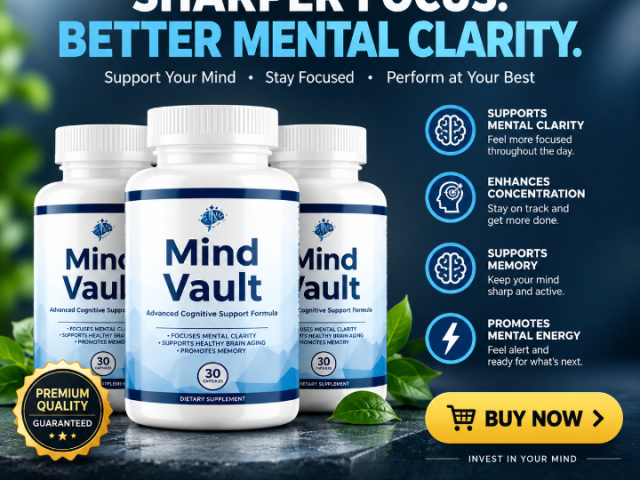
If you are considering a supplement for memory, focus, or mental clarity, this Mind Vault Review: Ingredients, Benefits & What to Know will help you look beyond the marketing claims. The product is promoted as a cognitive support supplement, with ingredients intended to support everyday memory, attention, and brain health.
However, an ingredient's reputation is not the same as proof that a finished supplement works. The exact formula, individual ingredient amounts, potential side effects, and quality of the available research all matter. This review examines the publicly described formula, what scientific studies suggest about its ingredients, and what to check before spending your money.
Quick Answer: Is Mind Vault Worth Considering?
The short verdict
Mind Vault may interest adults seeking general cognitive support, but the evidence reviewed here does not establish that the finished product improves memory or prevents cognitive decline. Its reported 10-ingredient formula includes compounds that have been studied individually, but the exact amounts and the product's clinical effectiveness need verification.
Best next step: Check the physical Supplement Facts label, confirm the seller and return policy, and discuss the formula with a pharmacist or doctor before taking it.
1. What Is Mind Vault?
Mind Vault is marketed as a dietary supplement intended to support memory, concentration, mental clarity, and everyday cognitive function. One version of its marketing describes the product as a once-daily capsule aimed at adults aged 45 and older.
The advertised formula includes a combination of vitamins, amino acids, and other compounds commonly discussed in the nootropic supplement category. Nootropics are substances marketed for their potential effects on cognition, attention, or mental performance.
It is important to distinguish three different things:
-
The product: The specific Mind Vault bottle and formula you purchase.
-
The ingredients: Individual compounds that may have been studied in clinical research.
-
The claims: Statements about memory, focus, mental energy, or healthy aging that require evidence.
A study of one ingredient does not prove that a particular blend works. The dose, ingredient form, combination, manufacturing quality, and study population can all affect the outcome.
A systematic review published in Advances in Nutrition found that evidence for commonly marketed cognitive supplements varied in quality, making it difficult to draw firm conclusions about their effectiveness in healthy adults. Read thesystematic review of cognitive performance supplements for a closer look.
An important product-identity warning
Several websites use similar Mind Vault names and present different ingredient lists or dosing instructions. One version lists 10 ingredients, including Bacopa monnieri, Alpha GPC, phosphatidylserine, Huperzine A, GABA, L-theanine, L-tyrosine, niacin, vitamin B6, and caffeine.
Other similarly named websites describe different formulas. Do not assume that a product's ingredients, capsule count, dosage, or safety information applies to every bottle sold under a similar name.
For this review, the 10-ingredient formula is the reference point. Confirm that your actual bottle matches it before relying on any product-specific information.
2. Mind Vault Ingredients: What's Inside the Formula?
The advertised ingredients have different roles, and the strength of evidence is not equal across the list. Some are essential nutrients, while others are marketed for their possible effects on memory or attention.
The following table summarizes the commonly listed 10-ingredient version. Because independently verified amounts per serving were not established from the available product information, exact doses are marked rather than guessed.
Why matters: Before purchase, look for the complete Supplement Facts panel showing each ingredient's amount per serving. If the seller cannot provide a clear, readable label, you cannot reliably assess the formula's value or compare it with the amounts used in research.

Bacopa monnieri
Bacopa monnieri is a plant used in traditional herbal preparations and frequently included in memory supplements. Researchers have studied standardized Bacopa extracts for their possible effects on learning and memory.
A systematic review of randomized controlled trials found that the available studies were generally conducted over 12 weeks, with different extracts and daily amounts used across trials. That finding suggests that research on Bacopa is not equivalent to evidence for an immediate memory boost after a single capsule. See thesystematic review of Bacopa and cognitive performance.
For consumers, the key questions are whether Mind Vault uses a standardized extract, how much it contains, and whether that specific preparation matches the evidence. Those details should be confirmed from the label.
Alpha GPC
Alpha GPC, short for alpha-glycerylphosphorylcholine, is a choline-containing compound. Choline is involved in several normal bodily functions, including the production of acetylcholine, a neurotransmitter associated with memory and learning.
That biological role makes Alpha GPC a plausible ingredient to investigate, but it does not establish that taking additional Alpha GPC improves memory in a healthy person. Nor does it show that a blend containing Alpha GPC delivers a measurable benefit.
Check the amount per serving and discuss it with a pharmacist if you take medication affecting acetylcholine or have a neurological condition.
Phosphatidylserine
Phosphatidylserine is a phospholipid found in cell membranes. It has been studied as a dietary supplement for possible effects on cognition, particularly in older populations.
The important distinction is between a compound's role in normal cell structure and the effects of taking it as a supplement. Evidence from particular study populations or doses cannot automatically be applied to every person using Mind Vault.
Ask the seller to identify the ingredient's source, amount, and form. Without that information, it is difficult to determine whether the formula resembles preparations used in research.
Huperzine A
Huperzine A is a compound derived from certain club moss species. It affects acetylcholinesterase, an enzyme that breaks down acetylcholine.
This activity is especially important when considering safety. Huperzine A should not be treated as an ordinary vitamin, and its effects may overlap with those of medications that influence acetylcholine. Taking it without checking for interactions can be risky.
People taking medication for Alzheimer's disease or other conditions involving cholinergic pathways should seek medical advice before considering a supplement containing Huperzine A. The actual amount in Mind Vault also needs verification.
GABA
Gamma-aminobutyric acid, usually called GABA, is a neurotransmitter involved in the nervous system's signaling processes. Supplement marketing often links GABA with relaxation and stress management.
However, the presence of GABA in a capsule does not prove that the product improves concentration, reduces anxiety, or produces a specific calming effect. The effects of an oral supplement cannot simply be inferred from the normal role of GABA in the brain.
Treat claims about calm focus as claims to be evaluated, not guaranteed outcomes.
L-theanine
L-theanine is an amino acid found naturally in tea. Researchers have examined it alone and alongside caffeine for possible effects on attention and mood.
A 2025 systematic review and meta-analysis of randomized controlled trials found some favorable short-term results for certain cognitive measures, particularly with L-theanine combined with caffeine. However, the findings were not uniformly conclusive, and the researchers noted uncertainty in the size and direction of some effects. Read theL-theanine and caffeine evidence review.
Those results do not demonstrate that Mind Vault produces the same effects. The amount of each ingredient, the timing, and the other components of the formula matter.
L-tyrosine
L-tyrosine is an amino acid used by the body to produce several important compounds, including precursors to dopamine and norepinephrine. It has been investigated for cognitive performance in certain demanding or stressful situations.
That does not mean that more tyrosine automatically produces better focus or mood. The results of research under specific conditions may not apply to healthy adults in everyday life.
If you have a medical condition or take prescription medication, ask a healthcare professional whether this ingredient is appropriate for you.
Niacin (vitamin B3)
Niacin is an essential nutrient used to produce coenzymes involved in energy metabolism. Getting enough vitamin B3 is necessary for normal health.
More is not necessarily better. Supplemental niacin can cause side effects, including flushing with certain forms and doses, while very high intakes can cause more serious problems. TheNIH Office of Dietary Supplements niacin fact sheet explains its functions, recommended intake, and risks from excessive supplementation.
Check how much niacin Mind Vault provides, which form it uses, and whether other supplements you take contain additional vitamin B3.
Vitamin B6
Vitamin B6 helps the body carry out normal metabolic processes, including processes involved in neurotransmitter production. A deficiency can be harmful, but that does not mean high supplemental intake will improve cognition in someone who already gets enough.
Excessive vitamin B6 intake from supplements can cause peripheral neuropathy, a condition involving nerve damage. Symptoms may include tingling, burning, or numbness, so the total amount from all products matters.
Review theNIH vitamin B6 fact sheet and check the dose in Mind Vault before combining it with a multivitamin or B-complex product.
Caffeine
Caffeine is a stimulant that can increase alertness and affect attention. Its effects vary by dose, individual sensitivity, habitual intake, and timing.
A supplement containing caffeine may be unsuitable for people who experience jitteriness, palpitations, anxiety, or sleep disruption after consuming stimulants. The label should state how much caffeine the product provides, so you can account for coffee, tea, energy drinks, and other supplements.
Bottom line on ingredients: Several Mind Vault ingredients have scientific research behind them, but that does not establish the effectiveness, safety, or value of the complete formula.
3. Mind Vault Benefits: What Can You Realistically Expect?
Mind Vault is promoted around three main goals: memory support, mental clarity, and everyday cognitive wellness. The question is whether those benefits are supported by evidence for the finished product.
Memory and learning support
Some ingredients, particularly Bacopa monnieri, have been investigated for their possible effects on memory. However, the studies use particular extracts, doses, and study periods, so their results cannot be transferred directly to a commercial blend.
A reasonable expectation is that the evidence may justify further research into individual ingredients. It does not justify promising that Mind Vault will help you remember names, learn faster, or prevent age-related memory loss.
If you are experiencing new or worsening memory problems, do not use a supplement as a substitute for a medical assessment.
Focus and attention
Caffeine and L-theanine have been investigated for their possible short-term effects on attention. This may be relevant to people who want to feel more alert during ordinary daily activities.
Still, the amount of caffeine in a product matters. Without a verified dose, you cannot determine how stimulating Mind Vault might be or compare its potential effects with those of tea or coffee.
It is also important to distinguish temporary alertness from improved memory over time. Feeling more awake does not necessarily mean you are learning or retaining information better.
Mental clarity
Mental clarity is a broad term rather than a single clinical outcome. It can refer to feeling alert, concentrating on a task, remembering information, or simply feeling less mentally tired.
A supplement advertisement may use these meanings interchangeably, but research does not. Before accepting a claim, look for a clearly defined outcome measured in a controlled study of the actual product.
Poor sleep, stress, medication effects, and some health conditions can also affect concentration. A supplement cannot be assumed to address the cause.
"Try Mind Vault Risk-Free: Read the Full 60-Day Guarantee Terms"
Healthy cognitive aging
Mind Vault is marketed toward adults aged 45 and older, a group that may be especially interested in maintaining memory and mental performance.
However, marketing a product to older adults does not prove that it prevents cognitive decline. No conclusion about dementia prevention, Alzheimer's disease treatment, or long-term protection should be drawn from the ingredient list alone.
A useful rule: The stronger the claim, the stronger the evidence you should expect to see. General wellness support and treatment of a diagnosed disease are not interchangeable.
4. Does Mind Vault Really Work?
The most useful way to evaluate this question is to separate ingredient-level evidence from product-level evidence.
A 2021 systematic review in Critical Reviews in Food Science and Nutrition examined plant-derived nootropics and found evidence of possible cognitive effects for some ingredients, including Bacopa, while also identifying inconsistencies that require further research. Thereview of plant-derived nootropics and human cognition is useful context for understanding why a promising ingredient is not the same as a proven supplement.
Why the exact dose matters
Imagine two products that both list Bacopa monnieri. One contains a standardized extract at an amount studied in a clinical trial, while the other contains a different extract or an undisclosed amount.
Although both labels name the same ingredient, the products are not necessarily comparable. Extraction methods, active compound concentrations, serving sizes, and ingredient quality can all differ.
This is why a full Supplement Facts panel matters more than a long list of recognizable ingredients. If a seller cannot clearly document the formula, it is sensible to postpone the purchase.
What about customer reviews?
Customer reviews can tell you about reported experiences with ordering, packaging, taste, customer support, or perceived effects. They cannot reliably establish that a supplement causes an improvement in memory.
A reviewer may also experience changes due to better sleep, changes in caffeine intake, expectations, or other lifestyle factors. A positive testimonial does not separate these explanations.
When evaluating Mind Vault customer reviews, look for independently verifiable reviews, clear information about the exact product version, and balanced reports that include both positive and negative experiences. Do not treat a star rating or testimonial as clinical evidence.
5. Mind Vault Side Effects and Safety Considerations
The safety of a multi-ingredient supplement depends on its complete formula, dose, manufacturing quality, personal health, and other products or medicines you use.
The ingredients discussed above are not automatically safe for everyone simply because some are naturally derived or commonly sold in supplements.
TheFDA's guide to dietary supplements explains that supplements are not approved by the FDA for safety and effectiveness before they are marketed in the same way as prescription medicines. Manufacturers are responsible for meeting applicable requirements, and consumers should be cautious about potential interactions and adverse effects.
Potential side effects to consider
The following are ingredient-related considerations, not a list of confirmed adverse events reported specifically for Mind Vault.
-
Caffeine: May cause restlessness, jitteriness, a racing heartbeat, or difficulty sleeping in susceptible people.
-
Bacopa monnieri: May cause digestive discomfort in some users.
-
Niacin: Certain supplemental forms can cause flushing, itching, or a burning sensation.
-
Vitamin B6: Excessive supplemental intake over time can damage peripheral nerves.
-
Huperzine A: Can affect acetylcholine pathways and may cause unwanted effects or interact with medicines.
-
Multi-ingredient combinations: May make it harder to identify which ingredient caused a reaction.
The precise risk cannot be estimated confidently without verified ingredient amounts and a complete label.
"Try Mind Vault Risk-Free: Read the Full 60-Day Guarantee Terms"
Who should speak with a healthcare professional first?
Consult a doctor or pharmacist before using Mind Vault if you:
-
Take prescription medicines, particularly medicines affecting acetylcholine or the nervous system.
-
Use other supplements containing vitamin B6, niacin, caffeine, or similar ingredients.
-
Have a neurological condition or an ongoing medical problem.
-
Are pregnant or breastfeeding.
-
Have experienced unusual reactions to stimulants or supplements.
-
Have an upcoming operation or have been told to avoid particular supplements.
Older adults taking several medicines should be especially careful about adding a multi-ingredient product without reviewing the complete label.
Stop taking the supplement and seek medical advice if you develop a concerning reaction. Severe symptoms, such as chest pain, difficulty breathing, or fainting, require urgent medical attention.
Can Mind Vault be taken with medication?
There is no responsible blanket answer for everyone. The combination of ingredients, the specific medicine, and the person's medical history determine whether an interaction is possible.
Huperzine A deserves particular attention because it affects acetylcholinesterase. Caffeine and other ingredients may also be relevant depending on the person's health and medication regimen.
Bring the bottle or a clear photograph of its complete label to a pharmacist. Ask them to check the ingredients against your prescription medicines and other supplements rather than relying on a general statement that the product is safe.

6. How to Take Mind Vault
Product instructions should come from the label of the exact bottle you have purchased. One version of Mind Vault's online product information describes once-daily use, while other similarly named pages describe different formulas or directions.
For that reason, do not assume that every Mind Vault product requires one capsule, two capsules, or the same timing.
Before taking it, follow these steps:
-
Confirm the product. Match the brand name, manufacturer or distributor, ingredient list, and serving size to the bottle you intend to use.
-
Read the serving directions. Check the number of capsules per serving and the maximum daily amount stated on the label.
-
Review the ingredients. Verify individual amounts, caffeine content, and any warnings or allergens.
-
Check medication compatibility. Ask a pharmacist or doctor to review the complete formula if you take medication or have a health condition.
-
Avoid unnecessary combinations. Do not stack Mind Vault with other nootropic blends or high-dose vitamins without checking for overlapping ingredients.
-
Track your response. If a healthcare professional confirms that use is appropriate, record any changes in sleep, alertness, digestive comfort, and other relevant symptoms.
Do not increase the dose because you have not noticed an effect. More of an ingredient does not necessarily produce greater benefits and may increase the risk of harm.
How long does Mind Vault take to work?
There is no established, clinically verified timeline for the finished Mind Vault formula. The time course for an ingredient studied over several weeks cannot be applied automatically to the complete product.
Some effects associated with caffeine can occur relatively quickly, but a temporary increase in alertness does not demonstrate improved long-term memory. Research on Bacopa, for example, has often examined repeated use over weeks rather than a single dose.
Be cautious if a seller promises a guaranteed result after a specific number of days. Ask for a clinical study of the exact product that measures the advertised outcome over that period.
7. Mind Vault Price, Value, and Buying Considerations
A supplement can contain researched ingredients and still be poor value if its doses are unclear, its claims exceed the evidence, or the seller does not provide adequate product information.
One publicly indexed version of Mind Vault has advertised a starting price of around $38 per bottle. This is not a verified current price for every version of the product, and prices, package sizes, and promotional offers can change. Current price and package details: .
Before comparing offers, confirm that you are comparing the same formula and bottle size.
Is Mind Vault worth the price?
That depends on what you can verify. If the seller supplies a complete label, credible quality information, clear return terms, and transparent pricing, you can make a more informed comparison.
If the doses are unclear, the seller makes disease-treatment promises, or the purchase terms are difficult to confirm, it is reasonable to walk away.
A higher price does not prove better quality, and a discount does not prove good value. Compare the information you can verify rather than relying on promotional language.
"Try Mind Vault Risk-Free: Read the Full 60-Day Guarantee Terms"
Where should you buy Mind Vault?
Start by identifying the manufacturer or distributor associated with the exact product you want. Check that the website's product name, ingredient panel, directions, and business details match the physical bottle.
Do not assume that a website is an official seller solely because it uses the product name or words such as “official,” “natural,” or “doctor-formulated.” Those phrases are not independent proof of authenticity or effectiveness.
If the seller cannot confirm the formula or provide a complete label before purchase, consider choosing a product with better documentation.
8. Pros and Cons of Mind Vault
A balanced review should consider both the potential appeal of the formula and the gaps in the available evidence.
Potential advantages
-
Multiple ingredients in one product: The advertised formula combines several compounds associated with cognitive wellness research.
-
Recognizable ingredient names: Consumers can investigate Bacopa, L-theanine, caffeine, and the other listed compounds individually.
-
Convenience: A capsule may be simpler for some people than managing several separate supplements.
-
Potential interest for adults 45+: The product is marketed toward people interested in everyday cognitive wellness as they age.
-
An opportunity to compare evidence: A transparent ingredient panel would allow buyers to evaluate the amounts against published research.
These are potential advantages of the product's format or ingredient selection, not proof of a clinical benefit.
Potential disadvantages
-
Unconfirmed product-level effectiveness: The available evidence reviewed here does not establish that the complete formula improves memory or focus.
-
Dose transparency needs verification: The amounts of the listed ingredients should be checked against the actual label.
-
Potential medication interactions: Huperzine A and other ingredients warrant a careful safety review.
-
Possible stimulant effects: A caffeine-containing formula may not suit people who are sensitive to stimulants or have sleep difficulties.
-
Uncertain value: A current price, verified serving count, and complete label are needed for a meaningful cost comparison.
-
Confusing product identity: Similar names and differing ingredient lists make it especially important to confirm which formula is being sold.
My assessment
The biggest issue is not that every ingredient lacks research. It is that ingredient research alone cannot establish the benefits or risks of the finished product.
Mind Vault would be easier to evaluate if the seller supplied a clear label, independently verifiable quality documentation, and controlled clinical research on the exact formula. Until those details are established, claims about meaningful memory improvements should be treated cautiously.
9. Who Is Mind Vault For—and Who Should Skip It?
Who might consider researching it?
Mind Vault may be of interest to adults who want to learn more about cognitive wellness supplements and are prepared to examine the ingredients, doses, and safety information before purchasing.
It may also interest consumers who prefer a combined formula over separate products. However, convenience alone is not a reason to take a supplement, particularly when the evidence for the combination is uncertain.
For healthy adults, it is sensible to consider sleep quality, a balanced diet, regular physical activity, and management of health conditions alongside any discussion about supplements. A product should not be treated as a replacement for these broader health measures.
Who should be cautious or avoid starting it without advice?
-
People taking prescription medication.
-
People who already use several supplements with overlapping ingredients.
-
Anyone who reacts poorly to caffeine or other stimulants.
-
People with conditions that may make one or more ingredients unsuitable.
-
Pregnant or breastfeeding individuals.
-
Anyone experiencing unexplained or worsening memory difficulties.
For these groups, the first step should be a professional review of the actual formula rather than an experiment with a new supplement.
What if your main concern is memory loss?
Do not assume that memory changes are simply part of getting older. Persistent or worsening difficulties deserve medical assessment, especially when they interfere with daily activities.
A healthcare professional can review potential causes, including medication effects, sleep problems, and other health issues. Mind Vault should not be used to delay that assessment or replace an established treatment.
10. Alternatives to Consider Before Buying Mind Vault
You do not have to choose between Mind Vault and doing nothing. Depending on your goals, other approaches may offer clearer benefits, lower costs, or fewer uncertainties.
For readers who are also interested in physical fitness, the goal is to build sustainable habits rather than chase a quick fix. Regular activity, adequate recovery, and consistent sleep can complement a broader health routine without relying on unverified supplement promises.
How to compare another cognitive supplement
Use this checklist when evaluating Mind Vault or any competing product.
-
Does the label list every ingredient and its amount?
-
Does the research involve the same ingredient form and a comparable dose?
-
Is there a controlled clinical trial of the finished product?
-
Are potential side effects and medication interactions explained?
-
Can the manufacturer provide credible quality documentation?
-
Are the seller's identity, price, and return terms clear?
-
Does the marketing avoid promises to cure or prevent disease?
If several important answers are missing, do not let a polished website or a long ingredient list make the decision for you.
"Claim Your 50% Mind Vault Discount Today – Check Official Availability →"
11. How We Evaluated Mind Vault
This review uses a research-based approach rather than treating promotional claims as established facts.
The assessment considers four main areas:
1. Product information. Publicly available descriptions identify a 10-ingredient version of Mind Vault. However, similar product names appear online with differing formulas, so product identity and the current label need confirmation.
2. Scientific evidence. Peer-reviewed systematic reviews and official health resources were used to examine the evidence for selected ingredients, the limits of cognitive supplement research, and potential safety concerns.
3. Transparency. A complete Supplement Facts panel, clearly stated serving instructions, verified pricing, and accessible seller information are important to a fair review. Where those details could not be independently established, they are marked for verification.
4. Product-specific proof. Evidence that an ingredient has been studied is not treated as proof that Mind Vault itself works. The review does not invent clinical trials, laboratory results, customer experiences, or product testing.
This is a desk-based evidence review, not an independent laboratory test or a clinical trial. It should not be presented as proof that the product has been physically tested.
12. Frequently Asked Questions About Mind Vault
What ingredients are in Mind Vault?
One advertised version lists Bacopa monnieri, Alpha GPC, phosphatidylserine, Huperzine A, GABA, L-theanine, L-tyrosine, niacin, vitamin B6, and caffeine. However, similarly named products may have different formulas. Always check the Supplement Facts panel on the exact bottle you plan to buy before relying on this list.
Does Mind Vault really improve memory?
The individual ingredients have varying levels of scientific evidence, but that does not prove that the finished Mind Vault formula improves memory. A reliable conclusion would require suitable clinical research on the exact product, with clearly stated doses and meaningful outcomes. At present, its product-specific effectiveness remains unestablished in the sources reviewed here.
What are the possible side effects of Mind Vault?
Potential concerns depend on the formula and your health. Caffeine may affect sleep or cause jitteriness, while excessive supplemental vitamin B6 can damage peripheral nerves. Huperzine A also warrants attention because of its effects on acetylcholine. Check the complete label and ask a pharmacist about interactions before taking the product.
Is Mind Vault safe for adults over 45?
Age alone does not establish whether a supplement is safe. Adults over 45 who take prescription medicines, have medical conditions, or use other supplements should have the full ingredient list reviewed by a healthcare professional. Do not assume that a product marketed for healthy aging has been proven safe or effective for every older adult.
How long does Mind Vault take to work?
There is no established timeline for the finished Mind Vault formula. Some ingredients have been studied over different periods, but those results cannot predict exactly how this combination will affect an individual. Be cautious about promises of guaranteed results within days or weeks unless supported by credible trials of the exact product.
Is Mind Vault FDA-approved?
Dietary supplements are not approved by the FDA for safety and effectiveness before marketing in the same way as prescription medicines. A claim that a product is made in an FDA-registered facility does not mean that the FDA has approved the supplement or confirmed its effectiveness. See theFDA's dietary supplement guidance.
13. Final Verdict: Mind Vault Review
This Mind Vault Review: Ingredients, Benefits & What to Know leads to a cautious conclusion: the product may appeal to adults interested in cognitive wellness, but its advertised ingredients do not establish that the complete formula delivers meaningful memory or focus benefits.
Some ingredients, including Bacopa monnieri and caffeine, have been studied for specific cognitive outcomes. Others raise important questions about dosage, individual suitability, and medication interactions. The missing link is reliable product-specific evidence showing that the exact formula is effective and appropriately characterized for safety.
Before purchasing, verify the exact product identity, full Supplement Facts panel, ingredient amounts, seller details, current price, and return terms. Discuss the formula with a pharmacist or doctor if you take medication or have a health condition.
The bottom line: Do not buy Mind Vault solely because it contains researched ingredients or promises better memory. Make your decision based on transparent labeling, credible evidence, realistic expectations, and your individual health needs. If the seller cannot provide enough information to evaluate those factors, waiting or choosing a better-documented option is reasonable.
This article is for general information and is not a substitute for advice from a doctor or physical therapist.
"Claim Your 50% Mind Vault Discount Today – Check Official Availability →"
Step 4: Sources
The following sources support the scientific and safety discussion. Product descriptions are used only to identify the advertised formula and should not be treated as independent evidence of effectiveness.
1. U.S. Food and Drug Administration. FDA 101: Dietary Supplements. FDA, updated 2024.
https://www.fda.gov/consumers/consumer-updates/fda-101-dietary-supplements
2. U.S. National Institutes of Health, Office of Dietary Supplements. Niacin: Fact Sheet for Health Professionals. NIH ODS.
https://ods.od.nih.gov/factsheets/Niacin-HealthProfessional/
3. U.S. National Institutes of Health, Office of Dietary Supplements. Vitamin B6: Fact Sheet for Health Professionals. NIH ODS.
https://ods.od.nih.gov/factsheets/VitaminB6-HealthProfessional/
4. Pase, M. P., et al. The cognitive-enhancing effects of Bacopa monnieri: a systematic review of randomized, controlled human clinical trials. Journal of Alternative and Complementary Medicine, 2012.
https://pubmed.ncbi.nlm.nih.gov/22747190/
5. Butler, M., et al. Dietary Supplement Ingredients for Optimizing Cognitive Performance Among Healthy Adults: A Systematic Review. Annals of Internal Medicine, 2021.
https://pubmed.ncbi.nlm.nih.gov/34370563/
6. Pérez, M. F., et al. Plant-derived nootropics and human cognition: A systematic review. Critical Reviews in Food Science and Nutrition, published online 2022.
https://pubmed.ncbi.nlm.nih.gov/34978226/
7. Payne, E. R., et al. Effects of Tea (Camellia sinensis) or its Bioactive Compounds l-Theanine or l-Theanine plus Caffeine on Cognition, Sleep, and Mood in Healthy Participants: A Systematic Review and Meta-Analysis of Randomized Controlled Trials. Nutrition Reviews, 2025.
https://pubmed.ncbi.nlm.nih.gov/40314930/
8. National Center for Complementary and Integrative Health. Dietary and Herbal Supplements. NIH/NCCIH.
https://www.nccih.nih.gov/health/dietary-and-herbal-supplements
9. Mind Vault product information. Mind Vault — Everyday Memory & Cognitive Support. Manufacturer-facing product description; used only for advertised product details, not as independent evidence of efficacy.
https://en-en-mindvault.com/
Useful information
- Avoid scams by acting locally or paying with PayPal
- Never pay with Western Union, Moneygram or other anonymous payment services
- Don't buy or sell outside of your country. Don't accept cashier cheques from outside your country
- This site is never involved in any transaction, and does not handle payments, shipping, guarantee transactions, provide escrow services, or offer "buyer protection" or "seller certification"
Related listings
-
 NiteHush Reviews 2026: Does NiteHush Really Work?Brain & Memory - Chicago (Illinois) - October 26, 2026 49.00 $
Nighttime snoring is more than just an annoying noise; it is a direct barrier to deep, restorative physical recovery. Whether you are an athlete striving for optimal muscle repair or simply trying to wake up feeling refreshed, disrupted sleep impacts...
-
 Phytomem One Reviews: Benefits, Results & PriceBrain & Memory - Chicago (Illinois) - September 12, 2026 49.00 $
Phytomem One promises sharper memory, steadier focus, and clearer thinking — all from a daily capsule built around three well-known botanicals. At roughly $69 per bottle (less with bundle pricing), it's priced like a premium supplement, which m...
-
 Neuro Sharp Reviews Breakdown: Scam or Legit Brain Supplement? Ingredients, Side Effects & ResultsBrain & Memory - Chicago (Illinois) - May 10, 2026 49.00 $
If you’ve been struggling with brain fog, mid-afternoon memory lapses, or a profound lack of focus—even after getting a full eight hours of sleep—you are definitely not alone. [>>Visit the official site to order and lear...