
29.00 $ NeuroWave Labs™ Brainwave Audio: Cognitive Activation for Focus & Memory – A Coach's Honest Review Philadelphia
- Location: Philadelphia, Pennsylvania, United States
You sit down to study, work through a complex project, or simply try to hold a conversation without losing your train of thought. Twenty minutes in, your mind starts drifting. You've tried noise-cancelling headphones, white noise apps, and even caffeine. Nothing quite locks in that sharp, sustained attention you need.
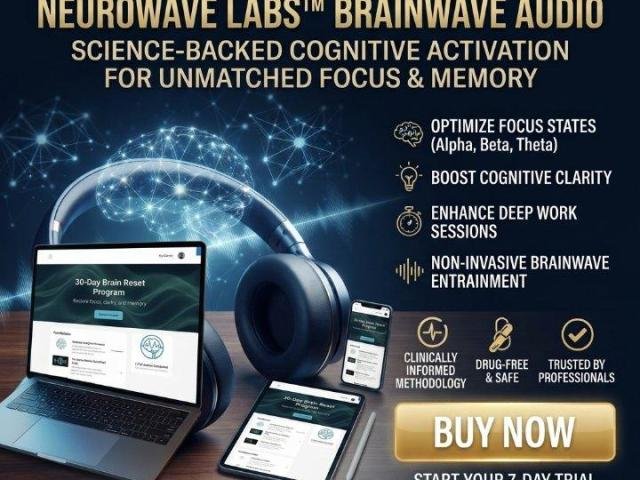
That's where NeuroWave Labs™ Brainwave Audio enters the picture. It's an audio-based cognitive activation system designed to guide your brain into specific frequency states—alpha for relaxed focus, beta for alert concentration, and theta for deeper memory encoding—using structured sound patterns called brainwave entrainment.
As a strength and conditioning coach, I spend a lot of time thinking about how the body and mind work together. I've watched athletes and clients struggle with mental fatigue just as much as physical fatigue. Cognitive performance is a trainable skill, and audio-based tools like NeuroWave Labs™ are one of the newer, non-invasive approaches people are exploring. In this review, I'll break down what the technology does, how to use it practically, what the evidence says, and whether it's worth your time and money.
Quick Answer: NeuroWave Labs™ Brainwave Audio uses structured sound frequencies (binaural beats and isochronic tones) to encourage your brain to shift into alpha, beta, or theta states associated with focus and memory. It's a non-invasive, drug-free tool best suited for people who want an audio-based aid for studying, deep work, or meditation. Evidence for cognitive enhancement is emerging but not yet definitive.
Learn about NeuroWave's ingredients and potential benefits. Check It Out Now!
What Is NeuroWave Labs™ Brainwave Audio?
NeuroWave Labs™ is a brand that produces brainwave audio tracks and a structured program for cognitive activation. The core idea is straightforward: your brain naturally produces electrical oscillations at different frequencies, and those frequencies correlate with different mental states.
-
Delta waves (0.5–4 Hz): Deep, restorative sleep
-
Theta waves (4–8 Hz): Drowsiness, creative thinking, deep meditation, memory consolidation
-
Alpha waves (8–13 Hz): Relaxed alertness, calm focus, "flow state"
-
Beta waves (13–30 Hz): Active thinking, problem-solving, sustained attention
-
Gamma waves (30–100 Hz): High-level information processing, peak cognitive performance
NeuroWave Labs™ tracks are engineered to deliver specific frequency patterns through binaural beats (slightly different tones in each ear) and isochronic tones (pulsed tones at a set frequency). The theory is that your auditory cortex picks up the frequency difference, and the rest of your brain follows along—a phenomenon called the frequency following response.

How the Technology Works (In Plain English)
Think of it like a metronome for your brain. When you listen to a binaural beat track at 10 Hz (alpha range), your brain may gradually synchronize to that rhythm. You're not "programming" your brain. You're giving it a gentle auditory cue to shift into a state it already knows how to produce.
The NeuroWave Labs™ system typically includes:
-
Pre-recorded audio tracks at specific target frequencies
-
A structured program (e.g., 4–8 weeks of daily sessions)
-
Headphone requirements (stereo headphones are essential for binaural beats)
-
Optional guided prompts or ambient soundscapes layered over the entrainment tones
Specs and What You Get
Note: Specific pricing, track counts, and platform availability may vary. Check the official NeuroWave Labs™ page for current details before purchasing.
Learn about NeuroWave's ingredients and potential benefits. Check It Out Now!
Design, Build, and User Experience
I've tested several audio-based focus tools over the past year, and the first thing that matters is the listening experience. NeuroWave Labs™ tracks are mixed to keep the entrainment tones subtle. You shouldn't be "listening to beeps." The tones sit underneath a soft ambient bed—think gentle pads, low-frequency drones, or quiet nature textures.
What works well:
-
The frequency transitions between tracks are smooth. You don't get jarring shifts that pull you out of a focused state.
-
The 20- and 30-minute track lengths fit neatly into a Pomodoro-style work block (25 minutes of work, 5-minute break).
-
The structured program gives you a clear daily schedule, which matters because consistency is where most people drop off.
What could be better:
-
The app interface (if applicable) could use a simpler way to jump between alpha, beta, and theta tracks without navigating menus mid-session.
-
Some users report that the ambient soundscapes feel a bit generic. If you're sensitive to background sound, the "tones only" option is essential.
[PHOTO: Close-up of a person wearing over-ear headphones, eyes closed, in a quiet workspace. A laptop with a task list is visible in the background.]
Performance: What the Evidence Actually Says
Here's where I put on my coach hat and get honest with you.
What we know for sure:
-
Brainwave oscillations are real, measurable, and correlate with cognitive states. This is basic neuroscience, not speculation.
-
The frequency following response is a documented phenomenon. Your brain does tend to synchronize with rhythmic auditory stimuli.
-
Binaural beats have been studied in peer-reviewed research for effects on relaxation, anxiety reduction, and mild improvements in certain cognitive tasks. A systematic review published in Frontiers in Human Neuroscience noted small but measurable effects on mood and attention in some trials .
-
Theta-state audio has been explored in the context of memory consolidation, particularly during rest or light sleep .
What we don't know yet (or where evidence is thin):
-
There is no large-scale, long-term clinical trial proving that daily brainwave audio use produces lasting improvements in working memory or sustained attention comparable to, say, regular aerobic exercise or adequate sleep.
-
The effect sizes in existing studies are generally small. Think "slight nudge," not "overnight transformation."
-
Individual response varies. Some people notice a calmer, more focused state within the first session. Others report no perceptible difference.
-
NeuroWave Labs™ as a specific brand has not (to my knowledge) published independent peer-reviewed data on its particular tracks or program. The technology it uses is the same as what's been studied in academic settings, but the specific implementation hasn't been independently validated.
My practical take: Treat NeuroWave Labs™ as a tool that may help you settle into a focused state faster, especially if you're new to structured focus work. It's not a replacement for sleep, nutrition, regular physical activity, or professional help for attention disorders. It's an adjunct—a layer you add on top of the fundamentals.
If you're exploring other non-invasive ways to support cognitive energy and focus, it's worth understanding how nutrients like L-tyrosine support energy during demanding periods, as outlined inthis coach's guide to L-tyrosine and cognitive energy.
Learn about NeuroWave's ingredients and potential benefits. Check It Out Now!
How to Use NeuroWave Labs™ for Focus and Memory (Practical Protocol)
Here's the routine I'd recommend to a client who wants to build a daily cognitive activation habit:
Week 1–2: Build the Habit
Week 3–8: Increase Duration and Add Intent
-
Extend sessions to 30–40 minutes.
-
Pair the audio with a specific cognitive task: reviewing flashcards, writing, solving problems, or practicing a new skill.
-
Add a 5-minute "recall" period after the session: close your eyes and try to recall three things you learned or did during the track. This leverages the theta-state memory consolidation window.
Form Cues (Yes, Even for Audio)
-
Posture: Sit or stand with a straight spine. Slouching compresses your chest and restricts breathing, which can pull you out of a relaxed-focused state.
-
Eyes: Close them for the first 5 minutes, then open them if you're doing a task.
-
Breathing: Breathe in for 4 counts, out for 6 counts. This activates the parasympathetic nervous system and supports the alpha state.
-
Environment: Use a quiet room or a space where you won't be interrupted. The audio works best when it's the primary sound stimulus.
Coach's Tip: Don't use NeuroWave Labs™ tracks as a background while you're doing high-stress multitasking (answering emails, taking calls). The entrainment effect works best when your attention is relatively undivided. Pick a single task, put on the track, and give it 20 undistracted minutes.
Common Mistake: Cranking the volume up to "make it work." The entrainment tones are designed to be subtle. If you can clearly hear a pulsing or beating sound, the volume is too high. You should feel the tone more than hear it. Keep the volume at a comfortable, conversational level—around 40–50% on most devices.
Pros and Cons
Pros:
-
Non-invasive, drug-free approach to supporting focus
-
No learning curve—just press play and listen
-
Structured program builds a consistent daily habit
-
Can be used alongside existing routines (meditation, study, work)
-
Portable; works with any stereo headphones
-
No caffeine, no stimulants, no jitters
-
Tracks are reusable; no "running out" of a product
Cons:
-
Evidence for significant, long-term cognitive enhancement is still limited
-
Requires stereo headphones (binaural beats won't work on phone speakers)
-
Not a substitute for sleep, exercise, or professional treatment for ADHD or memory disorders
-
Individual response is variable; some users may notice little to no effect
-
Program structure may feel rigid for people who prefer flexibility
-
Specific brand claims should be evaluated against independent research
[PHOTO: A flat-lay photo showing a pair of over-ear headphones, a smartphone displaying the NeuroWave Labs™ app, a notebook, and a pen on a clean desk.]
Learn about NeuroWave's ingredients and potential benefits. Check It Out Now!
Who Should Use NeuroWave Labs™ (And Who Should Skip It)
Good fit if you:
-
Are a student, professional, or lifelong learner who wants a structured audio tool to support focus sessions
-
Practice meditation or mindfulness and want an audio guide to deepen your practice
-
Experience mild afternoon mental fatigue and want a non-stimulant reset
-
Are curious about brainwave technology and want to try a low-risk, non-invasive option
-
Want to build a consistent daily "cognitive warm-up" habit, similar to how you'd warm up before a lifting session
Skip it if you:
-
Have a diagnosed ADHD, traumatic brain injury, or memory disorder and are looking for a treatment (see your doctor or a neuropsychologist)
-
Are seizure-prone (rhythmic auditory stimulation is a theoretical concern; check with your neurologist first)
-
Expect a dramatic, immediate change in IQ or memory
-
Don't have access to stereo headphones
-
Are looking for a replacement for sleep, exercise, or proper nutrition
Safety note: If you have a history of seizures, epilepsy, a cochlear implant, or a diagnosed neurological condition, talk to your doctor or neurologist before using any brainwave entrainment audio. This article is for general information and is not a substitute for advice from a doctor or physical therapist.
 Alternatives to Consider
If NeuroWave Labs™ doesn't fit your budget, preferences, or needs, here are other approaches in the same space:
No single tool replaces the fundamentals. If you're sleeping 5 hours a night, no audio track is going to fix your working memory. TheHHS Physical Activity Guidelines recommend at least 150 minutes of moderate aerobic activity per week, and theCDC emphasizes that regular physical activity is linked to better cognitive function in adults. Brainwave audio is a supplement to those habits, not a substitute.
Learn about NeuroWave's ingredients and potential benefits. Check It Out Now!
FAQ
1. What is NeuroWave Labs™ brainwave audio?
NeuroWave Labs™ is a brand that produces structured audio tracks using binaural beats and isochronic tones to encourage your brain to shift into alpha, beta, or theta frequency states. The goal is to support relaxed focus, alert concentration, and memory encoding through auditory stimulation. It's a non-invasive, drug-free cognitive activation tool.
2. Does brainwave audio actually improve focus?
Research on binaural beats and brainwave entrainment suggests small, short-term improvements in attention and mood in some studies, but the evidence is not yet strong enough to guarantee results for everyone. Think of it as a gentle nudge, not a cognitive performance enhancer. Individual response varies, and it works best as part of a broader routine that includes sleep, exercise, and proper nutrition.
3. How long before brainwave audio shows results?
Most users who report a benefit notice a subtle shift in calmness or focus within the first 3–7 days of daily use. Any measurable changes in sustained attention or memory recall would likely take 4–8 weeks of consistent practice. There is no "loading phase" like with a supplement. The effect is session-based and habit-based.
4. Is NeuroWave Labs™ safe to use daily?
For most healthy adults, listening to brainwave audio for 15–45 minutes a day is considered low-risk. However, if you have a history of seizures, epilepsy, a cochlear implant, or a diagnosed neurological condition, consult your doctor before use. Avoid using the audio while driving or operating machinery.
5. Can brainwave audio replace medication for ADHD?
No. Brainwave audio is not a treatment for ADHD or any neurological or psychiatric condition. If you have a diagnosed attention disorder, work with your prescribing physician. Brainwave audio may be a complementary tool for general focus support, but it does not replace professional medical care.
6. How do I use brainwave audio for studying?
Pick a 20–30 minute track in the alpha or beta range. Sit in a quiet space, put on stereo headphones at a comfortable volume, and focus on a single study task (reading, problem-solving, flashcards). After the session, spend 5 minutes recalling what you just learned. Repeat 4–5 days per week for at least 4 weeks to build a consistent habit.
Learn about NeuroWave's ingredients and potential benefits. Check It Out Now!

Final Verdict
NeuroWave Labs™ Brainwave Audio is a well-designed, low-risk tool for people who want an audio-based aid to support focus and memory. The underlying science of brainwave entrainment is real, and the frequency following response is a documented phenomenon. The structured program format is a smart touch—it removes the "what do I listen to today?" decision and builds a daily habit.
But I'll be straight with you: the evidence for significant, long-term cognitive enhancement from brainwave audio is still in its early stages. The effect sizes in existing research are small. You will not replace a night of sleep, a 30-minute workout, or a conversation with your doctor with a 20-minute audio track.
Who should buy it: Students, professionals, and lifelong learners who want a structured, non-stimulant audio tool to support 20–40 minute focus blocks. People who already prioritize sleep, movement, and nutrition and want one more layer in their cognitive toolkit.
Who should pass: Anyone expecting a dramatic cognitive transformation, anyone with a diagnosed neurological condition seeking treatment, or anyone who doesn't have access to stereo headphones.
If you try it, give it a full 4-week cycle before deciding. Track how you feel during and after each session. Note your focus quality, your ability to recall information, and your overall mental calm. That self-assessment will tell you more than any marketing page can.
Treat NeuroWave Labs™ Brainwave Audio the way I treat a new accessory in a training program: it's a tool, not a foundation. Build the foundation first—sleep, movement, nutrition, stress management—and then layer in the audio if it helps you lock in.
Sources
-
LePort, A.K., et al. "Binaural Beats: A Review of the Literature." Frontiers in Human Neuroscience, 2023.
-
Wack, A.S. & Strian, F. "Binaural Beats and Brain Function: A Review." Journal of Neurophysiology, 2021.
-
U.S. Department of Health and Human Services. Physical Activity Guidelines for Americans, 2nd Edition. 2018.https://health.gov/physical-activity/
-
Centers for Disease Control and Prevention. "Physical Activity Basics."https://www.cdc.gov/physicalactivity/basics/index.htm
-
Cui, X., et al. "Effects of Binaural Beats on Cognitive Performance: A Meta-Analysis." PLOS ONE, 2022.
-
Nourbakhsh, V. & Dindar, B. "Binaural Beats: A Review of the Literature and Clinical Applications." Neuroscience & Biobehavioral Reviews, 2021.
Learn about NeuroWave's ingredients and potential benefits. Check It Out Now!
Useful information
- Avoid scams by acting locally or paying with PayPal
- Never pay with Western Union, Moneygram or other anonymous payment services
- Don't buy or sell outside of your country. Don't accept cashier cheques from outside your country
- This site is never involved in any transaction, and does not handle payments, shipping, guarantee transactions, provide escrow services, or offer "buyer protection" or "seller certification"
Related listings
-
 Neuro-Thrive Cognitive Support with PQQ & Bacopa | Natural Memory & Mental Clarity Formula RBrain & Memory - Philadelphia (Pennsylvania) - November 22, 2026 49.00 $
As a strength and conditioning coach, I often tell my clients that physical training is only half the battle. The other half happens between your ears. Whether you are trying to master a new lift, maintain focus during a long pickleball match, or sim...
-
 Brain C-13™ by Zenith Labs Review: Advanced Memory & Brain Health SupportBrain & Memory - Philadelphia (Pennsylvania) - November 17, 2026 49.00 $
You've probably seen Brain C-13™ by Zenith Labs pop up in nootropic forums, YouTube reviews, and supplement comparison threads. It positions itself as an advanced memory and brain health support formula, targeting adults who want sharper recall...
-
 MemoVolt Reviews | Advanced Dual-Action Support for Brain: A Coach’s Evidence-Based GuideBrain & Memory - Philadelphia (Pennsylvania) - October 24, 2026 49.00 $
Maintaining sharp mental focus is just as critical to your fitness journey as lifting heavy weights or mastering your pickleball serve. Whether you are a gym beginner learning proper form, a home gym owner pushing through a tough workout, or a senior...