
39.00 $ SonusZen Reviews & Complaints 2026: Does It Really Work? New Orleans
- Location: New Orleans, Louisiana, United States
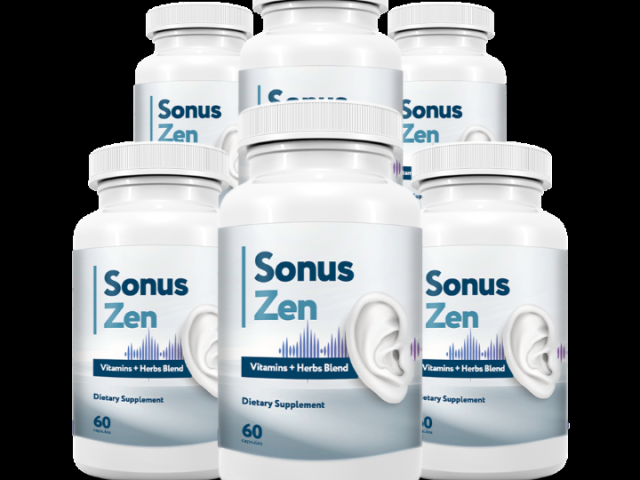
SonusZen is a 12-ingredient capsule marketed as a "Hearing Support Formula," sold in packages from $158 to $294 with a 60-day guarantee.
Unlike most supplements in this category, SonusZen publishes its full supplement facts panel with exact doses. That's genuinely commendable and rare — and it also lets us do something the marketing probably didn't intend: read what's actually in the bottle.
What's in the bottle is a cardiovascular and diuretic formula. Hawthorn, garlic, olive leaf, and hibiscus are four of the most common blood-pressure botanicals in existence. Buchu and juniper are diuretics. Together they make up the bulk of the active ingredients.
That creates a specific, real safety issue the page never mentions — and it means the review below is less about whether the ingredients work, and more about whether they do what the label says they do.
👉 Check current SonusZen pricing and package options »
⚠️ The Blood Pressure Problem
This is the most important safety point on the page, and it isn't mentioned anywhere in the product's marketing.
Four ingredients in SonusZen lower blood pressure:
- Hawthorn berry (175 mg) — traditional cardiovascular herb, genuinely lowers BP
- Garlic powder (150 mg) — well-documented antihypertensive effect
- Olive leaf extract (125 mg) — real BP-lowering research
- Hibiscus (100 mg) — solid clinical evidence for reducing blood pressure
Plus two diuretics:
- Buchu leaf (25 mg)
- Juniper berry (15 mg)
Stacked together and combined with blood pressure medication, this can cause hypotension — dizziness, lightheadedness, fainting, and falls. In older adults, who are the primary market for a hearing supplement, falls are a serious health event.
Two specific interactions matter most:
Hawthorn and digoxin. Hawthorn contains cardiac glycoside-like compounds and can potentiate digoxin's effects. This is a well-documented, clinically significant interaction. If you take digoxin, do not take this without talking to your cardiologist.
Garlic and blood thinners. Garlic has genuine antiplatelet activity. Combined with warfarin, aspirin, or clopidogrel, it increases bleeding risk. Discontinue at least two weeks before surgery.
Also relevant: the diuretic ingredients combined with prescription diuretics (furosemide, hydrochlorothiazide) can cause electrolyte disturbance.
If you take any blood pressure, heart, or blood-thinning medication, talk to a doctor or pharmacist before considering this. That's not boilerplate — it's the specific, foreseeable risk of this specific formula.
⚠️ Sudden Hearing Loss Is a Medical Emergency
Before anything else about efficacy.
Sudden sensorineural hearing loss requires medical care within 72 hours. If you lose hearing rapidly — over hours or a few days, usually in one ear — corticosteroid treatment can restore hearing in a meaningful proportion of cases, but the treatment window is short. Delay substantially reduces the chance of recovery.
Ordering a supplement and waiting to see if it helps is the single most damaging response to sudden hearing loss, and it's the real-world harm associated with this entire product category.
See a doctor promptly for:
- Sudden hearing loss, especially one-sided
- New or rapidly worsening tinnitus, particularly in one ear
- Hearing loss with dizziness or vertigo
- Ear pain, discharge, or a feeling of fullness
- Hearing changes after head injury or loud noise exposure
- Any hearing change that concerns you
Many causes of hearing difficulty are genuinely treatable — impacted earwax, middle ear fluid, infection, and medication side effects among them. An audiologist or ENT can identify which. A supplement cannot.
What Is SonusZen?
SonusZen is a capsule supplement taken as one capsule daily with 8 oz of water. Each bottle contains 60 capsules, so per the label, one bottle is a 60-day supply.
It's distributed by LOJA EXPERIENCE LTDA of Lakeland, Florida, manufactured in the USA in an FDA-registered facility with globally sourced ingredients, and sold through ClickBank.
A note on regulatory language: "FDA registered facility" is not "FDA approved." Facilities register with the FDA and follow GMP standards. The FDA does not approve dietary supplements for safety or efficacy — which the page's own disclaimer confirms.
Credit where it's due
The supplement facts panel is fully disclosed with exact milligram amounts for every active ingredient. No proprietary blend, no hidden doses. Across the supplement reviews I've researched, this is unusual and genuinely better practice than most competitors.
The vitamin B6 form is also worth noting positively: pyridoxal-5-phosphate at 3.4 mg is the active form at a modest dose. Some nerve and hearing supplements use high-dose B6, which is itself a documented cause of peripheral neuropathy. SonusZen doesn't make that mistake — 3.4 mg is nowhere near the problematic range. That's a genuinely good formulation decision.
The Big Finding: This Is a Cardiovascular Formula
Here's what the disclosed label reveals.
Looking at the botanical ingredients by weight, the formula is dominated by:
| Ingredient | Dose | What it's actually known for |
|---|---|---|
| Hawthorn berry | 175 mg | Cardiovascular / blood pressure |
| Garlic powder | 150 mg | Blood pressure / cholesterol |
| Olive leaf extract | 125 mg | Blood pressure |
| Hibiscus flower | 100 mg | Blood pressure |
| Buchu leaf | 25 mg | Diuretic / urinary |
| Juniper berry | 15 mg | Diuretic / urinary |
| Green tea extract | 15 mg | Antioxidant |
Four blood-pressure herbs and two diuretics. If you handed this ingredient list to a pharmacist without the label, they would almost certainly identify it as a blood pressure or water-retention formula. Buchu and juniper in particular are classic urinary-tract botanicals with essentially no hearing literature.
The charitable reading — and it's a fair one: there is a genuine, established relationship between cardiovascular health and hearing. The cochlea is a highly vascular structure with a demanding blood supply and no collateral circulation, which makes it sensitive to vascular compromise. Hypertension, diabetes, and cardiovascular disease are all associated with hearing decline in population research.
So a circulation-focused formula isn't an absurd idea for hearing. That's the strongest honest case for this product.
But the case has limits:
- Supporting circulation generally doesn't restore already-damaged cochlear hair cells — those don't regenerate in humans
- The doses here are mostly well below what the cardiovascular research itself uses
- If cardiovascular health is the mechanism, treating your actual blood pressure with proven medication does it far more effectively
- And the ingredients most specifically tied to hearing research in the literature are dosed at a fraction of studied levels
Ingredient-by-Ingredient: The Doses Tell the Story
Because the label is disclosed, we can compare actual amounts against research doses. This is where the formula weakens considerably.
The ingredients with genuine hearing relevance
Folate — 170 mcg DFE (100 mcg folic acid). This is the most interesting inclusion. Folic acid has genuine research for age-related hearing decline — a Dutch randomized controlled trial found folic acid supplementation slowed the decline in low-frequency hearing in older adults with low folate status.
The problem is the dose. That trial used 800 mcg daily. SonusZen provides 100 mcg of folic acid — roughly one-eighth of the studied amount, and well below the 400 mcg RDA.
Vitamin B12 — 100 mcg (4,167% DV). B12 deficiency is genuinely associated with tinnitus and hearing difficulty in some research, and correcting deficiency can help. B12 is water-soluble with a good safety profile, and 100 mcg is a reasonable supplemental dose.
But: if you're actually B12 deficient, you need testing and proper correction — potentially injections — not a multi-ingredient capsule. Get tested.
Vitamin C — 60 mg. Antioxidant with some animal research on protecting against noise-induced hearing damage. 60 mg is a modest, food-level dose.
The ingredients where dose is the issue
Hawthorn — 175 mg. Real cardiovascular research, but trials typically use 300–1,800 mg daily of standardized extract. This is at or below the bottom of that range.
Garlic — 150 mg powder. Genuine BP and cholesterol evidence, but research generally uses 600–1,200 mg of aged garlic extract or standardized preparations. 150 mg of powder is a small fraction.
Olive Leaf — 125 mg. BP research typically uses 500–1,000 mg of standardized extract.
Hibiscus — 100 mg. The blood pressure evidence for hibiscus is genuinely decent — but it comes from studies using hibiscus tea (often 1.25–3 g of dried calyx) or extracts in the gram range. 100 mg of powder is far below that.
Green Tea 50% extract — 15 mg. This is the starkest example. Green tea research on metabolism and antioxidant effects uses 300–800 mg of extract. At 15 mg of a 50% extract, you're getting roughly 7.5 mg of active catechins — a small fraction of a single cup of green tea.
Buchu — 25 mg and Juniper — 15 mg. Both trivially small, and neither has hearing evidence regardless of dose.
Niacin — 2.5 mg (as niacinamide). Very low, and the niacinamide form means no flushing. Some older thinking linked niacin's vasodilation to hearing, but 2.5 mg produces no meaningful vasodilation.
Ingredient verdict
| Ingredient | Dose | Hearing evidence | Assessment |
|---|---|---|---|
| Folate | 100 mcg folic acid | ⭐ Real (FACIT-type research) | ⚠️ ~1/8 of studied dose |
| Vitamin B12 | 100 mcg | ⭐ If deficient | Reasonable dose |
| Vitamin C | 60 mg | Antioxidant, indirect | Modest |
| Vitamin B6 | 3.4 mg P5P | Indirect | ✅ Safe, good form |
| Hawthorn | 175 mg | None direct | ⚠️ BP-lowering; digoxin |
| Garlic | 150 mg | None direct | ⚠️ BP; bleeding risk |
| Olive Leaf | 125 mg | None direct | ⚠️ BP-lowering |
| Hibiscus | 100 mg | None direct | ⚠️ BP; sub-clinical dose |
| Buchu | 25 mg | None | ⚠️ Diuretic; pulegone |
| Juniper | 15 mg | None | ⚠️ Diuretic; kidney caution |
| Green Tea | 15 mg | None | Negligible dose |
| Niacin | 2.5 mg | Minimal | Too low to matter |
The honest summary: the two ingredients with genuine hearing research — folate and B12 — are the two you could buy for a few dollars. Folate is dosed at roughly an eighth of the studied amount. Everything else is a cardiovascular and diuretic stack at largely sub-clinical doses, with real interaction risk and no hearing evidence.
👉 View the SonusZen label and current packages »
Three Errors on the Sales Page
Worth noting, because they say something about how carefully this was assembled.
1. The disclaimer names a different product. The legal disclaimer reads: "Testimonials, case studies, and examples found on this page are results that have been forwarded to us by users of Gelatine Sculpt and related products..."
Gelatine Sculpt is a different product entirely. The testimonial disclaimer — a legally meaningful piece of text — was copied from another sales page and not updated.
2. "YOU SAVE $780" appears on both the 2-bottle and 6-bottle offers. Identical savings figures for packages costing $158 and $294. Mathematically impossible, and it undercuts the anchor pricing generally.
3. The supply durations don't match the label. The label states 1 capsule daily, 60 capsules per bottle — so one bottle is a 60-day supply.
- Page says 2 bottles = 60-day supply. Should be 120 days.
- Page says 3 bottles = 90-day supply. Should be 180 days.
- Page says 6 bottles = 180-day supply. Should be 360 days.
Every figure is exactly half the label math. Either the stated supply durations are wrong, or the intended dose is actually two capsules daily, contradicting the label.
Ask the vendor which it is before ordering — it changes both your cost per day and your actual intake of every ingredient, including the blood-pressure botanicals.
Benefits: What's Realistic
Plausible
Correcting a B12 deficiency — if you're deficient, this may genuinely help, and B12 deficiency is associated with tinnitus and hearing difficulty. Get tested first.
Modest blood pressure support — given four BP botanicals, though at doses below research levels. If this happens, it's a real effect, just not the advertised one.
General antioxidant intake from vitamin C, green tea, and hibiscus.
Mild diuretic effect from buchu and juniper.
Indirect circulatory support — and there is a genuine cardiovascular-hearing relationship, so this isn't nothing. It's just not the same as improving hearing.
Not supported
- Restoring lost hearing. No supplement reverses sensorineural hearing loss — cochlear hair cells don't regenerate in humans. This is settled physiology.
- Curing or treating tinnitus
- Preventing age-related hearing loss — the folate research is interesting but underdosed here
- Replacing hearing aids or any device
- Treating any diagnosed ear condition
Results: A Realistic Timeline
Weeks 1–2. Possible mild diuretic effect (more urination). If you're on BP medication, this is when you'd watch for dizziness.
Weeks 3–8. If you were B12 or folate deficient, correction is gradual. Any blood pressure effect would establish here.
Weeks 8+. Whatever effect exists is established. Hearing thresholds will not have changed — that's not something this or any supplement does.
Honest expectation: possible general wellbeing or blood pressure effects, possible benefit if deficient. No measurable hearing improvement.
Measuring it properly
Hearing perception is genuinely unreliable, and expectation effects are strong after spending money.
- Get a baseline audiogram from an audiologist before starting. This is the only objective measure of hearing that exists, and it's the single most useful thing in this list.
- Track tinnitus with a daily 1–10 rating if that's your concern.
- Monitor your blood pressure — genuinely important given four BP-lowering ingredients, especially if you're medicated.
- Get B12 and folate tested before and after. This tells you whether the two relevant ingredients are doing anything.
- Change one thing at a time.
- Re-test at 60 days, inside the guarantee window.
Side Effects and Interactions
Common
- Increased urination — buchu and juniper
- Dizziness or lightheadedness — the BP-lowering stack, especially on standing
- GI upset, garlic breath, body odour — garlic
- Nausea — several botanicals
- Headache
More serious
- Hypotension — four BP-lowering ingredients combined, particularly with medication
- Falls — from dizziness, which matters most in the older population this targets
- Bleeding risk — garlic's antiplatelet activity, relevant with anticoagulants and before surgery
- Digoxin potentiation — hawthorn; clinically significant
- Electrolyte disturbance — diuretic ingredients with prescription diuretics
- Kidney irritation — juniper with prolonged use; genuinely contraindicated in kidney disease
- Liver considerations — buchu contains pulegone, which is hepatotoxic in significant amounts
- Folic acid masking B12 deficiency — mitigated here by B12's inclusion, but worth knowing generally
Who should avoid it
- Anyone on blood pressure medication without medical clearance
- Anyone on digoxin — the hawthorn interaction is significant
- Anyone on blood thinners or regular NSAIDs — garlic
- Anyone on prescription diuretics
- Anyone with kidney disease — juniper
- Anyone with liver disease — buchu's pulegone content
- Anyone with low blood pressure already
- Pregnant or breastfeeding women — juniper is a uterine stimulant and buchu is contraindicated; the label flags pregnancy generally
- Anyone scheduled for surgery within two weeks
- Anyone under 18 — noted on the label
- Anyone with sudden or worsening hearing changes — see a doctor, not a supplement
Customer Feedback and Complaints
The page shows testimonials with a disclaimer noting they may not be representative — and, as covered above, that disclaimer references a different product entirely.
Common positive reports
- General wellbeing improvements — plausible from the vitamins
- Feeling calmer or less stressed
- Easy single-capsule routine
- Some report tinnitus feeling less intrusive — plausible if stress or sleep improved, since tinnitus perception is strongly modulated by both
Common complaints
- "My hearing is unchanged." The most frequent, and the expected one.
- "My tinnitus is the same."
- Dizziness or lightheadedness — consistent with the BP-lowering stack.
- Increased urination — the diuretics.
- Garlic taste or odour.
- Cost relative to results.
- Confusion over supply duration — understandable given the label discrepancy.
On evaluating reviews
Genuine review signals are specificity, mixed verdicts, and willingness to report no effect. Be particularly skeptical of any review claiming a supplement restored hearing — that isn't physiologically possible.
Price: What It Costs
| Package | Total | Stated supply | Actual supply (per label) |
|---|---|---|---|
| 2 bottles | $158 + $9.99 shipping | 60 days | 120 days |
| 3 bottles | $207, free shipping | 90 days | 180 days |
| 6 bottles | $294, free shipping | 180 days | 360 days |
A 60-day money-back guarantee applies.
On the anchor pricing: $358→$158, $537→$207, $1,074→$294, with "$780 saved" appearing on two different packages. Prices never charged aren't savings. Judge it on the actual numbers.
Is it fair value? Poor, given what's actually in it:
- B12 at 100 mcg: roughly $5 for six months
- Folate at a proper 400–800 mcg: roughly $5–8 for six months
- A basic B-complex covering B6, B12, folate, and niacin: $8–12 for several months
- Hibiscus tea at genuinely effective doses: a few dollars
- A hearing test: often free at hearing aid clinics, and it actually tells you something
The two ingredients with real hearing research cost under $15 for half a year — and you'd get folate at a dose the research actually used, rather than an eighth of it.
Structural note: the best per-unit price requires $294 upfront against a 60-day guarantee, and per the label that's potentially a full year of product you can't return after two months.
Buying notes
- Clarify the supply duration and daily dose before ordering — the label and page disagree by a factor of two.
- Check your blood pressure medication list with a pharmacist first. This is the genuine safety step.
- ClickBank is the retailer — standard affiliate arrangement, and their disclaimer notes this doesn't constitute endorsement of the product's claims.
- Start with the smallest package — the only tier that aligns sensibly with the guarantee.
- Take with food to reduce GI upset.
- Monitor your blood pressure for the first two weeks if you're medicated.
👉 Check SonusZen pricing and the 60-day guarantee »
What Actually Protects Hearing
The evidence-based list, most of it free.
1. Protect against noise. Noise-induced hearing loss is the most preventable form and permanent once it happens. Use earplugs at concerts, when using power tools, mowing, or anywhere you must raise your voice to be heard. Custom-fitted plugs are worth it for regular exposure.
2. Follow the 60/60 rule. No more than 60% volume for no more than 60 minutes with headphones. Over-ear beats earbuds. Noise-cancelling headphones genuinely help, because they remove the temptation to crank volume over background noise.
3. Don't put anything in your ear canal. Cotton buds push wax deeper and risk eardrum damage. Earwax is protective and self-clearing. Genuine impaction should be removed professionally — and impacted wax is a common, completely reversible cause of hearing difficulty.
4. Manage blood pressure and diabetes. Genuinely relevant here, and it's the honest version of what this product gestures at. Both are associated with hearing decline, and controlling them with proven treatment does far more than a sub-clinical botanical dose.
5. Exercise. Cardiovascular fitness supports cochlear blood supply.
6. Don't smoke. Associated with increased hearing loss risk.
7. Know your ototoxic medications. Some antibiotics, chemotherapy agents, high-dose aspirin, and loop diuretics can damage hearing. Ask your prescriber.
8. Get your B12 and folate tested if you're concerned about hearing or tinnitus. These are cheap tests, deficiency is common over 50 and in anyone on metformin or long-term acid reducers, and correction is straightforward.
9. Get baseline hearing testing. An audiogram gives you something to compare against later — and many hearing clinics offer free screenings.
10. Treat hearing loss when it appears. Untreated hearing loss is associated with social isolation, depression, and in observational research, increased dementia risk. Hearing aids are genuinely effective and have become far more affordable since over-the-counter options became available in the US.
11. For tinnitus specifically: sound therapy, cognitive behavioural therapy, and hearing aids (if hearing loss is present) have the best evidence. Managing stress and sleep genuinely reduces how intrusive tinnitus feels.
Frequently Asked Questions
What is SonusZen?
A 12-ingredient capsule containing vitamins C, B6, B12, folate, niacin, plus hawthorn, garlic, olive leaf, hibiscus, buchu, juniper, and green tea, marketed as a hearing support formula. One capsule daily.
Does SonusZen work for hearing?
No supplement restores lost hearing — cochlear hair cells don't regenerate. The two ingredients with genuine hearing research here (folate and B12) are relevant if you're deficient, but folate is dosed at roughly an eighth of the studied amount.
Why does it contain blood pressure herbs?
That's the notable finding. Hawthorn, garlic, olive leaf, and hibiscus are all established blood-pressure botanicals. The charitable reading is that cochlear blood supply matters for hearing — which is true — but this is functionally a cardiovascular formula.
Can I take it with blood pressure medication?
Not without medical clearance. Four BP-lowering ingredients plus medication risks hypotension, dizziness, and falls. If you take digoxin, the hawthorn interaction is specifically significant.
Does it help tinnitus?
There's no direct evidence. If your tinnitus improves, the most likely explanations are B12 correction (if you were deficient) or reduced stress — both real, but not what's advertised.
How long does one bottle last?
Per the label — 1 capsule daily, 60 capsules — one bottle is 60 days. The page's stated supply durations are half that, which is worth clarifying with the vendor.
Is the B6 dose safe?
Yes, and this is a genuine positive. At 3.4 mg of pyridoxal-5-phosphate, it's nowhere near the levels where B6 causes neuropathy — a real problem with some other nerve and hearing supplements.
Are there side effects?
Possible dizziness (BP-lowering ingredients), increased urination (diuretics), garlic odour, and GI upset. The more serious concerns are interactions.
Is it FDA approved?
No. Supplements aren't FDA approved. The facility is FDA-registered, which concerns manufacturing standards only.
What's the refund policy?
60-day money-back guarantee via ClickBank. Note it's shorter than the actual supply in the larger packages.
Final Verdict
SonusZen is an honestly-labeled cardiovascular supplement sold as a hearing formula — and the transparency that earns it credit is also what reveals the problem.
Real credit first. Publishing the full supplement facts panel with exact doses is genuinely better practice than most competitors, and it deserves recognition. The B6 is correctly dosed in the safe, active form, avoiding a mistake other hearing and nerve products make. B12 at 100 mcg is reasonable, and B12 deficiency is a legitimate, testable contributor to tinnitus and hearing difficulty. And the underlying cardiovascular-hearing connection is real — the cochlea genuinely depends on good blood supply.
But the disclosed label tells the story. Four blood-pressure botanicals and two diuretics make up the bulk of the formula, none with direct hearing evidence, creating a genuine hypotension and interaction risk that the page never mentions — including a clinically significant hawthorn-digoxin interaction. The one ingredient with real hearing research, folate, is dosed at roughly an eighth of the studied amount. Green tea at 15 mg is negligible. And three separate errors on the sales page — a disclaimer naming a different product, identical savings claims on different packages, and supply durations contradicting the label — don't inspire confidence in the rest of it.
Consider it only if: you take no blood pressure, heart, or blood-thinning medication, you have no kidney or liver concerns, you're not pregnant, you've had your hearing professionally evaluated, and you're testing the smallest package inside the guarantee with your blood pressure monitored.
Skip it if: you take any cardiovascular medication, you have sudden or worsening hearing changes (see a doctor within 72 hours), you have kidney or liver disease, you're pregnant, or you're hoping to avoid a hearing test.
What I'd genuinely recommend first: get an audiogram — many hearing clinics offer free screenings, it's objective, and it tells you whether your problem is reversible earwax, a middle-ear issue, or genuine sensorineural loss. Get B12 and folate tested at the same time, since those are the two things in this bottle with real hearing evidence and deficiency is genuinely common. If you're low, correct it properly — for about $10, at doses the research actually used, without four blood-pressure herbs attached.
👉 Check SonusZen pricing and guarantee terms »
This article is for general informational purposes only and is not medical advice. Dietary supplements are not evaluated by the FDA and are not intended to diagnose, treat, cure, or prevent any disease. Hearing loss is a medical condition requiring professional evaluation — sudden hearing loss is an emergency requiring care within 72 hours. Always consult a qualified healthcare provider or pharmacist before starting any supplement, particularly if you take blood pressure, heart, or blood-thinning medication, are pregnant or breastfeeding, or have an existing health condition.
Useful information
- Avoid scams by acting locally or paying with PayPal
- Never pay with Western Union, Moneygram or other anonymous payment services
- Don't buy or sell outside of your country. Don't accept cashier cheques from outside your country
- This site is never involved in any transaction, and does not handle payments, shipping, guarantee transactions, provide escrow services, or offer "buyer protection" or "seller certification"
Related listings
-
 SharpEar Reviews: Benefits, Ingredients, Results & Side EffectsEar Health - Dallas (Texas) - September 12, 2026 49.00 $
SharpEar is a capsule supplement marketed for hearing health, built around five main ingredients — Ginkgo Biloba, St John's Wort, Vinpocetine, Huperzine-A, and L-Glutamine — and sold in packages from $69 to $294 with a 60-day guarantee. T...
-
 Whispeara Honest Reviews & Complaints: Does This Tinnitus Supplement Really Work?Ear Health - New Haven (Connecticut) - May 18, 2026 49.00 $
If you constantly hear a high-pitched ringing, a low hum, buzzing, hissing, or clicking sounds in your ears that nobody else in the room can hear, you already know the profound frustration of tinnitus. It is an invisible, often isolating condition.&n...
-
 Quietum Plus Honest Review: Does It Really Work for Tinnitus or Is It a Scam?Ear Health - Seattle (Washington) - May 16, 2026 49.00 $
If you have ever found yourself lying awake at 2:00 AM, staring at the ceiling and listening to a relentless, high-pitched whine that nobody else in the room can hear, you already know the profound toll tinnitus can take on your life. [>>...