
39.00 $ ViriFlow Reviews 2026: Benefits, Ingredients, Results & Side Effects Nashville
- Location: Nashville, Tennessee, United States
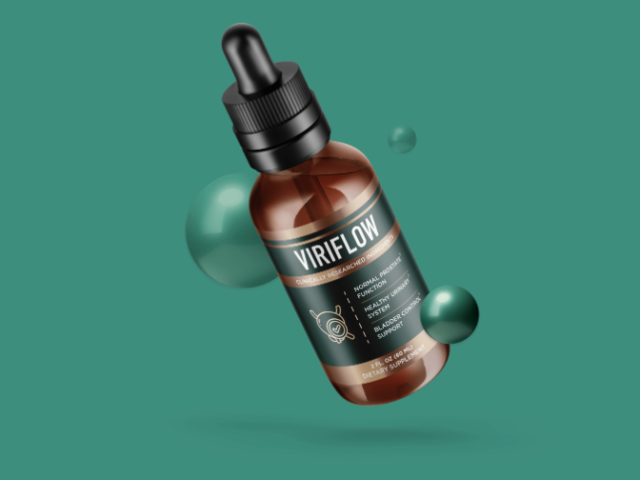
ViriFlow is a liquid prostate supplement built around nine ingredients, sold in packages from $158 to $294 with a 60-day guarantee. Its central claim is distinctive: that prostate problems are caused by "toxic, hard water minerals" building up inside your urinary system.
This review examines that premise, breaks down every ingredient against the evidence, and covers the safety issues the sales page doesn't mention — starting with the most significant one. This formula contains four separate seaweeds, which together can deliver an iodine dose high enough to disrupt thyroid function.
There's also a genuinely striking detail in the product's own reference list, which I'll get to.
👉 Check current ViriFlow pricing and package options »
⚠️ Read This Before You Order
1. Four seaweeds means a significant iodine load. Nori Yaki, Wakame, Kelp, and Bladderwrack are all iodine-rich, and kelp in particular can contain very high concentrations — single servings have been measured at many times the recommended daily intake.
Excess iodine is not harmless. Sustained high intake can cause both hypothyroidism and hyperthyroidism, thyroid inflammation, and in susceptible people can trigger autoimmune thyroid disease. The irony is that iodine deficiency and iodine excess produce overlapping symptoms — fatigue, weight change, temperature sensitivity.
No iodine content is disclosed on the sales page. For a product designed for 180-day courses, that's the number I'd insist on before ordering.
2. Bladderwrack accumulates heavy metals. Brown seaweeds concentrate arsenic, cadmium, and lead from seawater. Quality sourcing matters enormously, and there's no third-party testing data provided.
3. Shilajit has documented contamination concerns. Raw or improperly purified shilajit can contain heavy metals, mycotoxins, and free radicals. "Purified" grades exist; the label doesn't specify which is used.
4. Saw palmetto can lower PSA readings. This genuinely matters — tell your doctor you're taking this before any PSA test, because an artificially lowered result could mask prostate cancer.
5. Neem carries real cautions — potential hepatotoxicity at higher doses and blood-sugar effects.
If you take thyroid medication, have any thyroid condition, or take blood thinners or diabetes medication, talk to a doctor before considering this product.
Get Diagnosed Before You Self-Treat
Urinary symptoms in men — weak stream, frequency, nighttime urination, difficulty starting or stopping — have several possible causes. Most commonly benign prostatic hyperplasia (BPH), which is non-cancerous. But the same symptoms can indicate prostatitis, urinary tract infection, bladder dysfunction, or prostate cancer.
They feel identical from the outside. You cannot tell which you have without examination and testing.
Early prostate cancer is frequently asymptomatic or produces exactly these symptoms. Taking a supplement, feeling somewhat better, and postponing a doctor's visit is the genuine risk with this product category — compounded here by saw palmetto's potential effect on PSA readings.
See a doctor promptly if you have: blood in urine or semen, painful urination, inability to urinate (emergency), persistent pelvic or lower back pain, unexplained weight loss, or symptoms that are worsening rather than stable.
The "Hard Water Minerals" Premise
The product's central claim deserves direct examination, because everything else is built on it.
ViriFlow is described as "targeting the toxic, hard water minerals that can create a dangerous buildup inside your urinary system."
This is not a recognised mechanism of prostate disease. Here's what's actually established:
BPH is driven primarily by hormones and age — specifically the conversion of testosterone to dihydrotestosterone (DHT) by the enzyme 5-alpha-reductase, acting on prostate tissue over decades. That's why the effective prescription drugs (finasteride, dutasteride) are 5-alpha-reductase inhibitors. Genetics, obesity, metabolic syndrome, and inflammation also contribute.
Hard water minerals — calcium and magnesium — do not accumulate in the prostate. They're absorbed in the gut, regulated by the kidneys, and excreted. There's no described pathway by which drinking hard water causes prostate enlargement.
Prostatic calcifications do exist, but they're common, usually asymptomatic incidental findings, and they aren't caused by your tap water.
The hard-water framing appears to be a marketing hook — it creates a novel-sounding villain that existing treatments supposedly ignore, which is a recognisable pattern in this category.
The Reference List: One Notable Finding
ViriFlow cites roughly 30 references, which looks impressive. Reading them tells a different story.
The most striking one: the saw palmetto citation is Bent S, Kane C, Shinohara K, et al. "Saw palmetto for benign prostatic hyperplasia." New England Journal of Medicine. 2006.
That's a real, high-quality study — and it's the STEP trial, which found saw palmetto was no more effective than placebo for BPH symptoms. It's one of the most-cited pieces of negative evidence on saw palmetto in existence.
Citing it as support for a saw palmetto product is remarkable. Either nobody read past the title, or they're relying on readers not to.
Other patterns worth noting:
- Several "references" aren't research at all — Dr. Axe, Healthline, TheHealthSite, "Hello Doctor," and "The Shim Clinic Blog" are consumer websites, not studies.
- Multiple povidone-iodine citations concern surgical disinfectant and bladder irrigation in catheterised patients. That's antiseptic use — completely unrelated to an oral supplement.
- The neem citation studies "MCF-7 and HeLa cells" — breast and cervical cancer cell lines, in a dish, with cisplatin. Nothing to do with prostate health.
- A shilajit citation is a rat study.
- An iodine citation is a mouse model (TRAMP).
- None of the references is a study of ViriFlow.
A long citation list creates an impression of scientific rigour. This one, read carefully, doesn't deliver it.
👉 View ViriFlow's ingredient list and packages »
ViriFlow Ingredients: Evidence Breakdown
The two ingredients with genuine prostate evidence
Pygeum Africanum — arguably the best inclusion. Pygeum has reasonable evidence for BPH symptoms — a Cochrane review found modest improvements in urinary symptoms and flow measures. It's not dramatic, but it's real, and it's better supported than most botanicals in this space.
Effective doses in research run 100–200 mg daily of standardised extract. Undisclosed here.
Saw Palmetto — the most-studied, with genuinely mixed results. The most-researched botanical for BPH. Some smaller trials show modest benefit; the largest and best-controlled — including the NEJM study ViriFlow itself cites — found it no better than placebo.
The honest position is that its effect is small at best. Standardised research doses are 320 mg daily of lipidosterolic extract.
Important: saw palmetto can lower PSA readings. Tell your doctor.
The seaweeds — the formula's defining feature and its main risk
Nori Yaki, Wakame, Kelp, and Bladderwrack are four separate brown/red algae.
What they genuinely offer: real nutritional content, fucoidan and phlorotannins with antioxidant research, fucoxanthin with metabolic research. The cited research on brown algae compounds is legitimate as far as it goes.
What the evidence doesn't show: any established benefit for BPH or urinary symptoms. The observational association between Japanese seaweed consumption and lower prostate cancer rates is interesting but confounded by the entire rest of the Japanese diet, lifestyle, and genetics.
The real concern is cumulative iodine. One seaweed would be a consideration. Four is a genuine issue:
- Kelp can contain extremely high iodine concentrations, varying enormously by species and harvest
- Excess iodine causes thyroid dysfunction in both directions
- Cases of iodine-induced thyroid disease from kelp supplements are documented in the literature
- People with existing thyroid conditions, Hashimoto's, or on levothyroxine are at greater risk
Bladderwrack adds a second concern: it's a known accumulator of arsenic, cadmium, and lead. Without third-party heavy metal testing data, that's an unverified risk over a 180-day course.
The remaining ingredients
Shilajit — genuine research for testosterone in some small trials, and the cited studies on testosterone and spermatogenic activity are real. Prostate evidence is limited to a rat study.
The safety issue: raw shilajit can contain heavy metals, mycotoxins, and other contaminants. Purified grades are considerably safer, but the label doesn't specify. It may also raise uric acid — relevant if you have gout.
Pomegranate — the most scientifically interesting inclusion. The Pantuck 2006 phase II study found pomegranate juice slowed PSA doubling time in men with rising PSA after treatment. That's genuine, notable research.
But the follow-up matters: larger, better-controlled trials subsequently did not confirm a meaningful benefit. The pomegranate story is a good example of an exciting early finding that didn't replicate. Also worth noting — those studies used pomegranate juice or extract at specific doses, not a trace amount in a proprietary blend.
Neem — the same ingredient that concerned me in the SharpEar formula, for the same reasons. No prostate evidence. The cited study is breast and cervical cancer cell lines in vitro. Neem carries potential hepatotoxicity at higher doses, may significantly lower blood sugar, and has documented reproductive toxicity concerns.
Ingredient verdict
| Ingredient | Prostate evidence | Concern |
|---|---|---|
| Pygeum Africanum | ⭐ Moderate (Cochrane) | Dose undisclosed |
| Saw Palmetto | Mixed — NEJM negative | ⚠️ Can lower PSA readings |
| Pomegranate | Early promise, not replicated | Dose likely trace |
| Shilajit | Rat study only | ⚠️ Contamination, uric acid |
| Kelp | None | ⚠️ High iodine |
| Bladderwrack | None | ⚠️ Iodine + heavy metals |
| Wakame | None | ⚠️ Iodine |
| Nori Yaki | None | ⚠️ Iodine |
| Neem | None | ⚠️ Liver, blood sugar |
The honest summary: two ingredients with real prostate evidence (pygeum and saw palmetto, the latter genuinely contested), surrounded by four seaweeds that contribute iodine rather than prostate benefit, plus shilajit and neem with no meaningful prostate research.
It's also a proprietary blend, meaning individual doses aren't disclosed. With nine ingredients including four bulky seaweeds, the amounts of pygeum and saw palmetto — the ones that might actually work — are almost certainly well below research doses.
Benefits: What's Realistic
Plausible
Modest urinary symptom support — if pygeum and saw palmetto are meaningfully dosed, some men with mild BPH may notice small improvement in flow or frequency. Evidence says small at best.
General antioxidant intake from seaweed polyphenols and pomegranate. Real, if not prostate-specific.
Possible energy or vitality effect from shilajit, which has some genuine research for testosterone in small trials.
Nutritional micronutrients from the seaweed content — including iodine, which is a benefit only if you're deficient, and a problem if you're not.
Not supported
- Removing "hard water mineral buildup" — not a real mechanism
- Shrinking the prostate — no supplement does this; 5-alpha-reductase inhibitors do
- Preventing or treating prostate cancer
- Treating ED — the bonus book's "turn plain water into natural Viagra" claim isn't supported by anything
- Replacing prescription BPH treatment
Results: A Realistic Timeline
Weeks 1–2. Realistically nothing measurable. BPH symptoms naturally fluctuate week to week, which makes placebo effects strong here.
Weeks 3–6. If pygeum and saw palmetto are adequately dosed, the earliest window for change. Research on both typically runs 8–12 weeks before assessing.
Weeks 6–12. The realistic assessment point — and it sits right at the edge of the 60-day guarantee.
Months 3–6. Whatever effect exists is established. Prostate size won't have changed.
Honest expectation: modest improvement in mild urinary symptoms for some men, nothing for many. If symptoms are moderate to severe, prescription options work considerably better.
Measuring it properly
Use the IPSS (International Prostate Symptom Score) — a free, validated 7-question questionnaire that urologists use worldwide.
- Score yourself before starting. Write it down.
- Re-score at 30 and 60 days. A change of 3+ points is clinically meaningful; less is noise.
- Track nighttime urination count — objective and easy.
- Change one thing at a time.
- Decide inside the 60-day window.
- Consider a baseline thyroid panel given the iodine load, and recheck if you use it long-term.
That last point is unusual advice for a supplement review, but with four seaweeds it's genuinely warranted.
Side Effects
Common
- GI upset, nausea — seaweeds, neem, shilajit
- Metallic or fishy taste — seaweed-derived formulas
- Digestive changes in the first weeks
- Headache
More serious
- Thyroid dysfunction — the main concern. Symptoms of iodine-induced thyroid problems include fatigue, weight change, temperature intolerance, heart rate changes, and neck swelling. Both underactive and overactive presentations are possible.
- Heavy metal exposure — bladderwrack and unpurified shilajit
- Liver stress — neem at higher doses
- Hypoglycemia — neem may lower blood sugar; relevant with diabetes medication
- Altered PSA readings — saw palmetto
- Elevated uric acid — shilajit, relevant with gout
- Bleeding risk — pomegranate and some seaweed components have mild antiplatelet activity
Who should avoid it
- Anyone with a thyroid condition — hypothyroidism, hyperthyroidism, Hashimoto's, Graves', or thyroid nodules
- Anyone on levothyroxine or thyroid medication without clearance
- Anyone with a history of iodine sensitivity or shellfish/seaweed allergy
- Anyone with liver disease (neem)
- Anyone with gout (shilajit)
- Anyone on diabetes medication without monitoring
- Anyone on blood thinners
- Anyone with undiagnosed urinary symptoms
- Anyone with a prostate cancer diagnosis without oncology clearance
- Anyone scheduled for surgery within two weeks
- Anyone taking other iodine or kelp supplements — stacking is how iodine toxicity happens
Pricing: What It Costs
| Package | Total | Supply |
|---|---|---|
| Basic (2 bottles) | $158 + $9.99 shipping | 60 days |
| Most Popular (2+1) | $207, free shipping | 90 days |
| Best Value (3+3) | $294, free shipping | 180 days |
A 60-day money-back guarantee applies, plus three digital bonuses with the 6-bottle package.
On the anchor pricing: the page shows $358→$158, $537→$207, and $1,074→$294. A claimed 73% discount off a price never actually charged isn't a saving — it's framing. Judge it on the real numbers: roughly $49 to $79 per month.
Is that fair value? Expensive. The two ingredients most likely to help are pygeum and saw palmetto, both widely available standalone. Pygeum at 100–200 mg runs roughly $15–20/month; standardised saw palmetto at 320 mg about $10–15/month. Buying both at verified clinical doses would cost around $30 — and you'd avoid the iodine load entirely.
The structural problem: the best per-unit price requires $294 upfront for 180 days against a 60-day guarantee. You'd be holding four months of unrefundable product — and with a formula carrying iodine and heavy-metal considerations, that's a longer commitment than I'd make on an untested product.
Buying notes
- Request the supplement facts panel before ordering. You specifically need the iodine content, plus the pygeum and saw palmetto doses. Any legitimate seller will provide it.
- Ask about heavy metal testing given the bladderwrack and shilajit.
- Official page only. ClickBank is the retailer — standard affiliate arrangement, and their disclaimer notes this doesn't constitute endorsement of the product's claims.
- Start with the 2-bottle package — the only one aligned with the guarantee window.
- Read refund terms first; keep your confirmation email.
- Ignore "while stocks last" and "96% order 6 bottles." Standard funnel copy.
👉 Check ViriFlow pricing and the 60-day guarantee »
What Actually Helps Prostate and Urinary Health
Better evidence, mostly free.
Get evaluated. A DRE, a PSA discussion, and an IPSS score tell you what you're dealing with. Many urinary problems have specific, effective treatments.
Know the prescription options. For genuine BPH, alpha-blockers (tamsulosin, alfuzosin) typically relieve symptoms within days to weeks. 5-alpha-reductase inhibitors (finasteride, dutasteride) actually reduce prostate volume over months — they address the underlying hormonal mechanism. Combination therapy works better still. These have vastly more evidence than any botanical.
Behavioural changes that genuinely help:
- Limit fluids 2–3 hours before bed — often the single most effective change for nighttime urination
- Reduce caffeine and alcohol — both bladder irritants
- Double voiding — urinate, pause, try again
- Timed voiding — go on a schedule rather than waiting for urgency
- Pelvic floor exercises
- Check your medications — decongestants and some antihistamines worsen urinary retention
Lifestyle factors with real evidence:
- Maintain a healthy weight — obesity is associated with worse BPH outcomes
- Exercise regularly — associated with reduced symptom severity
- Cooked tomatoes for lycopene, and cruciferous vegetables
- Don't smoke
- Manage blood pressure and blood sugar
A man who gets diagnosed, uses appropriate prescription treatment, cuts evening fluids, and loses ten pounds will do dramatically better than one taking drops and hoping.
Frequently Asked Questions
What is ViriFlow?
A liquid prostate supplement containing nine ingredients — four seaweeds, saw palmetto, pygeum, pomegranate, shilajit, and neem — sold in 2, 3, and 6-bottle packages with a 60-day guarantee.
Does ViriFlow work?
Possibly modestly, via pygeum and saw palmetto, for mild urinary symptoms — though doses aren't disclosed and the formula's bulk is seaweed. Saw palmetto's own evidence is contested, including in the NEJM study ViriFlow cites.
Is the "hard water minerals" claim real?
No. BPH is driven primarily by hormones (DHT) and age. Dietary calcium and magnesium don't accumulate in the prostate. It's a marketing premise, not a recognised mechanism.
Is the iodine content dangerous?
It depends entirely on the amount, which isn't disclosed. Four seaweeds including kelp and bladderwrack can deliver substantial iodine, and excess iodine causes thyroid dysfunction. Get the label before ordering.
Can I take it with thyroid medication?
Not without medical clearance. This is the single most important interaction question for this particular formula.
Will it affect my PSA test?
Possibly — saw palmetto can lower PSA readings. Always tell your doctor about supplements before PSA testing so results are interpreted correctly.
Does it shrink the prostate?
No. No supplement does. Prescription 5-alpha-reductase inhibitors actually do.
Are the references legitimate?
Mixed. Some are real studies — but several are consumer websites, several concern povidone-iodine disinfectant (unrelated to oral use), one uses breast and cervical cancer cell lines, and the saw palmetto citation is a trial that found no benefit over placebo.
Is it FDA approved?
No. Supplements aren't FDA approved. The page's own disclaimer confirms statements haven't been evaluated by the FDA.
What's the refund policy?
60-day money-back guarantee. Note it's shorter than the 180-day package and barely covers the realistic assessment window.
Final Verdict
ViriFlow is built on a premise that isn't real, around a formula whose bulk contributes iodine rather than prostate benefit — and its own reference list undercuts its main ingredient.
There are legitimate elements. Pygeum has genuine Cochrane-supported evidence for BPH symptoms and is arguably the best thing in the bottle. The pomegranate research is real, even if it didn't replicate. Shilajit has some genuine testosterone research. And the 60-day guarantee is a real protection.
But the problems are substantial. The "hard water minerals" mechanism isn't recognised in any urological literature. Four seaweeds create an undisclosed iodine load that can genuinely disrupt thyroid function — a risk the page never mentions. Bladderwrack and unpurified shilajit carry heavy metal concerns with no testing data provided. Neem has no prostate evidence and real liver and blood-sugar cautions. The reference list includes consumer blogs, surgical disinfectant studies, and cancer cell lines unrelated to the prostate.
And most tellingly: the saw palmetto citation is the NEJM trial that found saw palmetto no better than placebo.
Consider it only if: you've been properly diagnosed, you have no thyroid condition and aren't on thyroid medication, you've obtained the full label including iodine content, you have no liver or gout concerns, you've cleared it with your doctor, and you test the 2-bottle package with an IPSS score inside the guarantee window.
Skip it if: you have any thyroid condition, take levothyroxine, haven't seen a doctor about your symptoms, take diabetes medication or blood thinners, have gout or liver concerns, or have moderate-to-severe symptoms where prescription options work far better.
What I'd genuinely recommend first: score yourself on the IPSS and take it to a doctor along with a PSA discussion. It's free, it's the same tool urologists use, and it tells you whether you're managing something mild or need real treatment. If you still want a supplement afterward, pygeum and saw palmetto standalone at verified doses cost less than a third of this and carry none of the iodine risk.
👉 Check ViriFlow pricing and guarantee terms »
This article is for general informational purposes only and is not medical advice. Dietary supplements are not evaluated by the FDA and are not intended to diagnose, treat, cure, or prevent any disease. Urinary and prostate symptoms require professional evaluation — they can indicate conditions ranging from benign enlargement to prostate cancer, and these cannot be distinguished without testing. Always consult a qualified healthcare provider before starting any supplement, particularly if you have a thyroid condition, take prescription medication, or have an existing health condition.
Useful information
- Avoid scams by acting locally or paying with PayPal
- Never pay with Western Union, Moneygram or other anonymous payment services
- Don't buy or sell outside of your country. Don't accept cashier cheques from outside your country
- This site is never involved in any transaction, and does not handle payments, shipping, guarantee transactions, provide escrow services, or offer "buyer protection" or "seller certification"
Related listings
-
 iGenics Reviews Breakdown: Does This Eye Health Supplement Really Work for Vision Support?Eye Health - Charlotte (North Carolina) - May 11, 2026 39.00 $
If you have started noticing blurry vision recently, you are definitely not alone. Millions of modern adults experience severe eye strain from glowing computer screens daily. You might struggle with annoying trouble seeing clearly at night. Perhaps y...
-
 iGenics Reviews: Is iGenics Eye Supplement Effective? What You Need to Know Before Purchasing!Eye Health - Kalamazoo (Michigan) - February 26, 2026 39.00 $
When it comes to protecting your vision as you age, the search for effective solutions can feel overwhelming. Is there a natural way to support your eyesight and maintain overall eye health? Enter iGenics, a plant-based vision support supplement craf...