
Check with seller Finessa Reviews: Is This Digestive Supplement Worth Buying? A Coach's Honest Take Chicago
- Location: Chicago, Illinois, United States
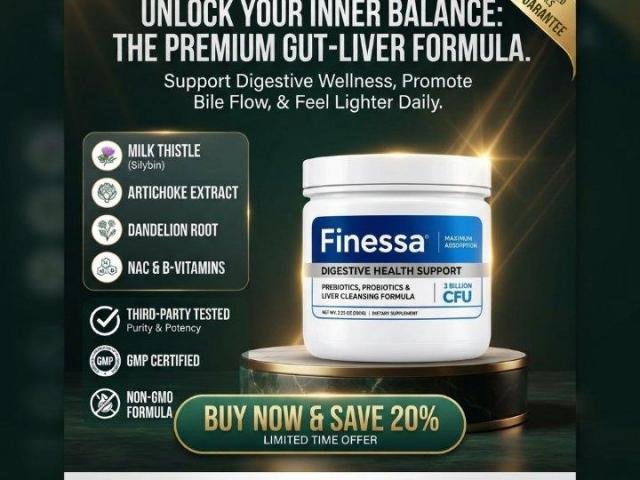
Finessa is a powdered digestive supplement that shows up all over social feeds promising a "clean gut," smoother digestion, and a flatter belly, so these Finessa Reviews: Is This Digestive Supplement Worth Buying? answers that question with the label in one hand and the research in the other. I coach people on training and nutrition for a living, and my rule is simple: before you spend money on any gut-health powder, you look at the ingredient list, then you look at what human trials say about those ingredients.
That is exactly what this review does. Finessa is sold as a once-daily drink mix built around what the brand calls the gut-liver axis, combining prebiotic fiber, probiotics, polyphenols, and herbal extracts like dandelion root, milk thistle, and cascara sagrada, according to themanufacturer's product page [1]. Some of those ingredient categories have real evidence behind them. One of them does not, and it carries a warning label history you deserve to know about before you buy.
Let me walk you through it the way I would with a client sitting across from me: what is actually in the scoop, what the science supports, what it costs, who should skip it entirely, and what I would spend the same money on instead.
Quick Answer: Finessa is a once-daily powder drink mix for digestive health, sold online with a 180-day money-back guarantee. Its prebiotic fiber and probiotic ingredients have decent research support for regularity and fullness, but it contains cascara sagrada, a stimulant laxative the FDA removed from OTC laxative drugs, and blend amounts are not fully disclosed. Verdict: cautious pass for most people. [2]
Learn more about its features, potential benefits, and what to consider before making a decision.

What Is Finessa? Product Overview and Specs
Finessa is a dietary supplement in drink-mix powder form rather than capsules. You stir one scoop into water or another beverage, once a day, usually in the morning, per themanufacturer's instructions [1]. The tub holds about 50 servings, which is a standard supply window for this product category .
The brand's core pitch is the gut-liver axis. That is a real area of research: your gut microbes break down food and produce metabolites that influence the liver, while the liver produces bile that helps digest fats. Finessa positions itself as supporting both sides of that conversation at once, which is a broader claim than a simple fiber or probiotic product makes.
Here is the honest framing I give clients. A powder can genuinely help with regularity, fullness, and feeding good gut bacteria. It cannot "cleanse" or "detox" anything, because your liver and kidneys already do that job around the clock. Marketing language that leans on cleansing is a flag to read the label extra carefully, not a deal-breaker by itself, but it should lower your expectations for dramatic results.
Table
Learn more about its features, potential benefits, and what to consider before making a decision.
Finessa Ingredients: What Is Actually in the Scoop
The label groups its blend into prebiotics, probiotics, polyphenols, and liver-support botanicals. Here is each one, with what the evidence actually says.
Dandelion (Taraxacum). Dandelion root is a natural source of inulin, a prebiotic fiber. This is the most evidence-backed part of the formula. A systematic review in Advances in Nutrition found that inulin-type fructans consistently increase Bifidobacterium and other beneficial bacteria in human trials, alongside improved laxation and modest increases in satiety [3]. So the prebiotic logic is sound.
Milk thistle (silymarin). A traditional liver-support botanical. Evidence for meaningful benefits in healthy people is limited, and this ingredient group matters more for people with existing liver conditions, who should be under medical care anyway.
Cascara sagrada. Here is the ingredient I flagged earlier. Cascara sagrada bark contains stimulant laxative compounds that irritate the colon to push stool through faster. The FDA issued a final rule in 2002 finding that cascara sagrada ingredients in OTC laxative drug products are "not generally recognized as safe and effective," removing them from the over-the-counter laxative monograph [2]. It remains legal in dietary supplements, which follow different rules, but the FDA's own safety reviewers did not endorse it for this use. The NIH LiverTox database notes it is recommended for short-term use only, under one week, with long-term use linked to electrolyte imbalance, dependency, and rare cases of clinically apparent liver injury [4]. A product meant for daily, ongoing use that contains a stimulant laxative is a genuine mismatch, and it is the single biggest mark against this formula.
Artichoke extract (Cynara scolymus). Often included for bile support and digestive comfort. Human evidence for bloating relief is early but not unreasonable.
Turmeric. A well-studied anti-inflammatory spice, though the amounts in blend-style products are usually too small to match what trials used .
Licorice extract. This one deserves caution too. Licorice contains glycyrrhizin, which the National Center for Complementary and Integrative Health warns can cause serious adverse effects including irregular heartbeat and dangerously low potassium, especially with long-term use or in people with hypertension, heart conditions, or kidney disease [5]. Unless the label specifies deglycyrrhizinated licorice (DGL), I would treat this as a real risk factor for daily use.
Probiotics. The listed probiotic strength is around 3 billion CFU. That is a modest dose. Better news: the specific strains are the real question with probiotics, not just the count.
Polyphenols. Plant compounds that act as fuel for gut bacteria. A reasonable addition, though "polyphenol blend" without per-compound amounts tells you little.
Coach's Tip
When you evaluate any supplement blend, look for this pattern: named ingredients with amounts next to each one. When a label groups five botanicals into one "blend" with a single combined weight, you cannot tell whether a meaningful dose of anything is in there. Finessa's blend structure falls into that category .
Performance and Features: What the Science Says About Whether Finessa Works
Regularity and constipation. This is where Finessa's formula has its strongest case, because fiber and probiotics are legitimately effective for constipation. A 2022 meta-analysis of 16 randomized trials in the American Journal of Clinical Nutrition found fiber supplementation improved constipation response, stool frequency, and stool consistency, with psyllium showing significant effects at doses above 10 g per day over at least 4 weeks [6]. Finessa's prebiotic fiber content may help here, though the dose per scoop is undisclosed, which makes comparison impossible
Probiotics add a second leg. A meta-analysis of 15 randomized trials found probiotics reduced whole gut transit time by about 13.75 hours and increased bowel movement frequency by roughly one per week, with multispecies formulas performing best [7]. A separate 2022 review of 30 trials reached similar conclusions, with Bifidobacterium lactis showing the clearest strain-specific benefit [8]. So if Finessa works for you, the most likely mechanism is this: fiber plus probiotics easing constipation and bloating. That is also why I want you to understand something important. Those benefits come from the ingredients, not from anything unique to this brand, and the same benefits are available from products with fully disclosed doses.
Fullness and appetite. The prebiotic content gives this formula a plausible appetite story. In a randomized crossover trial, psyllium taken before meals reduced hunger and desire to eat and increased fullness between meals, with the 6.8 g dose showing the most consistent satiety effects [9]. The NIH Office of Dietary Supplements notes that commercial prebiotic-probiotic combinations are called synbiotics, and that not all products labeled as probiotics have proven health benefits [10]. Translation: the category is legitimate, the individual product is unproven.
Weight loss and the flatter-belly claim. This is where I pump the brakes. The evidence that fiber supplements move body weight is mixed at best. A meta-analysis of glucomannan trials found no statistically significant weight loss versus placebo [11], while psyllium trials show either no change or small shifts that disappear in larger analyses . And no Finessa marketing should override this: the strongest weight-related evidence in this space belongs to whole-food fiber and grains, not powders. The World Cancer Research Fund's review found strong evidence that whole grains and fiber-rich foods decrease colorectal cancer risk [12]. A powder is a supplement to that pattern, never a replacement.
What Finessa cannot do. It cannot detoxify your liver, because that is not how the liver works. It cannot replace medical care for ongoing digestive problems. And it should not be your first move for constipation, because the first moves are water, food fiber, and movement, which cost less and carry more proven benefit, as theMayo Clinic's fiber guidance makes clear [13].
Learn more about its features, potential benefits, and what to consider before making a decision.
Common Mistake
The most common mistake I see with products like this is stacking them. Someone takes a gut powder, a fiber gummy, a greens blend, and a laxative tea, then wonders why they have cramps and loose stools. Every one of those products adds fiber or laxative compounds on top of the last. Pick one evidence-backed change at a time, usually a simple psyllium or food-fiber increase with plenty of water, and give it four weeks before adding anything else.
Pros and Cons
Pros
-
Prebiotic fiber and probiotics are evidence-backed ingredient categories for regularity and fullness [6]
-
Powder format may suit people who dislike swallowing capsules
-
Long 180-day money-back guarantee lowers the financial risk
-
Simple once-daily routine that is easy to keep consistent
Cons
-
Contains cascara sagrada, a stimulant laxative the FDA removed from OTC laxative drug products, and one that carries a short-term-use-only caution [4]
-
Licorice extract poses risks for people with high blood pressure or heart conditions [5]
-
Blend doses are not fully disclosed, so you cannot compare it against proven doses
-
No published clinical trials on the finished product
-
Sold only through the brand's own funnel, so third-party quality checks are limited
 Who It Is For and Who Should Skip It
A cautious fit might be: an adult with occasional sluggishness and mild constipation who eats a low-fiber diet, wants a simple daily routine, and understands the results will be modest and gradual. Even then, I would rather see that person start with a plain, fully-dosed psyllium product, which has the strongest evidence in this category [6].
Who should skip Finessa entirely:
-
Anyone with liver disease, heart conditions, high blood pressure, or kidney disease, because of the cascara sagrada and licorice content [5]
-
Anyone pregnant or breastfeeding
-
Anyone taking diuretics, blood pressure medications, or heart medications, because stimulant laxatives can shift electrolytes and interact with those drugs
-
Anyone with IBS who has not yet tested individual fiber types, since inulin-type fructans can worsen gas and bloating in some people, as a meta-analysis of prebiotics in IBS found [14]
-
Anyone with a history of eating disorder behaviors, since gut "reset" products can feed restrictive patterns
If you have ongoing constipation, blood in your stool, unexplained weight loss, or abdominal pain, skip supplements and see a doctor first. Those are symptoms that need a diagnosis, not a powder.
Alternatives to Consider
These alternatives are ingredient or food strategies, not brand endorsements, and every one of them has better disclosure or stronger evidence than Finessa's weakest links.
-
Plain psyllium husk powder. The single best-evidenced option for constipation and satiety in this whole category [6]. Fully disclosed dose, cheap, and available everywhere. Start with 1 teaspoon in a full glass of water once daily and drink it immediately.
-
Food fiber first. Beans, oats, berries, and whole grains. A large NIH-AARP cohort study of nearly 479,000 adults found higher whole-grain intake was associated with lower colorectal cancer incidence [15]. Adults should target roughly 25 g of fiber daily for women and 38 g for men [13].
-
A single-strain probiotic with published trial data. Bifidobacterium lactis has the clearest strain-specific evidence for stool frequency [8]. Look for products that name the exact strain.
-
Fermented foods. Yogurt, kefir, sauerkraut, and kimchi support a diverse gut microbiome as part of a healthy dietary pattern, per the Dietary Guidelines for Americans [16].
-
Movement. Walking after meals supports gut motility, costs nothing, and pairs naturally with any fiber change.
If your real goal is appetite control while cutting calories, read my breakdown ofevidence-based natural appetite control options and this guide tomanaging food cravings without supplements before you buy any gut powder.
Learn more about its features, potential benefits, and what to consider before making a decision.
Cost, Buying, and the Refund Policy
Finessa is sold direct online, with bundle pricing that drops the per-bottle cost. Reported pricing runs from roughly $39 for a single bottle to less per bottle in multi-bottle bundles . The advertised guarantee window is 180 days , which is generous for the category and reduces the risk of trying it, assuming you document your order and follow the return process exactly.
Two buying rules from my side. First, buy only from the official checkout, not marketplace resellers, because counterfeit supplements are a real problem. Second, check the label on arrival for a cascara sagrada or licorice line item. Formulas in this category get revised, and you want to know exactly what is in the tub you are holding.
Finessa Reviews FAQ
Is Finessa worth buying?
For most people, no, not as a first purchase. The prebiotic and probiotic categories are legitimate, but the formula includes cascara sagrada, a stimulant laxative with FDA safety concerns for daily use, and the blend doses are undisclosed. A fully-dosed psyllium product delivers the same core benefits with a stronger evidence base and full label transparency.
Does Finessa really work for bloating?
It may help some people, mainly if constipation is driving the bloating, since fiber and probiotics measurably improve stool frequency and transit time in trials. But results vary widely, inulin-type fibers can worsen gas in sensitive people, and there are no published trials on Finessa itself.
What are the ingredients in Finessa?
The label lists dandelion (a source of inulin prebiotic fiber), milk thistle, cascara sagrada, artichoke extract, turmeric, licorice extract, probiotics around 3 billion CFU, and polyphenols, organized into prebiotic, probiotic, polyphenol, and liver-health blends per the manufacturer's page.
Are there Finessa side effects?
Yes, potential ones. Stimulant laxative ingredients like cascara sagrada can cause cramping, diarrhea, and electrolyte shifts, especially beyond one week of use. Licorice's glycyrrhizin can raise blood pressure and lower potassium. Start low, take it with a full glass of water, and stop if you get cramping or loose stools.
How long does Finessa take to work?
Based on the ingredient research, fiber-related regularity benefits typically need at least 4 weeks of consistent daily use at adequate doses. If you notice nothing meaningful after 4 to 6 weeks, stop. Longer use of stimulant laxative components is exactly what safety guidance advises against.
Is Finessa FDA approved?
No. No dietary supplement is FDA-approved before sale; that applies to drugs only. The FDA issued a 2002 rule removing cascara sagrada from the OTC laxative monograph as not generally recognized as safe and effective, while supplements containing it remain legal under different rules.
 Final Verdict: Is This Digestive Supplement Worth Buying?
After working through the label and the research, my verdict on Finessa Reviews: Is This Digestive Supplement Worth Buying? is a cautious no for most people, with a narrow maybe for healthy adults who specifically want a prebiotic-probiotic powder, understand the cascara sagrada concern, and plan to use it short term rather than as a permanent fixture.
The core ingredients, prebiotic fiber, probiotics, and polyphenols, are the right category to be interested in. The evidence for regularity and fullness from those categories is real [6] [7]. But the best evidence in this space belongs to fully-dosed psyllium, food fiber, and named probiotic strains, not to a proprietary blend built around a stimulant laxative the FDA's own reviewers declined to endorse [2]. Spend the same money on a transparent psyllium product and a bag of oats, and you keep the benefits while dropping the biggest risks.
If you do try it, take it with a full glass of water, give it four weeks, and stop if you get cramping, loose stools, or any unusual symptoms. And check with your doctor first, especially if you take any daily medication, manage blood pressure, or have liver, heart, or kidney conditions.
This article is for general information and is not a substitute for advice from a doctor or physical therapist.
Learn more about its features, potential benefits, and what to consider before making a decision.
Sources
-
van der Schoot A, et al. The Effect of Fiber Supplementation on Chronic Constipation in Adults: An Updated Systematic Review and Meta-Analysis of RCTs. American Journal of Clinical Nutrition, 2022.https://ajcn.nutrition.org/article/S0002-9165(23)03614-6/fulltext
-
Satiety effects of psyllium in healthy volunteers (2 randomized crossover trials), 2016.https://pubmed.ncbi.nlm.nih.gov/27166077/
-
Meta-analysis of randomized controlled trials of the effects of probiotics on functional constipation in adults. Clinical Nutrition, 2020.https://pubmed.ncbi.nlm.nih.gov/32005532/
-
van der Schoot A, et al. Probiotics and synbiotics in chronic constipation in adults: systematic review and meta-analysis. Clinical Nutrition, 2022.https://www.sciencedirect.com/science/article/pii/S0261561422003764
-
NIH Office of Dietary Supplements. Probiotics Health Professional Fact Sheet.https://ods.od.nih.gov/factsheets/Probiotics-HealthProfessional/
-
NCCIH (NIH). Licorice Root: Usefulness and Safety.https://www.nccih.nih.gov/health/licorice-root
-
NCCIH (NIH). Green Tea: Usefulness and Safety.https://www.nccih.nih.gov/health/green-tea
-
LiverTox (NCBI Bookshelf). Cascara.https://www.ncbi.nlm.nih.gov/books/NBK548113
-
US FDA. Final rule: aloe and cascara sagrada in OTC drug products not generally recognized as safe and effective. Federal Register, 2002.https://www.federalregister.gov/documents/2002/05/09/02-11510/status-of-certain-additional-over-the-counter-drug-category-ii-and-iii-active-ingredients
-
Mayo Clinic. Dietary fiber: Essential for a healthy diet.https://www.mayoclinic.org/healthy-lifestyle/nutrition-and-healthy-eating/in-depth/fiber/art-20043983
-
Manufacturer product page (product basics only). Finessa Digestive Health Support Formula.https://thefinessa.com/
Learn more about its features, potential benefits, and what to consider before making a decision.
Useful information
- Avoid scams by acting locally or paying with PayPal
- Never pay with Western Union, Moneygram or other anonymous payment services
- Don't buy or sell outside of your country. Don't accept cashier cheques from outside your country
- This site is never involved in any transaction, and does not handle payments, shipping, guarantee transactions, provide escrow services, or offer "buyer protection" or "seller certification"
Related listings
-
 Gut Vita™ Advanced Probiotic & Digestive Health Supplement Review: Does It Deliver Natural Gut BalanHealthy Gut & Digestion - Chicago (Illinois) - November 19, 2026 49.00 $
You've been dealing with that tight, uncomfortable feeling after meals for weeks now. Maybe it's worse after a big workout or a high-fiber meal. You've tried cutting out dairy, eating smaller portions, and walking after dinner. Nothing sticks. You st...
-
 UltraK9 Pro Dog Supplement: Advanced Gut Health & Vitality Drops ReviewHealthy Gut & Digestion - Chicago (Illinois) - November 11, 2026 49.00 $
If you have been searching for the UltraK9 Pro Dog Supplement: Advanced Gut Health & Vitality Drops, you already know that a dog’s energy, coat quality, and digestion all start in the gut. As a certified conditioning coach who evaluates per...
-
 GutOptim Doctor-Formulated Synbiotic | Gut Health Support Review: Is It Worth It?Healthy Gut & Digestion - Chicago (Illinois) - November 10, 2026 49.00 $
Your digestive system does more than just break down food. It influences your energy levels, immune function, and even your mood. If you have been dealing with occasional bloating, irregularity, or low energy after meals, optimizing your microbiome i...