
49.00 $ Synevra UltraLift – Real Results, No Downtime | Book Now: An Honest Review Jacksonville
- Location: Jacksonville, Florida, United States
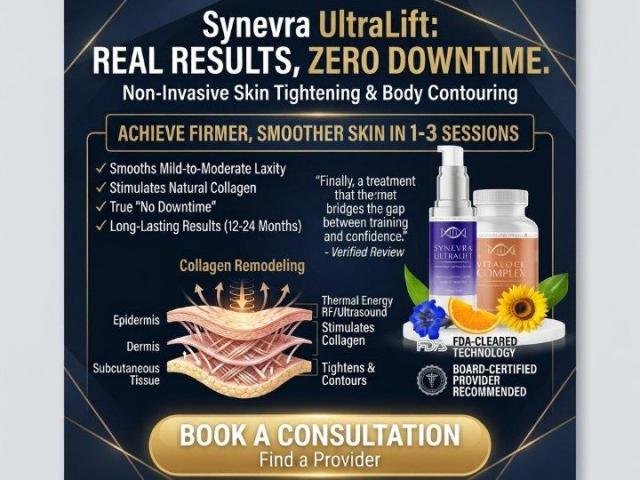
If you've been searching for a way to tighten skin and reshape your body without cutting into yourself, you've probably come across the name Synevra UltraLift. The promise is simple: visible firming and contouring with zero days off work. But does the treatment actually deliver on that promise, or is it just another glossy brochure?
I've spent years helping people build stronger, more confident bodies through training and movement. I also keep up with the non-invasive aesthetic technologies that clients ask me about in the gym. That background helps me separate marketing language from what the technology can realistically do. This review walks through what Synevra UltraLift is, how it works, what you can (and can't) expect, who it fits, and who should look elsewhere.
Quick Answer
Synevra UltraLift is a non-invasive body contouring and skin-tightening treatment that uses thermal energy to stimulate collagen remodeling. Most patients report mild, short-lived redness with no true "downtime." Results build over 8–12 weeks. It works best for mild-to-moderate skin laxity, not for significant fat loss or surgical-grade lifting. Book a consultation to confirm candidacy.
Learn more about Synevra UltraLift and see if it's the right addition to your beauty routine.
 What Is Synevra UltraLift? (Specs at a Glance)
Before I get into the details, here's a quick reference table. Because Synevra UltraLift is offered through specific clinics, some details vary by location. I've marked items you should confirm at your consultation.
Important: The table above reflects what non-invasive thermal body-contouring treatments generally offer. Confirm every line with your specific Synevra provider before booking. Ask to see the device's FDA clearance letter and the exact indication it's approved for.
Learn more about Synevra UltraLift and see if it's the right addition to your beauty routine.
How the Technology Works
Synevra UltraLift delivers controlled thermal energy deep into the dermis and subcutaneous tissue. Here's the plain-English version of what happens under your skin:
-
Heat reaches the target layer. The device's energy (whether radiofrequency, focused ultrasound, or a combination) heats tissue to roughly 40–45 °C (104–113 °F) at a depth of 1–4 mm, depending on the setting.
-
Collagen fibers contract. Existing collagen tightens almost immediately, giving a subtle "snap" you might notice in the mirror the same day.
-
New collagen is triggered. The controlled thermal injury signals fibroblasts to produce fresh collagen and elastin over the following weeks. This is the phase that creates the gradual, progressive firming.
-
Subcutaneous tissue remodels. In areas with mild fat pockets, the heat can encourage a small reduction in fat-cell volume, though this is modest compared to surgical liposuction.
The key word is stimulate. The treatment doesn't remove tissue the way a scalpel does. It coaxes your own biology to rebuild. That's why results are gradual and why the "no downtime" claim is accurate for most people—but also why you won't walk out looking like you had a facelift.
Research on radiofrequency and focused-ultrasound skin tightening consistently shows that multiple sessions produce more noticeable change than a single one. A systematic review published in the Journal of Cosmetic and Laser Therapy found that multi-session RF protocols yielded statistically greater improvements in skin elasticity than single-session treatments .
What to Expect: The Realistic Timeline
This is where marketing photos and actual biology diverge. Here's a week-by-week picture based on how thermal collagen remodeling works:
Coach's Tip: Treat the 12-week window like a training block. You wouldn't expect a new strength program to show full results in two weeks. Give the collagen the time it needs. Take "before" photos in the same lighting at week 0, week 6, and week 12 so you can track real change rather than relying on how you feel in the mirror.
Learn more about Synevra UltraLift and see if it's the right addition to your beauty routine.
Who Should Book Synevra UltraLift?
The treatment fits a specific profile. You're a good candidate if:
-
You have mild-to-moderate skin laxity (think: post-pregnancy belly, a few pounds of "looseness" after weight loss, early age-related sagging).
-
Your BMI is in the normal-to-slightly-overweight range. The technology works on skin and shallow tissue, not on large volumes of fat.
-
You want no surgical incisions, no general anesthesia, no week of recovery.
-
You're willing to commit to 1–3 sessions and a 12-week results window.
-
You maintain a reasonably active lifestyle and protect your skin from chronic sun damage.
 You should skip Synevra UltraLift (or at least not start here) if:
-
You have significant excess skin after major weight loss (100+ lb / 45+ kg). A body-contouring surgeon can tell you whether excisional surgery is the more appropriate path.
-
You expect a dramatic, overnight change. Non-invasive thermal treatments are incremental.
-
You're pregnant, nursing, or have a pacemaker, metal implants in the treatment area, active skin infection, or a history of keloid scarring. Check with your doctor first.
-
You have uncontrolled diabetes, poor circulation, or a bleeding disorder. Thermal treatments carry elevated risk in these cases.
Safety note: If you have any chronic medical condition, are on blood thinners, or are over 65, talk to your primary-care physician or a board-certified dermatologist before booking any thermal skin treatment. This article is for general information and is not a substitute for advice from a doctor or physical therapist.
Pros and Cons
Common Mistake to Avoid
Common Mistake: Booking the first clinic that shows a dramatic "before and after" photo on Instagram. Those images are often of ideal candidates (younger skin, lower BMI, single treatment area) or are taken at the 12-week peak under flattering lighting. Fix: Ask to see a video of a real patient at 4 weeks and 12 weeks. Ask how many sessions that person had. Ask what their starting skin condition was. A reputable provider will show you unedited, multi-timepoint results and will tell you honestly whether your skin is a good candidate.
Synevra UltraLift vs. Other Options
If you're comparing your choices, here's how UltraLift stacks up against other non-invasive and minimally invasive options:
No single technology is "best." The right choice depends on your specific anatomy, goals, budget, and tolerance for recovery. A good aesthetic provider will map your concerns to the technology that actually addresses them—not the one with the highest price tag.
Learn more about Synevra UltraLift and see if it's the right addition to your beauty routine.
 How to Prepare for Your Session
You don't need a week of prep, but a few steps make the experience smoother:
-
Skip alcohol and blood-thinning supplements (high-dose fish oil, vitamin E, aspirin) for 48 hours before. This reduces the chance of small bruises.
-
Moisturize the area the night before. Well-hydrated skin conducts energy more evenly.
-
Wear loose, breathable clothing. You'll go in and out of the treatment area, and the skin will be warm.
-
Hydrate well the day before and the day of.
-
Bring a photo of the area you want treated, taken in natural light, so you and your provider are looking at the same reference.
-
Ask about the device settings (energy level, depth, number of passes). You're allowed to ask. A transparent provider will explain them.
Post-Treatment Care
The "no downtime" claim holds up if you follow basic aftercare:
-
First 24 hours: Avoid hot showers, saunas, intense cardio, and direct sun on the treated area. The skin is more sensitive.
-
Days 2–7: Gentle movement is fine. A walk, light cycling, or upper-body lifting (if the treatment was on your abdomen) is all good. Avoid direct sun and use SPF 30+ if the area is exposed.
-
Weeks 2–12: This is your "collagen window." Stay consistent with:
-
Resistance training 2–3 days per week to support overall tissue health.
-
Adequate protein intake (roughly 0.7–1 g per lb of body weight / 1.5–2.2 g per kg) to give fibroblasts the amino acids they need. Research on protein and collagen synthesis is well established in theJournal of the American College of Nutrition.
-
Sleep: Aim for 7–9 hours. Growth hormone release during deep sleep supports tissue repair, and poor sleep is linked to increased skin aging markers, according to research reviewed by theNational Institutes of Health.
-
Sun protection: UV degrades the very collagen the treatment is trying to build.
Coach's Tip: Don't stop training because you had a skin treatment. In fact, gentle-to-moderate resistance work in the 48 hours after your session (avoiding direct compression of the treated zone) promotes blood flow and nutrient delivery to the remodeling tissue. Just skip heavy loading of the specific area for about a week.
What Results Can You Realistically Expect?
Let's be direct: Synevra UltraLift is not a body-transformation tool. Here's what the evidence on thermal skin-tightening technologies tells us:
-
Skin elasticity may improve by a measurable but modest amount (typically 5–15% in clinical studies on RF and ultrasound devices) .
-
Perimeter reduction (measuring the treated area with a tape measure) in the abdomen or thighs tends to be 1–3 cm (0.4–1.2 in) after a full course of sessions.
-
Patient satisfaction in published studies on non-invasive body contouring generally lands in the 70–85% "satisfied or very satisfied" range, with the caveat that expectations heavily influence that number.
-
Results are not permanent. Collagen continues to break down with age, sun exposure, and lifestyle factors. A maintenance session every 12–18 months helps, as does a consistent training and nutrition routine.
If your goal is to lose 20 pounds of fat, no skin-tightening device will do that. If your goal is to tighten the last 5% of "looseness" after you've already trained and eaten your way to a leaner body, this is where a non-invasive option can help.
Cost and What to Ask at Your Consultation
Pricing for Synevra UltraLift varies by clinic, city, and how many areas you're treating.When you book your consultation (which should be free or low-cost), ask these questions:
-
What exact device is being used, and what is its FDA clearance number?
-
How many passes and what energy settings will you use for my skin type and thickness?
-
How many sessions do you recommend, and why?
-
What is the total out-of-pocket cost, and is there a package discount?
-
Can I see unedited, multi-timepoint results from patients with a similar starting point?
-
What is your cancellation and rescheduling policy?
-
What happens if I'm not satisfied after the full course? Is there a follow-up or adjustment?
A provider who hesitates to answer any of these is a yellow flag.
 Is Synevra UltraLift Safe?
Non-invasive thermal treatments have a strong safety profile when performed by a trained provider on an appropriate candidate. The most common side effects are:
-
Transient redness or warmth (resolves in hours to a day)
-
Mild swelling
-
Temporary skin sensitivity
Serious complications (burns, blistering, uneven results) are rare but can occur if the device is misused, the wrong settings are applied to your skin type, or the provider lacks proper training.
To minimize risk:
-
Confirm the provider is board-certified (dermatology, plastic surgery, or a recognized aesthetic medicine credential).
-
Make sure the device is FDA-cleared for the specific indication you're treating.
-
Disclose all medications, supplements, and medical history at your consultation.
-
Avoid the treatment if you have active skin conditions, recent sunburn, or are on photosensitizing medications.
TheAmerican Academy of Dermatology provides patient-facing information on non-invasive skin procedures and how to evaluate a provider's credentials.
Learn more about Synevra UltraLift and see if it's the right addition to your beauty routine.
Who Should NOT Book This Treatment
To be clear, Synevra UltraLift is not the right first step for:
-
Pregnant or breastfeeding individuals. Thermal energy near the abdomen is contraindicated.
-
People with pacemakers, defibrillators, or metal implants in the treatment zone.
-
Individuals with active skin infections, open wounds, or unhealed scars in the area.
-
Those with a history of keloid or hypertrophic scarring (the thermal stimulus can trigger excessive scarring).
-
Anyone with unrealistic expectations of a surgical-level result from a non-invasive device.
If any of the above applies, talk to your doctor before proceeding. This article is for general information and is not a substitute for advice from a doctor or physical therapist.
Alternatives Worth Considering
If, after your consultation, you decide UltraLift isn't the right fit, here are other paths:
-
RF microneedling (Morpheus8, Potenza): Combines microneedling with RF for texture + tightening. Slightly more downtime (1–2 days) but addresses surface texture better.
-
HIFU / Ultherapy: Deeper energy for more "lift" in the face and neck. One session, higher cost.
-
EmSculpt NEO: Targets muscle hypertrophy and mild fat reduction. Good if your goal is more "tone" than "tightness."
-
Cryolipolysis (CoolSculpting): Freezes and eliminates fat cells. Best for defined fat pockets, not skin laxity.
-
Surgical options (VASER liposuction, tummy tuck, brachioplasty): For significant fat or excess skin. More downtime, more cost, but more dramatic results.
A good provider will tell you if a different technology or a combination of technologies would serve you better. That's a sign of honesty.
FAQ
How long do Synevra UltraLift results last?
Results typically last 12 to 24 months, depending on your age, sun exposure, weight stability, and overall skin health. Maintaining a consistent resistance-training routine, adequate protein intake, and daily sun protection helps preserve the collagen the treatment stimulates. A maintenance session can extend the timeline.
Is Synevra UltraLift safe for all skin tones?
Most modern RF and ultrasound devices are safe across a range of Fitzpatrick skin types, but you should confirm with your provider that the specific device and settings are validated for your skin tone. Darker skin has more melanin, which can absorb more surface energy and increase the risk of post-inflammatory hyperpigmentation if settings aren't adjusted.
Can I work out the same day as my UltraLift session?
Light activity (walking, gentle upper-body work if the treatment was on your lower body) is generally fine. Avoid intense cardio, heavy loading of the treated area, saunas, and hot showers for 24–48 hours. The skin is more thermally sensitive in that window.
How many sessions do I need for Synevra UltraLift?
Most providers recommend 1 to 3 sessions spaced 4 to 6 weeks apart. The exact number depends on your starting skin condition, the area treated, and your goals. A single session can produce a subtle change; two to three sessions build on the collagen remodeling for a more noticeable result.
Does Synevra UltraLift actually reduce fat?
It is not a primary fat-removal treatment. The thermal energy may cause a small reduction in subcutaneous fat-cell volume in the treated zone, but the effect is modest. If your main goal is fat loss, combine the treatment with a consistent calorie-managed nutrition plan and regular resistance and cardio training. No non-invasive device replaces the energy balance that drives fat loss.
Learn more about Synevra UltraLift and see if it's the right addition to your beauty routine.
What should I do if I'm not satisfied with my results?
Give the full 12-week collagen window before judging results. If you're still unsatisfied, return to your provider for a follow-up assessment. They may recommend an additional session or a complementary treatment. If the provider is unresponsive, you can seek a second opinion from another board-certified aesthetic provider.
Final Verdict: Should You Book Synevra UltraLift?
Here's my straight answer, coach to client:
Book it if you have mild-to-moderate skin laxity, you've already done the hard work of training and nutrition, you want a subtle refinement without surgery, and you're comfortable with a 12-week results window. It's a low-risk, low-downtime option that can close that last gap between "I've lost the weight" and "I feel confident in the mirror."
Don't book it if you're looking for a dramatic transformation, you have significant excess skin, you want results by Friday, or you haven't yet built the training and nutrition habits that support long-term body composition. No skin-tightening device compensates for a sedentary routine and poor diet. The collagen it stimulates will degrade faster if the rest of your lifestyle isn't supporting it.
Before you book: Get a free or low-cost consultation. Bring your questions. Ask to see the FDA clearance. Look at real, multi-timepoint patient results. Confirm the total cost for your full recommended course. And make sure the provider is board-certified and transparent about what the technology can and can't do.
Sources
-
U.S. Food and Drug Administration. "Noninvasive Body Contouring Devices." FDA Consumer Information. current URL:https://www.fda.gov/medical-devices/consumers/noninvasive-body-contouring-devices
-
American Academy of Dermatology. "Non-Invasive Skin Treatments: What to Know." AAD Patient Education. [ current URL:https://www.aad.org/public/diseases/a-z]
-
National Institutes of Health / National Heart, Lung, and Blood Institute. "Sleep and Skin Health." NIH Health Information.
-
Journal of the American College of Nutrition. Protein intake and collagen synthesis in adults.
-
American Society for Aesthetic Plastic Surgery (ASAPS). "Patient Education: Non-Surgical Body Contouring." ASAPS Patient Resources.
-
Journal of Cosmetic and Laser Therapy. Systematic review of radiofrequency for skin tightening.
-
National Institutes of Health. "Physical Activity Guidelines for Americans" (HHS).https://health.gov/physical-activity/
-
Mayo Clinic. "Skin-tightening treatments: Are they right for you?"
Learn more about Synevra UltraLift and see if it's the right addition to your beauty routine.
Useful information
- Avoid scams by acting locally or paying with PayPal
- Never pay with Western Union, Moneygram or other anonymous payment services
- Don't buy or sell outside of your country. Don't accept cashier cheques from outside your country
- This site is never involved in any transaction, and does not handle payments, shipping, guarantee transactions, provide escrow services, or offer "buyer protection" or "seller certification"
Related listings
-
 CaviArgan Anti-Aging Facial Moisturizer Review: Does This Argan Oil & Caviar Retinol Cream Deliver?Healthy Skin Glow - Hempstead (New York) - November 11, 2026 49.00 $
If you've been scrolling through skincare aisles or online stores trying to find one jar that handles hydration, fine lines, and evening cell turnover without a ten-step routine, the CaviArgan Anti-Aging Facial Moisturizer – Organic Argan Oil &...
-
 SynoGut Digestive Health Support – Advanced Gut Health & Probiotic Supplement: A Coach's Honest ReviHealthy Skin Glow - Phoenix (Arizona) - November 10, 2026 49.00 $
If you've been dealing with occasional bloating, irregular digestion, or that unsettled feeling after meals, you've probably seen SynoGut Digestive Health Support pop up in your feed. This advanced gut health and probiotic supplement promises to supp...
-
 Derma Prime Plus – Clear Skin & Radiant Glow Formula: An Honest ReviewHealthy Skin Glow - Philadelphia (Pennsylvania) - November 3, 2026 49.00 $
Skin is the largest organ you have, and what you feed it from the inside plays a real role in how it looks and feels. Over the past few years, oral skincare supplements have moved from a niche wellness trend into a mainstream category, and Derma Prim...