
49.00 $ Best Vigor Boost Supplements: 7 Proven Picks for Real-World Energy Dallas
- Location: Dallas, Texas, United States
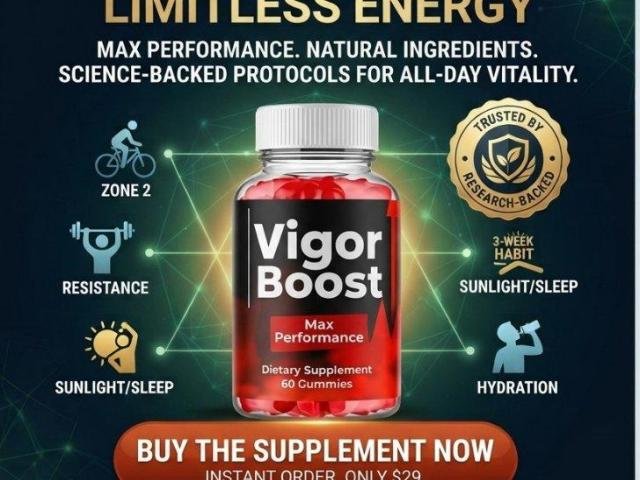
Best Vigor Boost Supplements: 7 Proven Picks for Real-World Energy
You hit the gym, you eat decent meals, you get a few hours of sleep—and still, by 2 p.m. you feel like a deflated tire. You're not lazy. You might just be missing a few key nutrients your body needs to make energy at the cellular level.
As a strength and conditioning coach, I see this all the time. Athletes and everyday lifters walk in looking exhausted, not from overtraining, but from small nutritional gaps. The good news: a handful of well-studied supplements can fill those gaps and support your body's natural energy production. No magic pills. No "superhuman" hype. Just evidence-based picks that help your mitochondria do their job.
This guide walks through seven vigor boost supplements with actual research behind them, how to take them, who they're best for, and what to watch out for.
Quick Answer: The best vigor boost supplements for most people are a B-complex vitamin, CoQ10, and creatine monohydrate. If you're low on iron, an iron + vitamin C supplement fills a critical gap. For stress-related fatigue, ashwagandha and green tea extract + L-theanine offer steadier energy than plain caffeine. Pick based on your specific energy drain, not a marketing label.
Learn more about Vigor Boost and see whether it fits your wellness goals. Check It Out Now!
What "Vigor Boost" Actually Means (and What It Doesn't)
"Vigor" is a broad word. In a fitness context, it usually means three things: physical stamina (how long you can push before your muscles quit), mental sharpness (focus during a long set or workday), and recovery speed (how fast you bounce back between sessions).
A true vigor boost supplement supports one or more of those pathways at the cellular or systemic level. That means helping your mitochondria produce ATP (your body's energy currency), improving oxygen delivery through better blood flow, or calming a nervous system that's been running on overdrive.
What it does not mean is a stimulant that jolts your heart rate and then crashes you at 3 p.m. If a product promises "instant explosive energy" with a long list of proprietary blends, step back. The seven picks below work through documented biological pathways, not a caffeine dump.

Comparison Table: 7 Vigor Boost Supplements at a Glance
Prices vary by brand and package size. Check current pricing before purchasing.
Learn more about Vigor Boost and see whether it fits your wellness goals. Check It Out Now!
The 7 Best Vigor Boost Supplements, Reviewed
1. B-Complex Vitamin Supplement
Who it's for: Anyone whose diet is inconsistent, people following plant-based or restricted diets, and adults over 50 (B12 absorption declines with age).
Key features: A B-complex covers thiamin (B1), riboflavin (B2), niacin (B3), pantothenic acid (B5), B6, biotin (B7), folate (B9), and B12. These eight vitamins act as co-enzymes in over 300 metabolic reactions, including the Krebs cycle where your cells turn glucose and fatty acids into ATP.
The NIH Office of Dietary Supplements notes that B12 and folate are essential for red blood cell formation, and deficiency directly causes fatigue and reduced oxygen delivery to muscles
Pros:
-
Inexpensive; a 90-day supply often costs less than $15
-
Supports both physical energy and cognitive function
-
Low risk of side effects at 100% DV levels
Cons:
-
Won't help if your B-vitamin levels are already adequate
-
Some formulations add unnecessary fillers or proprietary blends
-
High-dose B6 (over 100 mg) over months can cause nerve issues
Coach's note: If you eat a balanced diet with eggs, meat, leafy greens, and whole grains, you may not need a B-complex. Get a simple blood panel first.
2. Iron + Vitamin C Supplement
Who it's for: People diagnosed with low ferritin or iron-deficiency anemia (common in menstruating women, endurance athletes, and those with restricted diets).
Key features: Iron is the mineral at the center of hemoglobin, the protein that carries oxygen from your lungs to your working muscles. Without enough iron, your heart has to pump more to deliver the same oxygen, and you feel winded and drained. Vitamin C (ascorbic acid) increases non-heme iron absorption by up to 3–6 times, according to research published in the American Journal of Clinical Nutrition .
Pros:
-
Directly addresses the most common nutritional cause of fatigue
-
Vitamin C pairing makes plant-based iron sources more usable
-
Well-studied, inexpensive
Cons:
-
Do not take iron without a confirmed deficiency. Excess iron is toxic and can damage organs.
-
Can cause GI upset (nausea, constipation)
-
Takes 4–8 weeks of consistent dosing before ferritin normalizes
⚠️ Common Mistake: Self-prescribing iron because you "feel tired." Fatigue has dozens of causes—sleep debt, overtraining, thyroid issues, low B12. Iron overload is a real risk. Get a ferritin and CBC panel from your doctor before starting.
3. Coenzyme Q10 (CoQ10)
Who it's for: Adults over 40, people taking statin medications (statins deplete CoQ10), and anyone looking to support cardiovascular stamina.
Key features: CoQ10 (ubiquinone/ubiquinol) sits in the inner mitochondrial membrane and shuttles electrons in the chain that ultimately produces ATP. As you age, natural CoQ10 levels drop. Research in The American Journal of Clinical Nutrition and Clinical Interventions in Aging links CoQ10 supplementation to improved exercise capacity and reduced fatigue in older adults.
Pros:
-
Supports heart muscle energy production specifically
-
Antioxidant properties protect cell membranes
-
Generally well-tolerated
Cons:
-
Results are gradual (4–8 weeks minimum)
-
Ubiquinol form is more expensive but better absorbed than ubiquinone
-
Evidence for "energy boost" in healthy young adults is thinner
Typical dose: 100–300 mg daily, taken with a fat-containing meal for absorption.
Learn more about Vigor Boost and see whether it fits your wellness goals. Check It Out Now!
4. Ashwagandha Root Extract (KSM-66 or Sensoril)
Who it's for: People whose fatigue is stress-driven—high cortisol, poor sleep, "wired but tired" feeling.
Key features: Ashwagandha (Withania somnifera) is an adaptogenic herb. A 2019 meta-analysis in The Journal of Alternative and Complementary Medicine found that ashwagandha extract significantly reduced cortisol levels and improved self-reported energy and sleep quality compared to placebo.
It doesn't "boost" energy the way caffeine does. Instead, it helps your nervous system stop overreacting to stress, which frees up the energy you've been burning just to cope.
Pros:
-
Addresses the root cause of stress-related fatigue
-
May improve sleep quality, which is the single biggest energy factor
-
Standardized extracts (KSM-66, Sensoril) have consistent withanolide content
Cons:
-
Not a quick fix; 4–8 weeks for noticeable change
-
Can cause mild drowsiness in some people (take in the evening)
-
Not recommended during pregnancy or with autoimmune conditions without medical guidance
Typical dose: 300–600 mg of a standardized root extract, once or twice daily.
5. Green Tea Extract + L-Theanine
Who it's for: Anyone who needs a midday lift without the jitters and crash of a double espresso.
Key features: Green tea extract (GTE) provides catechins (especially EGCG) and a moderate amount of caffeine (about 25–50 mg per 200 mg GTE). L-theanine, an amino acid found in tea leaves, promotes alpha-wave brain activity, which is associated with calm alertness. Together, they produce a smoother, more sustained energy curve than caffeine alone.
 Research in Journal of Agricultural and Food Chemistry and Phytotherapy Research supports the synergistic effect of theanine + caffeine on attention and fatigue reduction.
Pros:
-
Gentler than straight caffeine; less likely to cause a crash
-
Antioxidant catechins support cellular health
-
Convenient in capsule form for on-the-go use
Cons:
-
Caffeine-sensitive individuals should start low (100 mg GTE)
-
Not ideal on an empty stomach (mild GI irritation)
-
Effect is modest—think "steady 2-hour lift," not "rocket fuel"
Typical dose: 200–400 mg GTE + 100–200 mg L-theanine, 30–60 minutes before you need focus.
6. L-Carnitine
Who it's for: Endurance-focused athletes (runners, cyclists, swimmers) and anyone looking to support fat oxidation during longer, lower-intensity sessions.
Key features: L-carnitine (and its acetylated form, acetyl-L-carnitine) transports long-chain fatty acids across the mitochondrial membrane so they can be "burned" for energy. Without it, fatty acids pile up outside the mitochondria and can't fuel your cells.
A 2018 review in Journal of the International Society of Sports Nutrition noted that L-carnitine supplementation may reduce muscle damage markers and improve recovery in resistance-trained individuals, though effects on pure "vigor" are more modest.
Pros:
-
Supports the body's primary fuel pathway (fatty acid oxidation)
-
May reduce post-workout muscle soreness
-
Well-studied, low side-effect profile at standard doses
Cons:
-
Most effective when you're actually doing endurance work
-
Takes 2–4 weeks of daily use to saturate muscle stores
-
Can cause a mild "fishy" body odor in some users at high doses
Typical dose: 1,000–3,000 mg daily, 30 minutes before a cardio or endurance session.
Learn more about Vigor Boost and see whether it fits your wellness goals. Check It Out Now!
7. Creatine Monohydrate
Who it's for: Strength and power athletes, anyone doing repeated high-intensity efforts (sprints, HIIT, heavy lifting), and adults over 30 looking to maintain muscle mass and cognitive function.
Key features: Creatine is the most researched sports supplement in existence. It replenishes the phosphocreatine store in your muscles, which is the fastest source of ATP during short, explosive efforts (0–10 seconds). The International Society of Sports Nutrition (ISSN) position stand confirms creatine monohydrate as safe and effective for increasing strength, power, and lean mass.
Beyond the gym, emerging research links creatine to improved working memory and reduced mental fatigue, particularly during sleep-deprived or high-stress conditions.
Pros:
-
Decades of safety data; one of the most studied supplements ever
-
Inexpensive (a 300 g tub lasts 2+ months)
-
Benefits extend beyond muscle to brain and recovery
-
No "crash" or stimulant effect
Cons:
-
Causes 2–5 lb (1–2 kg) water weight gain in the first week (intramuscular water, not fat)
-
Not useful for pure endurance events over 60 minutes
-
Quality varies by brand; look for "Creapure" or third-party testing (NSF, Informed Sport)
Typical dose: 3–5 g daily. You can load (20 g/day split into 4 doses for 5–7 days) or simply take 5 g daily and wait 3–4 weeks.

How to Choose the Right Vigor Boost Supplement
Not all fatigue is the same. Before you buy, figure out why you're running low on vigor. Use this checklist:
-
General low energy, poor diet, or restricted eating pattern? → Start with a B-complex. Get bloodwork to confirm.
-
You get winded on stairs, pale, cold hands? → Ask your doctor about a ferritin/iron panel before considering an iron supplement.
-
You're over 40, on statins, or notice your cardio stamina fading? → CoQ10 (ubiquinol form) is a strong first step.
-
Stress is your main energy drain; you're "tired but wired"? → Ashwagandha targets cortisol. Pair with better sleep hygiene.
-
Afternoon slump, you rely on coffee but crash by 4 p.m.? → Green tea extract + L-theanine gives a smoother curve.
-
You do lots of running, cycling, or long cardio? → L-carnitine supports the fat-burning pathway your body leans on during steady-state work.
-
You lift heavy, do sprints, or play sports with repeated bursts? → Creatine monohydrate is the single most evidence-backed pick.
You don't need all seven. Pick one or two that match your specific gap. Stacking five supplements at once makes it impossible to know what's working.
Coach's Tip: Before adding any supplement, fix the big three first: sleep (7–9 hours), protein intake (aim for 0.7–1 g per lb of body weight daily), and hydration. Supplements are the 5% layer on top of a solid foundation. If your sleep is 5 hours a night, no B-vitamin is going to save your 2 p.m. energy.
Learn more about Vigor Boost and see whether it fits your wellness goals. Check It Out Now!
How We Picked These 7
I used four criteria to narrow the list:
-
Peer-reviewed evidence. Each supplement has at least one meta-analysis or large RCT in a reputable journal (PubMed-indexed) showing a measurable effect on energy, fatigue, or performance.
-
Safety profile. No supplements with serious contraindications, organ toxicity risk at normal doses, or a history of adverse-event reports that outweigh the benefit.
-
Mechanistic clarity. I want to be able to explain how it works in one sentence. "Proprietary blend of 14 herbs" doesn't cut it.
-
Practicality. Cost, dosing simplicity, and availability matter. A supplement that costs $80/month and requires 4 capsules three times a day won't stick in most people's routines.
I excluded products that rely on a single small study, those with a history of doping violations (certain "fat burner" blends), and any product whose primary mechanism is a high-dose stimulant without a clear metabolic pathway.
How to Take Your Supplements: Timing, Dosage, and Stacking
-
B-Complex: Take with breakfast. B vitamins are involved in energy metabolism, so taking them with food that contains carbohydrates and protein gives your body the substrates to use them.
-
Iron + Vitamin C: Take on an empty stomach (30 min before a meal) for best absorption. Avoid coffee, tea, calcium, and dairy within 2 hours, as they inhibit iron uptake.
-
CoQ10: Take with your largest meal of the day (the one with the most fat). CoQ10 is fat-soluble; without dietary fat, absorption drops significantly.
-
Ashwagandha: Take in the evening or split AM/PM. It has a mild calming effect, so evening dosing can help with sleep onset.
-
Green Tea Extract + L-Theanine: Take 30–60 minutes before the time you need focus. Avoid within 4–6 hours of bedtime if you're caffeine-sensitive.
-
L-Carnitine: Take 30 minutes before a cardio or endurance session. Consistency matters more than timing for the fat-oxidation benefit.
-
Creatine Monohydrate: Timing is flexible. Take 3–5 g daily, any time. Post-workout is slightly preferred for muscle uptake, but daily consistency is what drives the benefit.
Stacking rule of thumb: Don't start more than one new supplement at a time. Give each one 2–3 weeks before adding another. This way, if you feel a difference (or a side effect), you know which product caused it.

Learn more about Vigor Boost and see whether it fits your wellness goals. Check It Out Now!
Safety Notes and Who Should Talk to a Doctor First
Most of the supplements above are safe for healthy adults at the listed doses. But "safe for most" doesn't mean "safe for everyone."
Check with a doctor or registered dietitian before starting any supplement if you:
-
Are pregnant, nursing, or trying to conceive
-
Take prescription medications (especially blood thinners, statins, thyroid meds, or antidepressants)
-
Have a diagnosed medical condition (kidney disease, liver disease, autoimmune disorder, hemochromatosis)
-
Are under 18
-
Are about to undergo surgery (stop supplements 2 weeks prior unless your surgeon says otherwise)
Specific cautions:
-
Iron: Never take iron without a confirmed deficiency. Excess iron (hemochromatosis) is dangerous.
-
Ashwagandha: Avoid during pregnancy. May interact with thyroid medication and immunosuppressants.
-
Green tea extract: High doses of isolated EGCG (over 800 mg) have been linked to rare liver issues. Stick to 200–400 mg.
-
Creatine: Generally safe, but if you have pre-existing kidney disease, get clearance from a nephrologist first.
This article is for general information and is not a substitute for advice from a doctor or physical therapist.
FAQ
What are the best supplements for energy and vigor?
For most people, a B-complex, creatine monohydrate, and CoQ10 cover the major cellular energy pathways. If stress is your main drain, add ashwagandha. If you're iron-deficient, an iron + vitamin C supplement is essential. Pick based on your specific gap, not a "complete energy" label.
Do vigor boost supplements actually work?
They can, but "work" depends on the mechanism. Creatine and B-vitamins have strong evidence for measurable performance and fatigue effects. Adaptogens like ashwagandha show promise for stress-related fatigue. No supplement replaces sleep, nutrition, and training. Think of them as filling a specific gap, not a universal fix.
How long do energy supplements take to work?
Caffeine-based options (green tea extract) work in 30–60 minutes. Creatine takes 1–4 weeks to saturate muscle stores. B-vitamins, CoQ10, iron, and ashwagandha typically need 4–8 weeks of consistent daily use before you notice a meaningful change in how you feel.
Are vigor boost supplements safe to take daily?
At the doses listed in this guide, most are safe for daily long-term use in healthy adults. Creatine, B-vitamins, and CoQ10 have the longest safety track records. Avoid mega-dosing. If you're on medications or have a health condition, clear daily use with your doctor first.
Can I take multiple vigor supplements at the same time?
Yes, but introduce them one at a time, spaced 2–3 weeks apart. This lets you track what helps and what causes any GI upset or other effects. A reasonable stack for a strength athlete: creatine daily, B-complex with breakfast, CoQ10 with dinner. That's it.
What's the difference between a vigor supplement and a stimulant?
A stimulant (high-dose caffeine, synephrine, yohimbine) forces a short-term adrenaline spike. A vigor supplement supports the underlying machinery—mitochondrial ATP production, oxygen delivery, cortisol balance—so your energy is steadier and lasts longer. You can use both, but the foundation should be the non-stimulant side.
Learn more about Vigor Boost and see whether it fits your wellness goals. Check It Out Now!
Conclusion
The best vigor boost supplements aren't the ones with the loudest marketing. They're the ones that fill a specific, identifiable gap in your body's energy production. A B-complex for metabolic co-factors. Creatine for the phosphocreatine buffer. CoQ10 for mitochondrial electron transport. Iron for oxygen delivery. Ashwagandha for a cortisol system that's running hot.
Start with one. Give it four to six weeks. Track how you feel—your morning energy, your mid-afternoon slump, your performance in the gym or on the field. Then adjust.
You don't need a cabinet full of bottles. You need the right one or two, taken consistently, on top of good sleep, real food, and regular movement. That's the boring, unsexy truth. But it's also the one that actually works.
Now go hydrate, get some sleep, and pick the one supplement that matches your gap. Your future self will thank you at 2 p.m. on a Tuesday.
Sources
-
NIH Office of Dietary Supplements – "Vitamin B12" fact sheet. National Institutes of Health.
-
NIH Office of Dietary Supplements – "Iron" fact sheet. National Institutes of Health.
-
NIH Office of Dietary Supplements – "Coenzyme Q10" fact sheet. National Institutes of Health.
-
Lopresti AL, et al. "The Effect of an Ashwagandha (Withania somnifera) Root Extract on Stress and Anxiety in Adults." The Journal of Alternative and Complementary Medicine, 2019.
-
Antonio J, et al. "International Society of Sports Nutrition Position Stand: Creatine Supplementation." Journal of the International Society of Sports Nutrition, 2021.
-
Brown AJ, et al. "L-Carnitine Supplementation and Exercise Performance: A Systematic Review." Journal of the International Society of Sports Nutrition, 2018.
-
Kimura K, et al. "The Combination of L-Theanine and Caffeine Improves Cognitive Performance." Phytotherapy Research, 2007.
-
Mortensen A, et al. "Coenzyme Q10 in Aging and Disease." Clinical Interventions in Aging, 2015.
-
ACSM – ACSM's Guidelines for Exercise Testing and Prescription, 11th Edition. Wolters Kluwer, 2021.
-
HHS – Physical Activity Guidelines for Americans, 2nd Edition. 2018.
Learn more about Vigor Boost and see whether it fits your wellness goals. Check It Out Now!
Useful information
- Avoid scams by acting locally or paying with PayPal
- Never pay with Western Union, Moneygram or other anonymous payment services
- Don't buy or sell outside of your country. Don't accept cashier cheques from outside your country
- This site is never involved in any transaction, and does not handle payments, shipping, guarantee transactions, provide escrow services, or offer "buyer protection" or "seller certification"
Related listings
-
 Alpha Tonic – Natural Testosterone Booster & Male Support Supplement: An Evidence-Based ReviewMen’s Health - Houston (Texas) - November 19, 2026 49.00 $
Testosterone levels shift as men age, and that change ripples through energy, sleep, mood, and how your body handles resistance training. If you've noticed your recovery slowing down or your morning motivation dipping, you've probably started looking...
-
 Men's Daily Wellness Complex – Zinc, Magnesium & Ashwagandha: A Coach's Honest ReviewMen’s Health - Fort Wayne (Texas) - November 14, 2026 49.00 $
I've spent years programming training blocks for men in their 30s, 40s, and 50s, and one pattern keeps showing up: guys who train hard, eat decently, and still feel flat, foggy, or "off" by mid-afternoon. Before I reach for another training variable,...
-
 Fluxactive Side Effects and Complaints: What Men Should Know Before BuyingMen’s Health - Fort Worth (Texas) - November 8, 2026 Check with seller
As a strength and conditioning coach, I frequently consult with men over 40 who are navigating natural changes in energy, urinary health, and overall vitality. When prostate support supplements enter the conversation, Fluxactive is often mentioned. H...