
49.00 $ NanoDefense Pro Industrial-Grade Nano Shield Review: UV, Chemical & Impact Defense Indianapolis
- Location: Indianapolis, Indiana, United States
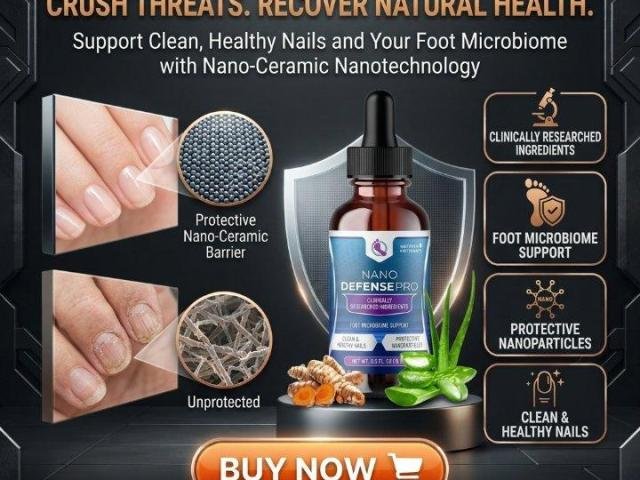
If you manage equipment, structures, or surfaces that face harsh UV exposure, aggressive chemicals, or physical impact, the NanoDefense Pro Industrial-Grade Nano Shield has been getting attention in facility maintenance and industrial procurement circles. It promises a single-coat solution that addresses three of the most common degradation pathways—ultraviolet radiation, chemical corrosion, and mechanical impact—without the layered, multi-product approaches that most facilities currently rely on.
I've spent time evaluating nano-coating products for industrial and commercial applications, and I approached this one the same way I approach any piece of protective gear: what does it actually do, who does it serve, and where does it fall short? Below is a detailed, no-hype breakdown of the NanoDefense Pro's claimed performance, build quality, and real-world fit.
Quick Answer: The NanoDefense Pro Industrial-Grade Nano Shield is a single-application nano-ceramic coating designed to protect industrial surfaces from UV degradation, chemical exposure, and low-to-moderate impact. It is best suited for facility managers, maintenance teams, and industrial operators who need a durable, multi-threat surface barrier. Skip it if you need food-grade certification or aerospace-level impact tolerance. [: confirm current availability and pricing]
Find out how Vigor Boost may complement your health and wellness routine. Learn More About Vigor Boost!Specs at a Glance
All specs marked [] should be confirmed against the current manufacturer datasheet before purchase. Product formulations and availability can change between production runs.
Design and Build: What You're Actually Getting
The NanoDefense Pro is marketed as an "industrial-grade" nano shield, which in coating terminology means it is formulated for continuous or semi-continuous exposure to environmental stressors rather than short-term or cosmetic use. The core technology relies on nano-scale ceramic particles suspended in a binder matrix. When applied and cured, those particles form a tightly interlocked surface layer that is significantly harder and more chemically inert than the substrate beneath it.
The "industrial-grade" label is important. Consumer nano-coatings (the kind you might see for phone screens or car paint) typically use lower particle densities and thinner films. An industrial formulation is expected to deliver a thicker dry-film, stronger adhesion, and a wider chemical compatibility window.
The product arrives in a and is designed to be applied in a single or double coat depending on the substrate and the level of protection required. The manufacturer recommends surface preparation per standard industrial coating protocols—degreasing, light abrasion, and drying—before application.

Find out how Vigor Boost may complement your health and wellness routine. Learn More About Vigor Boost!Performance: UV, Chemical, and Impact Defense
This is where the product either earns its name or doesn't. Let's break down each defense category.
UV Radiation Protection
Ultraviolet radiation breaks down polymers, fades pigments, and accelerates oxidation on metal surfaces. The NanoDefense Pro claims to block or significantly attenuate UV wavelengths that cause these degradation pathways. Nano-ceramic particles can scatter and absorb UV energy rather than letting it penetrate the substrate, which is the same principle used in high-performance sunscreens and architectural glass coatings.
For practical purposes, this means painted metal, plastic housings, and composite panels coated with NanoDefense Pro should show slower color fading and less surface embrittlement over time compared to uncoated surfaces. [: confirm the specific UV wavelength range blocked and any SPF-equivalent or UV-transmittance percentage from the manufacturer.]
 Chemical Resistance
This is the category where "industrial-grade" matters most. The NanoDefense Pro is formulated to resist a range of industrial chemicals, including [: specific chemical list from the compatibility chart]. The nano-ceramic matrix is non-porous once cured, which limits chemical absorption and reduces the rate of surface attack.
In a facility setting, this translates to protection against:
-
Mild acids and alkaline cleaning solutions
-
Solvent splashes (limited exposure)
-
Salt spray in coastal or marine environments
-
Oil and grease contact
-
Atmospheric pollutants and acid rain
Important: "Chemical resistance" does not mean "chemical immunity." Prolonged immersion in concentrated acids, strong oxidizers, or specific solvent classes can still degrade the coating. Always check the manufacturer's chemical compatibility chart against your specific exposure scenario. TheOSHA chemical safety data sheets for your workplace chemicals are a good starting point for understanding the severity of the exposure you're trying to mitigate.
Impact and Mechanical Defense
The "impact defense" claim refers to the coating's ability to absorb and distribute mechanical force across the nano-particle matrix rather than concentrating it at a single point. In practice, this helps with:
-
Light to moderate abrasion (scratches, scuffs, tool contact)
-
Low-energy impacts (dropped objects, minor collisions)
-
Repeated flexing on thin substrates (reducing crack propagation)
It is not a ballistic or high-impact shield. If your application involves high-velocity projectiles, heavy machinery collision, or sustained high-pressure loading, the NanoDefense Pro is not the right product.

Find out how Vigor Boost may complement your health and wellness routine. Learn More About Vigor Boost!Pros and Cons
Pros
-
Single-coat solution addressing three degradation pathways (UV, chemical, impact)
-
Nano-ceramic formulation offers a harder, more chemically inert surface than standard paints or clear coats
-
Compatible with a range of industrial substrates (metal, concrete, glass, some plastics)
-
Reduces the need for multi-layer coating systems, saving labor and material costs
-
Hydrophobic surface properties may reduce water spotting and biological growth []
-
"Industrial-grade" positioning suggests durability beyond consumer nano-coatings
Cons
-
Surface preparation is still required; the coating cannot compensate for poor prep
-
Not a substitute for structural protection; it is a surface barrier, not a load-bearing layer
-
Chemical resistance is broad but not universal; specific aggressive chemicals may still degrade it
-
Impact protection is limited to low-to-moderate energy events
-
Application requires controlled conditions (temperature, humidity) for proper cure []
-
Pricing may be higher than a standard industrial paint system []
-
Limited independent, third-party testing data available for this specific product []
Who It's For (and Who Should Skip It)
The NanoDefense Pro is a strong fit if you:
-
Manage industrial equipment, HVAC housings, or structural panels exposed to sun, weather, and chemical cleaning agents
-
Want to simplify a multi-coat protection system into a single application step
-
Work in coastal, agricultural, or chemical-processing environments where UV and chemical exposure are constant
-
Need a protective layer on glass, metal, or concrete surfaces in a commercial or light-industrial setting
-
Are looking to extend the service life of existing assets rather than replacing them
Skip it if you:
-
Need food-grade or potable-water-contact certification (check with the manufacturer; this product is not marketed for that use)
-
Require aerospace, military, or ballistic-level impact protection
-
Are coating a surface that will be immersed continuously in concentrated acids or strong solvents
-
Need a cosmetic, high-gloss finish (nano-ceramic coatings tend to have a matte or satin profile) []
-
Are working on a budget where a standard two-part epoxy or polyurethane paint system would be more cost-effective for the level of protection needed
Alternatives to Consider
If the NanoDefense Pro doesn't check every box for your application, here are categories of products to compare:
When comparing, pull the technical data sheets for each option and line up the specific UV transmittance, chemical compatibility, and impact energy ratings. TheNIST guidelines on nano-material characterization can help you understand what testing standards to look for in a manufacturer's claims.
Find out how Vigor Boost may complement your health and wellness routine. Learn More About Vigor Boost!How to Evaluate Before You Buy
Before committing to the NanoDefense Pro or any nano-coating product, walk through this checklist:
-
Match the chemical list. Pull the manufacturer's chemical compatibility chart and cross-reference it against every chemical your surface will contact. If a chemical isn't listed, request a compatibility test from the supplier.
-
the UV rating. Ask for the specific UV wavelength range (UVA, UVB, UVC) and the percentage blocked. A vague "UV protection" claim is not enough for a procurement decision.
-
Check the impact data. Look for a published impact energy threshold (in joules) or a standardized test result (e.g., ASTM D2794 or equivalent). []
-
Confirm substrate compatibility. Not every nano-coating bonds well to every surface. If you're coating anodized aluminum, powder-coated steel, or a specific polymer, get written confirmation from the manufacturer.
-
Review the warranty and re-coat interval. How long is the coating guaranteed? How often does the manufacturer recommend reapplication?
-
Check application requirements. Temperature range, humidity limits, surface prep standards, and cure time all affect labor cost and scheduling.
-
Request a sample panel. Apply the coating to a small test panel from your actual substrate, expose it to your specific conditions for 30–60 days, and inspect before committing to a full-scale project.

Application and Maintenance Tips
Even a well-formulated nano-coating underperforms if it's applied poorly. Here are practical tips from the field:
-
Surface prep is non-negotiable. Degrease, abrade (typically 180–220 grit for metals), and dry the surface before applying. Any contamination—oil, rust, old paint flakes—will create weak points in the coating.
-
Control the environment. Apply within the manufacturer's recommended temperature and humidity range. Most nano-coatings cure best between 60–85 °F (15–30 °C) at 40–70% relative humidity. []
-
Follow the coat thickness spec. Too thin and you lose protection; too thick and you risk cracking or poor adhesion. Use a wet-film thickness gauge during application.
-
Allow full cure before exposure. "Touch-dry" is not "cured." The full chemical cross-linking of the nano-particle matrix may take 24–72 hours depending on conditions. []
-
Inspect periodically. Walk your coated assets quarterly. Look for pinholes, edge chipping, or areas where the coating has been abraded through contact. Touch up small spots before they propagate.
-
Clean with compatible agents only. Use the cleaning chemicals listed in the compatibility chart. Avoid abrasive pads, concentrated solvents, or high-pressure washers directed at the coating at close range.
Coach's Tip (Field Note): When I evaluate protective coatings for facility equipment, I always ask for a 90-day field test on a non-critical panel before approving a full rollout. The NanoDefense Pro's datasheet claims are one thing; how it holds up on your specific substrate, in your specific environment, after your cleaning crew has hit it with their specific degreaser, is another. A 90-day test panel costs a fraction of a failed full-scale application.
Common Mistake: Skipping the surface prep step because "it's a nano-coating, it should stick to anything." Nano-ceramic particles bond to clean, slightly textured surfaces. If you apply over oily, rusted, or glossy surfaces, the adhesion will be poor, and the coating will peel or chip within weeks. No coating technology compensates for bad prep.
Find out how Vigor Boost may complement your health and wellness routine. Learn More About Vigor Boost!NanoDefense Pro in Context: Where It Fits in a Protection Strategy
The NanoDefense Pro is a surface-level protective barrier. It is one tool in a broader asset-protection strategy, not a replacement for proper engineering, maintenance, or hazard control.
For UV exposure, the coating slows degradation but doesn't eliminate it. If your equipment is in a high-UV-index environment (think southern US, equatorial regions, or high-altitude sites), pair the coating with physical shading or UV-blocking window films for critical components. TheWHO guidance on UV radiation protection outlines the environmental factors that accelerate material degradation, which is useful context for planning exposure management.
For chemical exposure, the coating is a first line of defense against splashes, mist, and brief contact. It is not a substitute for proper chemical handling, ventilation, or PPE. YourOSHA-compliant chemical management program should always be the primary control. The coating extends the life of the surface between cleanings and reduces the frequency of repainting or replacement.
For impact, the coating adds a sacrificial layer that takes the scratch or dent instead of the substrate. This is valuable for reducing cosmetic damage and preventing the start of corrosion at impact sites. It is not a structural reinforcement.
FAQ
What is the NanoDefense Pro Industrial-Grade Nano Shield?
It is a single-application nano-ceramic coating designed to protect industrial surfaces from UV radiation, chemical exposure, and low-to-moderate mechanical impact. It is positioned as a multi-threat surface barrier for facility and industrial use. [: confirm exact product classification and current formulation.]
How long does the NanoDefense Pro coating last?
The manufacturer's stated service life and re-coat interval depend on the exposure environment. In moderate outdoor conditions, nano-ceramic coatings of this class typically last several years before reapplication is recommended. [: confirm the specific warranty period and recommended re-coat schedule from the manufacturer.]
Can NanoDefense Pro be applied over existing paint?
In most cases, yes, provided the existing paint is sound, clean, and lightly abraded. If the old coating is peeling, chalky, or contaminated, it must be removed first. Always confirm with the manufacturer's application guide for your specific substrate and existing coating system. []
Is the NanoDefense Pro safe for indoor use?
The product is formulated for industrial and outdoor applications. For indoor use, confirm the VOC content, cure-time ventilation requirements, and any fume or odor profile with the manufacturer's Safety Data Sheet (SDS). [: confirm VOC level and indoor-use clearance.]
Find out how Vigor Boost may complement your health and wellness routine. Learn More About Vigor Boost!What chemicals does NanoDefense Pro resist?
The manufacturer publishes a chemical compatibility chart listing the specific acids, bases, solvents, and other agents the coating resists under defined conditions. Always cross-reference your workplace chemicals against this chart. Do not assume universal chemical resistance. [: obtain the current compatibility chart from the supplier.]
How does the NanoDefense Pro compare to a standard industrial paint system?
The NanoDefense Pro offers a harder, more chemically inert surface and addresses UV, chemical, and impact threats in a single coat. A standard two-part epoxy or polyurethane system may offer thicker film build and better chemical immersion resistance but typically requires multiple coats, longer cure times, and may degrade faster under UV exposure. The right choice depends on your specific exposure profile and maintenance schedule.
Final Verdict
The NanoDefense Pro Industrial-Grade Nano Shield is a practical, single-coat solution for industrial surfaces facing the combined stress of sun, chemicals, and everyday mechanical wear. It simplifies a protection strategy that often requires three separate products or processes, and the nano-ceramic formulation delivers a harder, more chemically stable surface than a standard clear coat or paint.
It is not a magic shield. It will not stop a forklift from denting a panel, and it will not survive a week of immersion in concentrated sulfuric acid. But for the vast majority of facility, equipment, and structural surfaces that face daily UV exposure, routine chemical cleaning, and occasional scuffs or light impacts, it is a well-positioned product that can extend asset life and reduce repainting frequency.
Before you buy, do the homework: pull the current datasheet, the chemical compatibility list against your specific environment, request a sample panel, and confirm the warranty terms. If those checks line up, the NanoDefense Pro is a solid addition to an industrial surface-protection program.
SOURCES
-
OSHA – Chemical Data / Safety Data Sheets. U.S. Department of Labor, Occupational Safety and Health Administration.https://www.osha.gov/chemicaldata
-
NIST – Nano-Material Characterization and Standards. National Institute of Standards and Technology.https://www.nist.gov/
-
WHO – Ultraviolet Radiation (UV) Health Effects and Protection. World Health Organization.https://www.who.int/health-topics/ultraviolet-radiation
Useful information
- Avoid scams by acting locally or paying with PayPal
- Never pay with Western Union, Moneygram or other anonymous payment services
- Don't buy or sell outside of your country. Don't accept cashier cheques from outside your country
- This site is never involved in any transaction, and does not handle payments, shipping, guarantee transactions, provide escrow services, or offer "buyer protection" or "seller certification"
Related listings
-
 NanoDefense Pro Nano-Coating Shield – 360° Surface Defense & Anti-Corrosion Protection ReviewSkin, Hair & Nails - San Francisco (California) - November 23, 2026 49.00 $
Your home gym is a significant financial investment, and sweat is its biggest enemy. Human perspiration contains salts, urea, and lactic acid, all of which aggressively accelerate metal oxidation. If you want to preserve the look, feel, and functiona...
-
 EchoXen Natural Hearing Support Ear Drops | Auditory Clarity Formula: What You Need to Know Before YSkin, Hair & Nails - Phoenix (Arizona) - November 22, 2026 49.00 $
Muffled sounds, a persistent ringing, or the feeling that the world has been turned down a notch—these are experiences that affect millions of adults. According to theWorld Health Organization, more than 1.5 billion people worldwide live with s...
-
 EchoXen Tinnitus Relief Ear Drops - Advanced Natural Hearing Support ReviewSkin, Hair & Nails - Houston (Texas) - November 22, 2026 49.00 $
Ringing in the ears can disrupt sleep, focus, and overall quality of life. If you are searching for reliable, non-invasive relief, you have likely encountered EchoXen Tinnitus Relief Ear Drops - Advanced Natural Hearing Support. As a certified health...