
39.00 $ DentiCore Reviews & Complaints: What You Need to Know Before Buying Boise
- Location: Boise, Idaho, United States
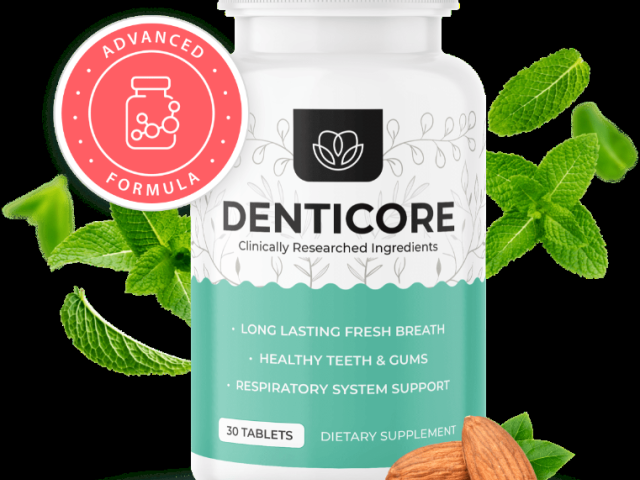
DentiCore is an eight-ingredient tablet marketed for teeth and gum health, sold in packages from $69 to $294 with a 60-day guarantee. Its premise is unusual: that it works by oxygenating gum tissue and deep cleansing your airways of bad bacteria before they reach your mouth.
This review examines that premise, breaks down every ingredient against the evidence, and covers the safety issues the sales page doesn't mention — starting with iodine, which is in the formula at an undisclosed dose and can genuinely disrupt thyroid function with sustained intake.
There's also something in the product's own reference list worth pointing out: it cites a Forbes article about 89% of supplements being inaccurately labeled. In a product that discloses no doses, that's a strange inclusion.
But the most important thing in this review isn't about the supplement at all. Gum disease is a bacterial infection that causes irreversible bone loss, and no oral tablet treats it. That section matters more than everything else here.
👉 Check current DentiCore pricing and package options »
⚠️ Four Things to Know Before Ordering
1. Iodine can disrupt thyroid function. The dose isn't disclosed. Excess iodine causes both hypothyroidism and hyperthyroidism, and can trigger autoimmune thyroid disease in susceptible people. If you have any thyroid condition, take levothyroxine, or already take a multivitamin containing iodine, check the label before ordering. Chlorella adds more iodine on top.
2. Copper has a genuine upper limit. Excess copper causes nausea, vomiting, abdominal pain, and liver stress. It also has a critical relationship with zinc — they compete for absorption. Long-term copper supplementation without balance is not risk-free, and the dose isn't stated.
3. Boron has a tolerable upper limit of about 20 mg/day for adults. Doses beyond that cause nausea, vomiting, and in high amounts more serious toxicity. Undisclosed here.
4. Shilajit carries documented contamination concerns. Raw or improperly purified shilajit can contain heavy metals, mycotoxins, and free radicals. Purified grades exist; the label doesn't specify which is used. It may also raise uric acid — relevant with gout.
If you take thyroid medication, have a thyroid condition, take other mineral supplements, or have kidney or liver disease, talk to a doctor or pharmacist first.
The Most Important Section: Gum Disease Needs a Dentist
This matters more than anything else in this review, so it comes before the ingredients.
Periodontal disease is a bacterial infection, and the bone loss it causes is permanent. Once the bone supporting a tooth is destroyed, it does not grow back. Teeth become loose and are eventually lost.
The progression:
- Gingivitis — gum inflammation, bleeding when you brush. This stage is genuinely reversible with proper cleaning and professional treatment.
- Periodontitis — the infection reaches the bone. The bone loss is irreversible. Treatment can halt progression but cannot rebuild what's gone.
- Advanced periodontitis — loose teeth, gum recession, tooth loss.
What actually treats it: professional scaling and root planing (deep cleaning below the gumline), which physically removes the bacterial biofilm and hardened tartar that brushing cannot reach. No tablet, rinse, or supplement removes tartar. It's mineralized deposit that requires mechanical removal by a dental professional.
See a dentist promptly if you have:
- Bleeding gums when brushing or flossing — this is not normal
- Persistent bad breath that doesn't respond to brushing
- Receding gums or teeth appearing longer
- Loose or shifting teeth — urgent
- Pain, swelling, or pus — possible abscess, potentially serious
- Gum tenderness or colour change
- Changes in how your teeth fit together
Why the delay matters more than with most conditions: a supplement that makes you feel you've addressed bleeding gums, while active periodontitis progresses, costs you bone you cannot get back. This is the specific harm pattern with oral health supplements, and it's why this section leads.
Gum disease is also linked to cardiovascular disease, diabetes complications, and adverse pregnancy outcomes. It's worth treating properly for reasons beyond your teeth.
The "Airway Cleansing" Premise
The product's central mechanism claim deserves examination.
DentiCore is described as working by "deep cleansing your airways of bad bacteria, preventing them from reaching your mouth and doing more damage."
This reverses the actual direction of travel. The reference list includes a University of Michigan piece titled "Spit can carry bacteria into your lungs" — and that's the real, established phenomenon. Oral bacteria can be aspirated into the lungs, which is why poor oral hygiene is a documented risk factor for aspiration pneumonia, particularly in older and hospitalised patients.
Bacteria travel mouth → lungs, not lungs → mouth.
Where oral bacteria actually come from: dental plaque, a biofilm that forms continuously on teeth from the bacteria already resident in your mouth and from food. It's not arriving from your airways.
And crucially: plaque and tartar are physical deposits on tooth surfaces. Nothing you swallow removes them. A tablet dissolves in your stomach and its components are absorbed into your bloodstream — it never contacts the biofilm on your teeth in any meaningful way.
The "oxygenating the gums" claim runs into a similar problem. Gum tissue is vascularized and oxygenated by your blood supply, which is working normally in most people. Periodontal disease isn't caused by a lack of oxygen in gum tissue — it's caused by bacterial biofilm triggering an inflammatory response.
👉 View DentiCore's ingredient details and packages »
DentiCore Ingredients: What the Evidence Shows
Eight ingredients: Calcium, Iodine, Copper, Chromium, Chlorella Vulgaris, Chlorophyllin, Boron Citrate Complex, and Shilajit.
No doses are disclosed anywhere, despite the page's claim of a "perfectly dosed proprietary blend."
The ingredients with genuine relevance
Calcium — legitimate, with a caveat. Calcium is a genuine structural component of teeth and the jawbone, and adequate intake supports bone health, which includes the alveolar bone that holds teeth.
The caveat: supplementing calcium doesn't rebuild bone already lost to periodontitis, and most people get reasonable amounts from diet. It also competes with other minerals for absorption.
Copper — real antimicrobial research. This is the most on-point ingredient. The cited studies are genuinely relevant: a systematic review on the role of copper and zinc in preventing dental caries, research on copper as an antimicrobial agent, and a study on zinc and copper content in tooth enamel.
Copper genuinely has antimicrobial properties, and there's real research on its role in enamel.
The problem: these studies largely concern copper in enamel or in topical/local application. Swallowing copper doesn't concentrate it at the tooth surface where plaque bacteria live. And copper has a meaningful upper limit with genuine toxicity above it.
Boron — the best-supported inclusion, but preclinical. The citations are the most substantial in the list: research on boron enhancing odontogenic and osteogenic differentiation of human tooth germ stem cells, studies on antibacterial and antibiofilm effects of boron, and multiple papers on boron's general nutritional importance.
That's genuinely interesting research with a plausible mechanism. But the tooth germ stem cell study is in vitro — cells in a dish, not people. And boron's antibacterial research doesn't establish that oral boron supplementation reduces plaque in a human mouth.
Boron does have reasonable general evidence for bone health, which is indirectly relevant.
The ingredients with weaker rationale
Iodine — the safety concern. Iodine is essential for thyroid function, and deficiency is a genuine problem in some populations. There's also research on iodine's antimicrobial properties — povidone-iodine is a real oral antiseptic used as a rinse.
But rinsing and swallowing are completely different. Topical iodine contacts oral bacteria directly. Ingested iodine goes to your thyroid.
And the thyroid risk is real. Excess iodine causes thyroid dysfunction in both directions, and chlorella in the same formula adds more. For a product marketed for 180-day courses with no disclosed dose, this is the formula's most significant unflagged risk.
Chromium — genuinely involved in glucose metabolism, with reasonable research there. No established role in dental or gum health. Its presence here isn't explained by any cited research.
Chlorella Vulgaris — nutrient-dense algae with genuine protein, B vitamins, and antioxidant content. The cited research concerns maximal oxygen uptake and serum vitamin B2 in young men — an exercise study, not a dental one. Plus a WebMD consumer article.
No dental evidence. And it contributes additional iodine. Chlorella can also be contaminated with heavy metals if poorly sourced.
Chlorophyllin — a semi-synthetic chlorophyll derivative with a long history of use as an internal deodorizer, sometimes marketed for body and breath odour. The evidence is modest, and the citation here is a WebMD article.
It may have some mild effect on breath odour. That's the most defensible claim for it — and it addresses a symptom, not gum disease.
Shilajit — genuine research for testosterone and altitude adaptation. The citation here is about high-altitude problems. No dental evidence. Plus the contamination and uric acid concerns noted above.
Ingredient verdict
| Ingredient | Dental evidence | Concern |
|---|---|---|
| Boron | ⭐ In vitro (tooth germ cells) | ⚠️ 20 mg upper limit |
| Copper | Real — but topical/enamel context | ⚠️ Upper limit, zinc balance |
| Calcium | Structural, indirect | Mineral competition |
| Iodine | Topical antiseptic ≠ ingested | ⚠️ Thyroid disruption |
| Chlorophyllin | Mild breath odour only | Minimal |
| Chlorella | None (exercise study cited) | ⚠️ Adds iodine; contamination |
| Chromium | None | Unexplained inclusion |
| Shilajit | None (altitude study cited) | ⚠️ Contamination, uric acid |
The honest summary: boron and copper have genuinely interesting research — boron's tooth germ stem cell work is the most relevant thing here, though it's in vitro. Calcium is structurally sensible.
But the fundamental problem is delivery. The most relevant research on copper and iodine concerns their action at the tooth surface — in enamel, or as a topical rinse. A swallowed tablet doesn't put them there. Plaque is a biofilm on your teeth, and systemic minerals don't reach it in meaningful concentration.
And three of eight ingredients have no dental evidence at all, with citations about exercise capacity, altitude sickness, and glucose metabolism.
The Reference List: Some Notable Entries
The list contains roughly 30 citations, and several are real, relevant studies — the boron and copper research in particular is genuine and on-topic. That's better than some products I've reviewed.
But read further and the pattern shifts.
Two citations are about supplement quality problems:
- "89% of sports supplements tested did not accurately label their ingredients" (Forbes)
- "Dietary Supplements: A Gateway to Doping?" (Nutrients)
These appear to be included to argue that other supplements are unreliable. It's an odd rhetorical move for a product that discloses no doses for any of its eight ingredients. If mislabeling is a concern worth citing, a full supplement facts panel is the obvious response.
Several citations aren't dental research:
- Three separate entries for the same 1990 French paper on treating deep wounds with boric acid solution — listed in French and English, apparently duplicated
- Anti-cancer effects of boron on small-cell lung cancer
- Strontium ranelate for vertebral fracture in postmenopausal women (NEJM) — strontium isn't in the formula
- Strontium and tooth anchorage in rats — again, strontium isn't an ingredient
- Asthma/bronchitis, peppermint for lung cleansing, the power of peppermint — peppermint isn't an ingredient either
- "The truth about fulvic acid" and "Application of fulvic mineral complex in human oral cavity" — from a humic acid company's website
- Multiple WebMD consumer articles
Strontium appears in two citations but isn't in the product. Peppermint appears in two citations but isn't in the product. That suggests the reference list was assembled from a broader pool than the actual formula.
Benefits: What's Realistic
Plausible
Modest breath improvement — chlorophyllin has some history as an internal deodorizer. This is the most defensible claim.
Correcting a genuine mineral deficiency — if you're low in calcium, boron, or copper, addressing that supports general bone and tissue health, including the jawbone. Real, but indirect.
General nutritional support from chlorella's micronutrient content.
Some bone health support from calcium and boron over time.
Not supported
- Removing plaque or tartar — these are physical deposits requiring mechanical removal
- Treating gum disease — periodontitis is a bacterial infection requiring professional treatment
- Reversing bone loss — permanent once it occurs
- "Oxygenating" gum tissue — your blood supply already does this
- Cleansing airways of bacteria that then cause dental damage — the direction is backwards
- Replacing brushing, flossing, or dental visits
- Whitening teeth or repairing cavities
Results: A Realistic Timeline
Weeks 1–2. Possibly some breath improvement from chlorophyllin. Nothing structural.
Weeks 3–8. If you had a genuine mineral deficiency, correction occurs gradually. No plaque or tartar change — those require a dental cleaning.
Months 2–3. Whatever effect exists is established. Assess inside the 60-day guarantee.
Important: if your gums stop bleeding during this period, the most likely explanation is that you started brushing and flossing more attentively because you were thinking about your teeth — not the tablet. That's a genuinely good outcome, but attribute it correctly.
Honest expectation: possible breath improvement, possible benefit if deficient. No change to plaque, tartar, gum disease, or bone.
Measuring it properly
- Get a dental exam and periodontal charting first. Your dentist measures pocket depths in millimetres — that's the objective measure of gum health, and it's what should change if anything real is happening.
- Note bleeding on brushing — count how many days per week.
- Track your actual hygiene routine honestly. If you improved it, that's your confound.
- Re-examine at 3 months with the same dentist.
- Change one thing at a time.
Periodontal charting is the single most useful measurement here, and your dentist does it routinely.
Side Effects
The page's FAQ includes "Are there any side effects?" — the answer isn't shown in the material provided. Here's what's realistic.
Common
- Nausea or GI upset — copper is a frequent culprit, especially without food
- Metallic taste — copper, iodine
- Green stool or discoloration — chlorophyllin, harmless but startling if unexpected
- Digestive changes — chlorella
- Headache
More serious
- Thyroid dysfunction — iodine excess, from both iodine and chlorella. Symptoms include fatigue, weight change, temperature intolerance, heart rate changes, neck swelling.
- Copper toxicity — nausea, vomiting, abdominal pain, liver stress at sustained high intake
- Zinc depletion — copper and zinc compete; excess copper can drive zinc deficiency
- Boron toxicity — above roughly 20 mg/day
- Heavy metal exposure — shilajit and chlorella both, if poorly sourced
- Elevated uric acid — shilajit, relevant with gout
- Mineral interactions — calcium impairs absorption of several medications
Who should avoid it
- Anyone with a thyroid condition — hypothyroidism, hyperthyroidism, Hashimoto's, Graves', or nodules
- Anyone on levothyroxine without clearance — and note calcium also interferes with its absorption
- Anyone taking other mineral supplements or a multivitamin — stacking iodine, copper, and calcium is how upper limits get exceeded
- Anyone with Wilson's disease — a copper metabolism disorder; copper supplementation is contraindicated
- Anyone with gout (shilajit)
- Anyone with kidney disease — mineral clearance
- Anyone with liver disease
- Pregnant or breastfeeding women — iodine requirements are specific and both deficiency and excess matter
- Anyone with iodine sensitivity or shellfish/seaweed allergy
- Anyone with untreated gum disease — see a dentist
Customer Feedback and Complaints
The page claims 12,642 reviews with no linked third-party platform to verify against.
Common positive reports
- Fresher breath — the most plausible reported benefit, consistent with chlorophyllin
- Gums feel healthier — subjective, and often coinciding with improved hygiene habits
- Easy to take — one tablet daily
- General wellbeing improvements from the mineral content
Common complaints
- "No difference to my gums." The most common, and expected given the delivery problem.
- "My dentist said I still have gum disease." The recurring disappointment — and the important one.
- Nausea or stomach upset — likely copper, especially on an empty stomach.
- Green stool — chlorophyllin, harmless but alarming without warning.
- Cost relative to results.
- Wanting to know the doses — a legitimate frustration given the "perfectly dosed" claim.
- Metallic taste.
- Refund friction — note DigiStore24 handles order support, not ClickBank, despite ClickBank-style page structure.
On the testimonials
No verifiable third-party source is linked. Genuine review signals are specificity, mixed verdicts, and willingness to report no effect. Be particularly skeptical of any review claiming a supplement resolved diagnosed gum disease — that's not something an oral tablet does.
Price: What It Costs
| Package | Total | Supply | Per month |
|---|---|---|---|
| 1 bottle | $69 | 30 days | $69 |
| 3 bottles | $177 | 90 days | $59 |
| 6 bottles | $294 | 180 days | $49 |
Free shipping on 6-bottle orders, plus two digital bonuses. A 60-day money-back guarantee applies.
On the anchor pricing: $99→$69, $297→$177, $594→$294. A price never charged isn't a saving. Real cost: $49–$69 per month.
Is it fair value? Poor, relative to alternatives — and the comparison here is stark:
- A quality electric toothbrush: $30–$100 once, with genuinely strong evidence for plaque reduction
- Floss or interdental brushes: a few dollars a month, with real evidence
- Antiseptic mouthwash (chlorhexidine, prescription, for active gingivitis): inexpensive, and it actually contacts the bacteria
- A dental cleaning: $75–$200, and it physically removes tartar — which nothing you swallow can do
- A basic multivitamin with calcium, copper, and boron at disclosed doses: $10–15/month
$294 buys roughly two professional dental cleanings — which would do more for your gums than six bottles of any oral supplement.
Structural issue: the best per-unit price requires $294 upfront for 180 days against a 60-day guarantee. Four months of unrefundable product, in a formula with iodine and copper considerations.
Buying notes
- Request the supplement facts panel before ordering. You specifically need the iodine, copper, and boron amounts — all three have meaningful upper limits.
- Check your other supplements for iodine, copper, and calcium before stacking.
- Note the retailer. DigiStore24 handles order support here, not ClickBank. Their role doesn't constitute endorsement of the product's claims.
- Start with one bottle — the only tier aligned with the guarantee.
- Take with food to reduce copper-related nausea.
- Separate from thyroid medication by four hours if you take it — calcium interferes with absorption.
- Ignore "96% order 6 bottles." Standard social proof.
👉 Check DentiCore pricing and the 60-day guarantee »
What Actually Works for Teeth and Gums
The evidence here is genuinely strong, and most of it is inexpensive.
1. Brush twice daily with fluoride toothpaste, two minutes. Fluoride has overwhelming evidence for preventing decay — one of the best-established interventions in all of public health. Don't rinse with water afterward; spit and leave the residue.
2. Clean between your teeth daily. Brushing reaches only about 60% of tooth surfaces. Interdental brushes have better evidence than floss for most people with adequate spacing — ask your dentist which size fits you.
3. Use an electric toothbrush. Oscillating-rotating and sonic brushes have solid evidence for superior plaque removal versus manual brushing. A one-time $30–$100 purchase.
4. See a dentist every 6–12 months. Professional cleaning removes tartar, which cannot be removed any other way. This is the non-negotiable one.
5. Treat gum disease properly. Scaling and root planing for periodontitis. It works, it halts progression, and delaying it costs you bone permanently.
6. Don't smoke. Smoking is one of the strongest risk factors for periodontal disease and dramatically worsens outcomes.
7. Control blood sugar if diabetic. The relationship between diabetes and gum disease runs both ways — each worsens the other.
8. Reduce sugar frequency, not just amount. How often you eat sugar matters more than how much — each exposure creates an acid attack.
9. Consider a nightguard if you grind. Bruxism damages teeth and stresses supporting structures.
10. Stay hydrated and address dry mouth. Saliva is genuinely protective — it buffers acid and contains antimicrobial components. Many medications cause dry mouth, which meaningfully increases decay risk.
An electric toothbrush, interdental brushes, and two cleanings a year cost roughly what one DentiCore package does — and they're what actually works.
Frequently Asked Questions
What is DentiCore?
An eight-ingredient tablet containing calcium, iodine, copper, chromium, chlorella, chlorophyllin, boron, and shilajit, marketed for teeth and gum health.
Does DentiCore work?
For fresher breath, possibly — chlorophyllin has some history there. For gum disease, plaque, or tartar, no. Those require mechanical removal and professional treatment, and a swallowed tablet doesn't reach tooth surfaces.
Does it remove plaque or tartar?
No. Plaque is a biofilm on your teeth and tartar is mineralized deposit. Both require physical removal — brushing, interdental cleaning, and professional scaling.
Can it reverse gum disease?
No. Gingivitis is reversible with proper cleaning and professional care; periodontitis causes permanent bone loss. Neither is treated by an oral supplement.
Is the iodine a problem?
It depends entirely on the dose, which isn't disclosed — and chlorella adds more. Excess iodine disrupts thyroid function. If you have any thyroid condition or take other iodine sources, get the label first.
Can I take it with thyroid medication?
Not without medical clearance. Both the iodine content and calcium's absorption interference are relevant.
Does it really cleanse airways?
The direction is backwards. Oral bacteria can travel to the lungs — that's the established phenomenon, and the product's own citation says so. Bacteria don't travel from airways to cause dental plaque.
Are the references legitimate?
Mixed. The boron and copper research is real and relevant. But several citations concern strontium and peppermint, neither of which is an ingredient, and several are WebMD consumer articles.
Is it FDA approved?
No. Supplements aren't FDA approved, as the page's own disclaimer states.
What's the refund policy?
60-day money-back guarantee. Order support goes through DigiStore24. Note it's shorter than the 180-day package.
Final Verdict
DentiCore has two ingredients with genuinely interesting research and a delivery method that can't get them where they'd need to be — sold on a mechanism that runs backwards.
Credit where due. The boron research is genuinely interesting — the tooth germ stem cell work and antibiofilm studies are real, even if in vitro. Copper's antimicrobial and enamel research is real. Calcium is structurally sensible. And the reference list contains more genuine, relevant research than several products I've reviewed.
But the fundamental problems are hard to get past. Plaque and tartar are physical deposits on your teeth — swallowing minerals doesn't reach them, and the copper and iodine research the product cites is largely about topical or enamel-level action. The airway-cleansing premise reverses the actual direction of bacterial travel, as the product's own citation demonstrates. Three of eight ingredients have no dental evidence, with citations about exercise capacity and altitude sickness. Strontium and peppermint appear in the references but not in the product. And in a formula citing research about supplement mislabeling, no doses are disclosed for anything — including iodine, copper, and boron, all of which have meaningful upper limits.
Consider it only if: you have no thyroid condition, you've obtained the full label and checked the iodine, copper, and boron amounts, you take no other mineral supplements, you've seen a dentist recently, and you're testing one bottle for breath freshness rather than gum disease.
Skip it if: you have any thyroid condition or take levothyroxine, you have bleeding gums or diagnosed gum disease, you take a multivitamin, you have Wilson's disease, gout, or kidney concerns, or you're hoping to avoid a dental visit.
What I'd genuinely recommend instead: if your gums bleed, book a dental appointment — bleeding gums are not normal, gingivitis is reversible at that stage, and periodontitis costs you bone permanently the longer it waits. Then buy an electric toothbrush and interdental brushes. Those two things cost less than one bottle of this and have evidence nothing in it can match — because they physically remove the bacteria that cause the problem, which is the only thing that actually works.
👉 Check DentiCore pricing and guarantee terms »
This article is for general informational purposes only and is not medical or dental advice. Dietary supplements are not evaluated by the FDA and are not intended to diagnose, treat, cure, or prevent any disease. Gum disease is a bacterial infection requiring professional diagnosis and treatment — bone loss from periodontitis is permanent, and delaying care worsens outcomes. Always consult a dentist for bleeding gums, loose teeth, or oral pain, and a qualified healthcare provider before starting any supplement, particularly if you have a thyroid condition, take prescription medication, or are pregnant or breastfeeding.
Useful information
- Avoid scams by acting locally or paying with PayPal
- Never pay with Western Union, Moneygram or other anonymous payment services
- Don't buy or sell outside of your country. Don't accept cashier cheques from outside your country
- This site is never involved in any transaction, and does not handle payments, shipping, guarantee transactions, provide escrow services, or offer "buyer protection" or "seller certification"
Related listings
-
 ProDentim Reviews & ComplaintS (2026): My Honest Review! Is It Worth Trying?Teeth and Gums Vitamins - Home Gardens (California) - September 13, 2026 69.00 $
ProDentim Reviews 2026: Does This Oral Probiotic Really Work? ProDentim has attracted attention as an oral probiotic supplement designed to support healthier gums, fresher breath, and a more balanced oral microbiome. Unlike traditional toothpaste or ...
-
 ProDentim Review 2026: What the Science Actually Says About This Oral ProbioticTeeth and Gums Vitamins - Kalamazoo (Michigan) - July 29, 2026 49.00 $
ProDentim is an oral probiotic supplement built around three bacterial strains and a handful of plant- and mineral-based ingredients, sold exclusively through ClickBank's affiliate network. The oral microbiome research it references is real, and dent...
-
 ProvaDent Honest Review: Ingredients, Complaints, Price, Benefits & Scam CheckTeeth and Gums Vitamins - Seattle (Washington) - May 16, 2026 46.00 $
If you’ve been struggling with chronic bad breath, sensitive, bleeding gums, yellowing teeth, stubborn plaque buildup, or recurring oral health issues despite brushing and flossing twice daily, you are certainly not alone. [>>Visit ...