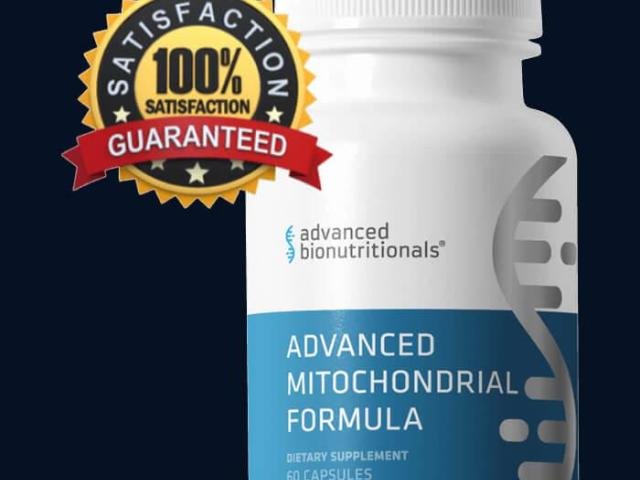
If you've reached the point where your morning coffee barely gets you to lunch, where stairs feel steeper than they used to, and where "tired" has become your default setting — you're not lazy, you're not broken, and you're certainly not alone. Millions of people in their fifties, sixties, and beyond hit a wall where energy just doesn't show up the way it once did. The supplement industry has noticed, and one of the more heavily promoted solutions right now is Advanced Mitochondrial Formula from Advanced Bionutritionals.
This review covers the four things buyers actually want to know: what the formula actually contains and what the science supports, what energy and mobility results are realistic and on what timeline, what it costs compared to buying the ingredients separately, and everything else — safety, interactions, alternatives, and who should skip it entirely.
Short version up front: the formula combines several genuinely researched mitochondrial nutrients with a few more speculative additions. The energy-support claims are plausible for some users, particularly those with suboptimal nutrient status, but the anti-aging transformation promises outrun the human evidence. At roughly $67–80 per bottle, it's a premium-priced supplement that delivers premium-priced ingredients — some of which you may already be taking. The rest of this article is the detail behind that summary.
What Is Advanced Mitochondrial Formula?
Advanced Mitochondrial Formula is a daily supplement designed to support cellular energy production by targeting mitochondria — the microscopic "power plants" inside your cells. It combines eleven ingredients including NAD precursors, ATP-building compounds, antioxidants, and mitochondrial transport nutrients.
No injection, no prescription, no complicated protocol. You take capsules daily, and the claimed effects accumulate over weeks as the nutrients support enzyme pathways involved in energy metabolism.
Here's the biology map the formula works from, which is accurate as far as it goes:
| Concept | What it means | Relevance |
|---|
| Mitochondria |
Organelles that generate ATP (cellular energy) |
Decline in number and efficiency with age |
| NAD+ |
Coenzyme required for mitochondrial energy reactions |
Declines with age; boosting it is a major research target |
| ATP |
The molecule cells actually use as energy currency |
Everything in the formula ultimately aims here |
| Sirtuins |
"Longevity" enzymes activated by NAD+ and certain polyphenols |
Lab interest is enormous; human translation is early |
The mitochondrial angle deserves credit — it's not marketing fiction. Cellular energy decline is a real feature of aging, and researchers from Harvard to the NIH are actively studying how to maintain mitochondrial health. What's less certain is whether an oral capsule can deliver the kind of transformation the marketing implies.
What's Inside Advanced Mitochondrial Formula?
A supplement is only as good as its formula, so let's examine each ingredient honestly — including what the evidence actually says in humans.
Niacinamide. A form of vitamin B3 that serves as a building block for NAD+, the coenzyme your mitochondria need to produce ATP. The logic is sound: if NAD+ drops with age, and niacinamide helps replenish it, then energy production should benefit. The reality is more nuanced. Niacinamide does raise NAD+ levels in some studies, but the magnitude varies, and megadosing isn't necessarily better — the body regulates NAD+ synthesis tightly. At moderate doses, it's a sensible inclusion. As a miracle anti-aging switch, the human evidence is still developing.
D-Ribose. A five-carbon sugar that forms the structural backbone of ATP. Unlike table sugar, ribose doesn't spike blood glucose significantly. There's modest but genuine evidence — particularly in chronic fatigue syndrome and fibromyalgia — that ribose supplementation can improve energy and reduce pain when taken at doses around 5 grams daily. Whether the dose in this formula reaches that threshold matters, and we'll address dosing transparency below.
Itadori Extract (Polygonum cuspidatum). Japanese knotweed extract, best known as a concentrated source of resveratrol — the polyphenol famous for activating sirtuins in laboratory studies. Here's the honest gap: resveratrol has spectacular results in yeast, worms, and mice on high-fat diets. In healthy humans, the translation has been underwhelming. Bioavailability is poor, effective doses in human trials are often far higher than supplement amounts, and the "longevity enzyme" activation hasn't yet produced measurable lifespan extension in people. It's a reasonable inclusion for a mitochondrial formula, but the longevity claims are speculative.
Pyrroloquinoline Quinone (PQQ). One of the more interesting newer ingredients in mitochondrial research. Some studies suggest PQQ can stimulate mitochondrial biogenesis — literally the creation of new mitochondria — through activation of PGC-1α. The human data is limited but promising, with small trials showing improvements in cognitive function and stress-related fatigue at doses around 20 mg daily. It's not proven, but it's not snake oil either.
Alpha-Lipoic Acid (ALA). A well-established antioxidant that works in both water and fat environments, helping to regenerate other antioxidants like glutathione and vitamins C and E. There's solid evidence for ALA improving insulin sensitivity and reducing oxidative stress, particularly in people with metabolic concerns. For general energy, the evidence is more modest but it's a defensible inclusion.
Acetyl-L-Carnitine (ALCAR). The form of carnitine that crosses the blood-brain barrier most easily. Its job is to shuttle fatty acids into mitochondria so they can be burned for energy. Several studies in elderly populations with documented carnitine deficiency show improvements in fatigue and mental clarity. If you're not deficient, the benefit is likely smaller — but many older adults do run low.
Coenzyme Q10 (CoQ10). One of the best-supported mitochondrial nutrients on the market. CoQ10 is essential for the electron transport chain — the final stage of ATP production. Levels decline with age and are further depleted by statin medications. Supplementation has genuine evidence for reducing fatigue, supporting heart health, and improving exercise tolerance, particularly in people over 50 or those on statins. This is arguably the formula's strongest ingredient.
Curcumin. The active compound in turmeric, included here for its anti-inflammatory and antioxidant properties. Chronic low-grade inflammation is a genuine drain on energy and a driver of cellular aging. Curcumin has decent evidence for reducing inflammatory markers, though absorption is notoriously poor without enhancement.
Quercetin. A polyphenol antioxidant with emerging interest as a senolytic — a compound that may help clear out aged, dysfunctional cells. The human evidence for energy specifically is thin, but quercetin complements curcumin as an anti-inflammatory and may enhance the activity of other compounds in the formula.
Bioperine. A patented black pepper extract included specifically to boost absorption of curcumin, quercetin, and potentially other polyphenols. It's doing real work here — without it, much of the curcumin would pass through unabsorbed.
Magnesium. An essential mineral involved in over 300 enzymatic reactions, including ATP synthesis itself. Many adults — particularly older adults — are subclinically deficient, and correcting that deficiency can genuinely improve energy, sleep, and muscle function. The form matters for absorption; the site mentions a "highly absorbable" form but doesn't specify which.
The dose question. The formula contains eleven active ingredients, which raises a practical concern: are the doses clinically relevant? A capsule can only hold so much powder. If D-ribose requires 5 grams for effect in trials, and the entire daily serving is two or three capsules, the ribose dose may be modest. Similarly, CoQ10 studies often use 100–200 mg, and curcumin absorption is a known challenge. Without seeing the exact milligrams on the label, it's impossible to verify whether each ingredient is present at a studied dose. Any review that skips this concern isn't doing its job.
How Does Advanced Mitochondrial Formula Work?
The proposed mechanism has three parts, each with a different evidence weight:
NAD+ support. Niacinamide provides raw material for NAD+ synthesis. More NAD+ should mean more efficient mitochondrial energy production — the same logic behind the much more expensive NAD+ IV drips and precursors like NMN and NR. The difference is that niacinamide is the older, cheaper pathway, and while it works, it may also inhibit sirtuins at very high doses through a feedback mechanism. Moderate dosing is key.
ATP substrate supply. D-Ribose literally provides the sugar backbone that ATP is built from. If your cells are struggling to regenerate ATP quickly enough — common in chronic fatigue and aging — extra ribose may speed up the rebuilding process. ALCAR feeds fatty acids into the mitochondrial furnace. CoQ10 keeps the electron transport chain moving. Together, they cover the "fuel and factory" side of energy production.
Protection and cleanup. ALA, curcumin, quercetin, and CoQ10 all serve antioxidant roles, protecting mitochondria from the oxidative damage that accumulates with age. PQQ may stimulate the growth of new, healthy mitochondria to replace worn-out ones. Magnesium ensures the enzymatic machinery functions.
Layering all eleven is comprehensive formulation logic — cover the raw materials, the transport, the production line, and the maintenance. The honest summary: this is a well-thought-out mitochondrial multivitamin, not a single magic bullet. Whether the doses are high enough to move the needle in an already well-nourished person is the open question.
Benefits of Advanced Mitochondrial Formula: What's Realistic
This is where an honest review earns its keep, because the advertised benefits and the evidence-supported benefits are two different lists.
Benefits with reasonable support:
Reduced fatigue in nutrient-depleted individuals. If you're low in CoQ10, carnitine, magnesium, or B3, this formula replaces what you're missing — and the energy improvement can be genuinely noticeable. This is the most defensible benefit.
Better exercise tolerance and recovery. CoQ10 and ALCAR both have trials showing improved physical performance in older adults. The effect isn't dramatic — you won't turn into an athlete — but stair-climbing and walking may feel easier.
Support for statin-related side effects. If you take a cholesterol-lowering statin, you're likely depleting CoQ10. This formula contains it, which is genuinely important for muscle comfort and energy in that population.
General antioxidant coverage. The polyphenol stack (curcumin, quercetin, ALA) provides broad-spectrum oxidative stress support. For people with inflammatory lifestyles or diets, this has real value even if energy doesn't skyrocket.
A structured daily commitment to cellular health. Taking a mitochondrial supplement creates a daily cue that you've invested in your energy. Some of what users report is the ritual effect — and that's not nothing.
Benefits the marketing claims that evidence doesn't support:
Being direct about this list matters more than the one above:
-
Feeling decades younger. No supplement has reversed aging in humans. Energy may improve; biological age markers are a different claim.
-
Measurable lifespan extension. Not supported by human trials for any of these ingredients.
-
Rapid transformation in three weeks. Some users may notice something; many won't. Three weeks is barely enough for tissue levels of CoQ10 and carnitine to rise.
-
Replacement for sleep, exercise, or medical care. Mitochondria need all of the above. A capsule doesn't shortcut the fundamentals.
The chain the marketing implies — take the formula → raise NAD+ → activate sirtuins → feel young again — has real laboratory interest but breaks at the human translation arrow. Even granting every ingredient its best-case trial result, you're looking at modest, gradual support for energy metabolism in some people. That's a legitimate product. It just isn't the cellular fountain of youth the ads describe.
Results: What to Expect and When
"Results" is where most supplement buyers get disappointed, almost always because of timeline and magnitude expectations set by the ads.
A realistic timeline:
Weeks 1–2. Most people notice either mild digestive adjustment or nothing at all. Both are normal. Anyone reporting a dramatic first-week transformation is describing expectation, not pharmacology — mitochondrial nutrients don't work like caffeine.
Weeks 3–6. If the formula works for you, this is where a pattern may emerge: slightly less afternoon slump, a bit more willingness to take the stairs, possibly better mental clarity. The site mentions a 3-week energy guarantee, which is optimistic but not impossible for people who were genuinely deficient in one or more of these nutrients.
Weeks 6–12. The window where genuine users who benefit report cumulative effects: steadier energy through the day, less post-exercise soreness, occasionally improved sleep. Subtle, not cinematic. CoQ10 and carnitine tissue levels reach steady state in this window.
Week 12+. Whatever effect you're going to get is established by now. If nothing has shifted after three months of consistent daily use, further use is unlikely to change that.
The honest distribution: some people get a clear energy benefit — usually those who were low in CoQ10, magnesium, or carnitine — some get a mild one, and a meaningful share get nothing at all. Individual biochemistry, baseline diet, sleep quality, and activity level all influence outcomes. Nobody can predict which group you're in before you try.
Four reasons results vary so much:
-
Baseline nutrient status. Someone deficient in CoQ10 or magnesium has far more room to benefit than someone already replete.
-
Expectation calibration. If you're watching for a 25-year-old's energy level, you'll miss a modest genuine improvement in afternoon stamina.
-
Consistency. Mitochondrial nutrients are not stimulants; they support infrastructure, they don't force output. Daily use matters.
-
Underlying conditions. Thyroid disorders, sleep apnea, anemia, depression, and heart disease all cause fatigue that no mitochondrial supplement will touch.
How to measure your own results properly:
Don't trust your memory — it's biased toward whatever you paid for. Do this instead:
-
Pick ONE metric before you start. Afternoon fatigue on a 1–10 scale. Number of flights of stairs you can climb comfortably. Time until you feel tired after waking. One, not four.
-
Take it at the same time every day, with food.
-
Log two lines daily. The metric, plus anything notable.
-
Run it a full 90 days. The guarantee covers this window, and tissue levels need time.
-
Change nothing else during the window if you can help it — new sleep habits or a new exercise routine will confound everything.
If your number hasn't moved after 90 consistent days, you have your answer — and that's precisely what the 90-day guarantee exists for.
The Smartest Pre-Purchase Check
Before spending anything, look at what you're already taking. If you currently take CoQ10, ALCAR, magnesium, and a B-complex separately, this formula may simply duplicate them — possibly at lower individual doses. Add up your current monthly supplement spend and compare it to the per-bottle price here.
If you're taking nothing and suspect your diet is short on these nutrients, this formula is a reasonable one-stop starting point. If you're already covered, you're paying for redundancy.
Price: What It Costs and Whether It's Worth It
Advanced Mitochondrial Formula pricing:
| Package | Supply | Price | Per bottle |
|---|
| 1 bottle |
30 days |
$79.95 |
$79.95 |
| 3 bottles |
90 days |
$214.95 |
$71.65 |
| 6 bottles |
180 days |
$399.90 |
$66.65 |
Free US shipping on the 3- and 6-bottle packages. The 6-bottle package advertises "instant savings" of $199.80 versus buying six singles.
How that compares:
| Option | Cost structure | What you get |
|---|
| Advanced Mitochondrial Formula |
~$67–80/month |
11-ingredient mitochondrial blend |
| Buying ingredients separately |
~$40–70/month |
Potentially higher individual doses, more pills to swallow |
| Basic mitochondrial stack (CoQ10 + ALCAR + Mg) |
~$25–40/month |
Covers the best-supported ingredients |
| NAD+ precursors (NMN/NR alone) |
~$40–60/month |
Targets NAD+ specifically, misses the rest |
| Diet and sleep optimization |
$0 |
Stronger evidence for energy than any capsule |
The per-day math on the 6-bottle package works out to roughly $2.20 daily. For a comprehensive mitochondrial formula, that's in line with premium supplement pricing — neither a steal nor extortionate.
The honest caveat is the bottom row. Sleep, exercise, protein intake, and stress management move the energy needle more reliably than any capsule. You're paying for targeted nutritional support — a legitimate purchase, but not a shortcut past the fundamentals.
Buying notes that actually matter:
-
Official site or established retailers only. Counterfeit supplements are a real problem; buy from the manufacturer's site or a trusted pharmacy.
-
Read the guarantee terms. It's a 90-day, "down-to-the-last-pill" money-back guarantee — confirm whether opened bottles qualify and keep your confirmation email. Note: you pay return shipping.
-
Ignore urgency framing. "Limited time" banners are standard funnel design.
-
Check for interactions first. If you're on warfarin, thyroid medication, or chemotherapy, several ingredients here require medical clearance.
The Science: What's Solid and What Isn't
Three layers here, with very different evidence behind each.
The mechanism — well supported.
Mitochondrial biology is established science, not fringe theory. Every cell biology textbook describes how mitochondria generate ATP through the electron transport chain, how CoQ10 and carnitine participate in that process, and how oxidative damage accumulates with age. "These nutrients participate in energy metabolism" is solid ground.
The supplementation effects — mixed.
Where evidence is reasonably supportive: CoQ10 for fatigue and heart health, ALCAR for elderly fatigue, magnesium for deficiency-related low energy, D-ribose for chronic fatigue and fibromyalgia, ALA for oxidative stress and glucose handling.
Where it thins out: resveratrol/itadori for human longevity (promising in labs, inconsistent in people), PQQ for dramatic cognitive enhancement (early small trials), quercetin as a senolytic (mostly preclinical), and the specific combination's synergistic effect (untested as a whole formula).
Three caveats the sales page won't mention:
-
No study has tested this specific product. All cited research demonstrates general principles or single ingredients — not this exact blend at these exact doses.
-
Niacinamide is not the same as NMN or NR. The marketing leans on NAD+ buzz, but niacinamide is the older, cheaper B3 form. It raises NAD+ but may also trigger feedback inhibition at higher doses.
-
Bioavailability is a real issue. Curcumin, resveratrol, and quercetin all absorb poorly. The Bioperine helps, but whether enough reaches your mitochondria to matter is genuinely uncertain.
The anti-aging claims — unsupported in humans.
Restating in the science section: no oral supplement has been proven to extend human lifespan or reverse biological aging. The sirtuin activation story is fascinating laboratory science. The human translation remains a work in progress.
What Real Users Report
Filtering out obvious affiliate content, feedback settles into consistent patterns.
What positive users say:
-
Steadier energy through the afternoon — the most consistent positive report
-
Less muscle soreness after activity, particularly in the 60+ age group
-
Better mental clarity and "sharpness" within the first month
-
Good tolerance — few reports of significant side effects
-
Convenience of taking one product instead of five separate bottles
What the complaints reveal:
-
"I felt nothing after two months." A substantial share — concentrated among users who were already taking similar nutrients or who had underlying medical causes of fatigue.
-
Price sensitivity — at $80/bottle, the cost is real, and some users expected more dramatic results for the investment.
-
"It's just an expensive multivitamin." From users who compared the ingredient list to their existing regimen and found overlap.
-
Post-purchase upsells — common with direct-to-consumer supplement brands.
How to spot a fake review:
Probably incentivized: uniformly five-star with no downsides, specific age-reversal claims, multiple purchase links before the halfway point, celebrity name-dropping used as evidence, and urgency language about prices rising.
Probably genuine: mentions specific timeline and modest improvement, reports "subtle but real" rather than transformational language, mentions price honestly, and appears somewhere without a checkout button attached.
Safety and Side Effects
Generally well tolerated, but this formula has real interaction potential that deserves attention:
Blood thinners. Curcumin, quercetin, and ALA can all have mild anticoagulant effects. If you take warfarin, aspirin, or other blood thinners, talk to your doctor before starting — INR monitoring may be warranted.
Thyroid conditions. ALA can affect thyroid hormone levels in some people. If you manage hypothyroidism with medication, discuss this formula with your endocrinologist.
Low blood sugar. ALA and possibly D-ribose can influence glucose metabolism. If you're on diabetes medication, monitor your levels closely.
Chemotherapy. Antioxidant supplements during active cancer treatment are controversial — some oncologists worry they could protect cancer cells along with healthy ones. Do not start this without your oncologist's approval.
Pregnancy and nursing. Insufficient safety data for several ingredients at these doses. Skip it.
Common, minor effects: mild stomach upset (best reduced by taking with food), occasional headache, and vivid dreams reported by a few ALCAR users.
Pros & Cons
Pros:
-
Built on legitimate mitochondrial biology, not pseudoscience
-
Contains several genuinely well-researched ingredients (CoQ10, ALCAR, magnesium, ALA)
-
Comprehensive formula covering multiple energy pathways
-
90-day guarantee is longer than the industry standard
-
No stimulants — won't cause jitters or crashes
-
Free shipping on multi-bottle orders
-
Manufactured by an established company with a real medical formulator
Cons:
-
Premium pricing ($67–80/bottle) for ingredients available separately
-
Proprietary blend concerns — exact milligrams of each ingredient not always clear
-
Some ingredients (resveratrol/itadori, quercetin) have thin human evidence for energy
-
Won't fix fatigue from sleep disorders, thyroid problems, anemia, or depression
-
Marketing leans heavily on anti-aging buzzwords that outrun the human data
-
May duplicate nutrients you're already taking
-
Post-purchase upsells
Alternatives Worth Considering First
If your real goal is more energy, these have dramatically more evidence behind them:
-
Sleep, 7–9 hours. Nothing in the supplement market approaches its impact on energy. Free.
-
Aerobic exercise. Builds mitochondrial density literally — your body makes more power plants in response to demand. More effective than any capsule.
-
Protein at every meal. Amino acids are the building blocks of the enzymes that run your mitochondria. Many older adults under-eat protein.
-
Basic mitochondrial stack. CoQ10 (100–200 mg), magnesium glycinate, and ALCAR bought separately cover the formula's strongest ingredients for less money.
-
Thyroid and iron testing. Fatigue is a symptom, not a diagnosis. A $30 blood panel rules out common medical causes that no supplement can fix.
Unglamorous, unaffiliate-friendly, and more effective than anything in this bottle for most people. Any honest review of an energy supplement has to say so.
Frequently Asked Questions
What is Advanced Mitochondrial Formula? A daily supplement combining NAD precursors, ATP-building compounds, antioxidants, and mitochondrial transport nutrients to support cellular energy production. It's designed for adults experiencing age-related fatigue and low stamina.
How does it work? The formula supplies nutrients involved in mitochondrial ATP production — including CoQ10 for the electron transport chain, carnitine for fatty acid transport, niacinamide for NAD+ synthesis, and antioxidants to protect the machinery. It's nutritional support, not a stimulant.
How long before I feel it working? Some users notice subtle changes in 3–6 weeks; cumulative benefits, where they occur, build over 8–12 weeks. If nothing has shifted after 90 consistent days, further use is unlikely to help — and the guarantee covers that window.
What does it cost? $79.95 for one bottle, $214.95 for three ($71.65/bottle), or $399.90 for six ($66.65/bottle). Free US shipping on 3- and 6-bottle orders. Confirm current pricing on the official site.
Is there a refund policy? Yes — a 90-day, "down-to-the-last-pill" money-back guarantee. You pay return shipping. Confirm the exact terms and keep your confirmation email.
Does it really work? Depends on the claim. For supporting energy metabolism in nutrient-depleted adults — plausibly, and CoQ10 and carnitine have the best evidence. For reversing aging or delivering dramatic transformation — no human evidence supports that.
Is it safe with other medications? Possibly not. Curcumin, quercetin, and ALA can interact with blood thinners. ALA may affect thyroid medication. Talk to your doctor or pharmacist before combining it with prescriptions — bring the full ingredient list.
Who should skip it? Pregnant or nursing women, anyone on blood thinners or chemotherapy without medical clearance, people with unmanaged thyroid conditions, and anyone who hasn't first ruled out medical causes of fatigue with their doctor.
Final Verdict
Advanced Mitochondrial Formula is a competently formulated energy supplement built on real cellular biology, sold with anti-aging promises that outrun the human evidence by a considerable distance.
Strip away the longevity buzzwords and what remains is a reasonable proposition: for roughly $67–80 per month, you get a comprehensive stack of mitochondrial nutrients — some with excellent evidence (CoQ10, carnitine, magnesium), some with early but interesting data (PQQ, D-ribose), and some that are more speculative (resveratrol/itadori, quercetin). For people in their fifties and beyond who suspect their diet is short on these compounds, it's a defensible experiment under the 90-day guarantee.
Judged against its most aggressive marketing — "rocket fuel," decades younger, sirtuin activation — it will disappoint, because no capsule has achieved that in humans.
Buy it if: you're over 50, not currently taking CoQ10 or carnitine, you've ruled out medical causes of fatigue with your doctor, and you view it as nutritional support with a 90-day trial window.
Skip it if: you're already taking a similar stack separately, you're on blood thinners or thyroid medication without clearance, you expect dramatic age-reversal, or you haven't yet fixed sleep, exercise, and protein intake — which will outperform anything in this bottle.
The best move before buying: check your current supplement cabinet. If you already own CoQ10, ALCAR, and magnesium, you're likely duplicating. If your cabinet is empty and your energy is low, the formula is a reasonable, if premium-priced, starting point — with the guarantee as your safety net.
This article is for general informational purposes only and is not medical advice. Persistent fatigue can indicate conditions requiring medical treatment, including thyroid disorders, anemia, sleep apnea, depression, and heart disease. Consult a qualified healthcare provider before starting any supplement, especially if you take prescription medication, are pregnant or nursing, or have a chronic health condition.
Share

 GutOptim Reviews & Complaints: What Customers Should Know Before BuyingWeight Management - Denver (Colorado) - September 14, 2026 39.00 $
 Aquaburn Reviews: Real Customer Feedback, Benefits, Complaints & MoreWeight Management - San Jose (California) - September 14, 2026 39.00 $
 Revive Daily Reviews: Benefits, Ingredients, Results & Side EffectsWeight Management - Birmingham (Alabama) - September 12, 2026 49.00 $