
49.00 $ FemiCore Review: Benefits, Results, Price & More Philadelphia
- Location: Philadelphia, Pennsylvania, United States
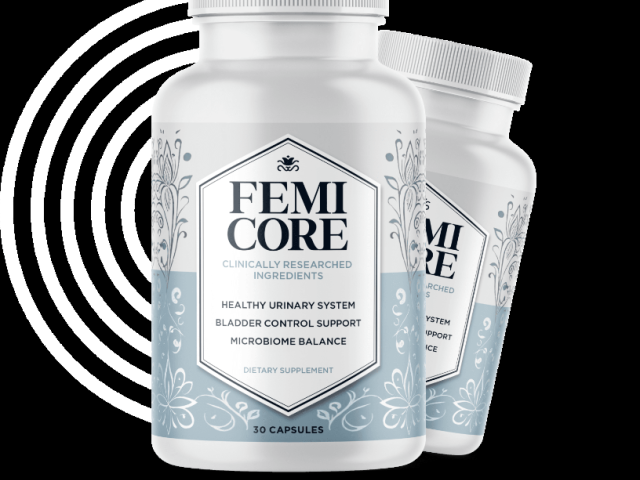
FemiCore promises relief from one of the most quietly devastating problems in women's health: bladder leaks. If you've ever mapped your day around bathroom locations, skipped a workout class out of embarrassment, or laughed carefully at a joke — you know this isn't a minor inconvenience. It affects millions of women, most of whom never mention it to a doctor.
FemiCore approaches the problem from an angle that has real scientific momentum: the urinary microbiome. The pitch is that restoring balance to the bacteria living in and around the urinary tract calms the involuntary contractions behind those sudden leaks. At $158 for a two-month supply ($294 for six bottles with bonuses), it's a meaningful investment — so this review digs into whether the science supports the price.
Short version up front: the urinary microbiome is a legitimate, active research area; cranberry has genuine (if modest) evidence; several other ingredients are speculative; and pelvic floor therapy remains the best-supported non-drug intervention for bladder leaks — and it's cheaper than this bottle. That said, for women seeking a natural adjunct, some of this formula is defensible. The rest of this article is the detail behind that summary.
Disclosure: this is an affiliate product, so most reviews online — including the enthusiastic ones — earn a commission per sale. Weigh every five-star testimonial accordingly, this page included.
👉 Check current pricing on the official FemiCore website »
What Is FemiCore?
FemiCore is a daily supplement for women that targets bladder control by supporting the urinary microbiome — the community of bacteria living in the urinary tract. Its formula combines cranberry extract, bearberry, berberine, Mimosa Pudica, and five Lactobacillus probiotic strains.
No prescription, no device, no app. You take capsules daily, and the claimed effects accumulate over weeks as the probiotic strains and botanicals shift the microbial environment and calm the bladder's involuntary contractions.
Here's the biology map the formula works from, which is accurate as far as it goes:
Table
The urobiome angle deserves credit — it's not marketing fiction. Landmark research, including work by Wolfe and Brubaker published in Nature Reviews Urology and a 2020 study in the American Journal of Obstetrics and Gynecology, found that the bladder bacterial communities of women with incontinence differ measurably from those of continent women. That's a real correlation, from real peer-reviewed studies, in real journals.
Here's the critical caveat: correlation is not causation, and no probiotic blend has been proven in large trials to fix bladder leaks. The science is a promising beginning, not a finished conclusion — and the marketing sometimes presents it as the latter.
What's Inside FemiCore?
A supplement is only as good as its formula, so let's examine each ingredient honestly — including the dose problem we'll get to at the end.
Cranberry extract. The veteran of urinary tract ingredients, studied for decades. Cranberry's proanthocyanidins (PACs) appear to prevent bacteria — especially E. coli — from adhering to the walls of the urinary tract, which is the first step in infection. The evidence for preventing UTIs is modest but real, particularly in women with recurrent infections. Its relevance to leaks, as opposed to infections, is more indirect — fewer irritations and infections may mean fewer symptom flares. Reasonably supported, honestly framed.
Bearberry (uva-ursi). A traditional remedy for urinary discomfort containing arbutin, which converts to a compound with antimicrobial properties in alkaline urine. It's been used in European herbal medicine for generations, and a multicentre trial (the BRUMI trial, protocol published in BMJ Open) is underway. The honest concerns: it's traditionally used short-term (days, not months) because long-term hydroquinone exposure raises liver and kidney questions, and it's not appropriate in pregnancy. Its role in a daily, long-term formula is debatable among herbalists themselves.
Berberine. A compound from goldenseal and barberry with antimicrobial and metabolic effects. There's intriguing animal research — including a 2013 study in the Journal of Ethnopharmacology showing berberine improved bladder muscle contractile response in diabetic rats. Rats. That's a long way from a woman laughing without crossing her legs. Emerging, unproven in humans for this purpose.
Mimosa Pudica. A fascinating plant with documented antimicrobial properties in laboratory studies — including a 2022 study examining its antibacterial compound L-mimosine. But "inhibits bacteria in a petri dish" and "controls bladder leaks in humans" are separated by years of clinical research that hasn't happened yet. This is the most speculative ingredient in the formula.
The five Lactobacillus strains (crispatus, acidophilus, plantarum, gasseri, casei). This is the formula's microbiome centerpiece, and it's grounded in genuine science. Lactobacillus dominance is associated with healthier vaginal and urinary environments, and specific strains have evidence for reducing recurrent UTIs — a 2022 pilot study on L. plantarum and recurrent pediatric UTIs, and broader reviews in Frontiers in Cellular and Infection Microbiology, support the concept. The open questions: whether oral probiotics reliably colonize the urinary/vaginal tract (the research is genuinely divided), whether the strains and doses here match the studied ones, and whether UTI prevention translates to leak control at all.
The dose problem. FemiCore uses a "proprietary blend" — which means individual ingredient doses aren't disclosed. For a buyer, that's a real issue: cranberry studies use defined PAC doses, probiotic studies use defined CFU counts, and "optimally dosed" is a claim, not a specification. Any review that skips this point isn't doing its job.
👉 See the full formula on the official FemiCore site »
How Does FemiCore Work?
The proposed mechanism has three parts, each with a different evidence weight:
Microbiome restoration. The five probiotic strains aim to shift the urinary and vaginal environment toward Lactobacillus dominance — the state associated with fewer disruptive bacteria, less irritation, and stronger mucosal defenses. This is the formula's most distinctive claim, and it rests on real but early science.
Anti-adhesion and antimicrobial action. Cranberry PACs and bearberry's arbutin work to make it harder for disruptive bacteria to colonize urinary tract walls. Think of it as making the walls slippery, so troublemakers can't get a grip. Decent analogy, decent evidence — mostly from UTI research rather than leak research.
Bladder muscle calming. Berberine's animal data and the general "fewer irritants, fewer spasms" logic suggest the bladder wall simply has less reason to fire involuntarily when the environment around it is calm. Plausible. Not proven in humans.
Layering all three is coherent formulation strategy. But an honest summary: this formula is built substantially on UTI-prevention evidence and urobiome correlation research, and bladder leakage — its core marketing promise — is a step beyond what most of the cited studies actually measured.
Benefits of FemiCore: What's Realistic
This is where an honest review earns its keep, because the advertised benefits and the evidence-supported benefits are two different lists.
Benefits with reasonable support:
Fewer urinary irritations and possibly fewer UTIs. The strongest evidence-based benefit, driven by cranberry PACs and the Lactobacillus strains. If your leaks tend to flare alongside infections or irritation, this pathway may genuinely reduce those triggers.
Improved vaginal and urinary microbial balance. Plausible via the probiotic strains, with the colonization caveat above. Some users report noticeably fewer episodes of general urinary discomfort.
A real commitment device. Taking a daily supplement creates structure around a health problem many women have silently accepted for years. Simply addressing bladder health — tracking symptoms, paying attention, taking action — changes behavior in ways that help independent of any capsule.
A natural alternative for the medication-averse. Anticholinergic bladder medications work but carry dry mouth, constipation, and cognitive side effects that many women rightly dislike. For mild-to-moderate symptoms, a lower-risk adjunct has legitimate appeal.
Benefits the marketing claims that evidence doesn't support:
Being direct about this list matters more than the one above:
-
Restoring "perfect" bladder control. No supplement has achieved this in clinical trials. Pelvic floor therapy gets closer than anything in a capsule.
-
Fixing the root cause of leaks. The root causes are multifactorial — pelvic floor weakness, nerve signaling, childbirth injury, hormonal changes, weight, habits. A microbiome capsule addresses one thread of that web.
-
Working for every woman. Urge leaks, stress leaks (sneezing, jumping), overflow leaks, and post-surgical leaks have different mechanics. One formula cannot address all of them, and marketing that implies otherwise overpromises.
-
Results without lifestyle change. Fluid timing, caffeine reduction, weight management, and pelvic floor exercises move the needle measurably. A capsule doesn't replace them.
Results: What to Expect and When
"Results" is where most supplement buyers get disappointed, almost always because of timeline and magnitude expectations set by the ads.
A realistic timeline:
Weeks 1–2. Most women notice either mild digestive adjustment (common with new probiotics) or nothing at all. Both are normal. Anyone reporting a dramatic first-week transformation is describing expectation, not microbiology — bacterial shifts take time.
Weeks 3–6. If the formula works for you, this is where a pattern typically emerges: fewer urinary discomfort episodes, possibly fewer "warning-rush" bathroom sprints. Probiotic studies generally show measurable microbial shifts in this window.
Weeks 6–12. The window where genuine users who benefit report cumulative effects: fewer leak episodes per week, more confidence going out, less anxiety around coughing or laughing. Subtle, gradual, real for some.
Week 12+. Whatever effect you're going to get is established by now. If nothing has shifted after three months of consistent daily use, further use is unlikely to change that — and pelvic floor physical therapy is waiting with dramatically stronger evidence.
The honest distribution: some women get a clear reduction in irritations and flares, some get a mild benefit, and a meaningful share get nothing at all — particularly women whose leaks are primarily stress-type (sneezing/jumping leaks), which are mechanical, not microbial.
Four reasons results vary so much:
-
Leak type. Urge leaks (rushing, frequency, spasms) have at least a plausible microbial connection. Stress leaks are about pelvic floor support — probiotics don't lift anything.
-
Baseline habits. Caffeine, carbonation, fluid timing, and constipation all aggravate bladder symptoms and can drown out any supplement benefit.
-
Consistency. Probiotic effects are cumulative and reversible; sporadic use produces sporadic results.
-
Underlying conditions. Overactive bladder, interstitial cystitis, prolapse, and neurological causes need real diagnosis. A supplement masking symptoms can delay the right treatment.
How to measure your own results properly:
Don't trust your memory — it's biased toward whatever you paid for. Do this instead:
-
Keep a three-day bladder diary before starting: voiding times, leak episodes, triggers. Baseline everything.
-
Continue the diary through weeks 4, 8, and 12.
-
Track one primary metric: leak episodes per week. One, not five.
-
Change nothing else during the window if you can help it — new habits confound everything.
-
Give it the full 12 weeks, then compare honestly against your baseline.
If your leak count hasn't moved after 12 consistent weeks, you have your answer — and that's precisely what the 60-day guarantee is for (note the mismatch: the fair trial window is 90 days; the guarantee is 60. Worth knowing before you buy a six-bottle bundle).
👉 Start your FemiCore trial — 60-day money-back guarantee »
The Smartest Pre-Purchase Step
Before spending anything: figure out what kind of leaks you actually have. A simple pattern check is free — leaks with coughing, sneezing, or jumping suggest stress incontinence (pelvic floor mechanics); leaks with sudden urgency suggest overactive bladder (nerve and muscle signaling). FemiCore's mechanism maps most plausibly onto neither directly — it targets the microbial environment — but it may reduce irritation-driven urgency flares for some women.
And the step every honest review must recommend: mention bladder leaks to your doctor at your next visit. Incontinence is a symptom with many causes, some treatable simply, and it's one of the most under-reported conditions in medicine — not because it's minor, but because women have been taught it's normal. It isn't. And if pelvic floor physical therapy is available to you, its evidence base dwarfs any supplement's.
Price: What It Costs and Whether It's Worth It
FemiCore pricing, per the official site:
Table
The six-bottle "Best Value" package is heavily pushed — the page notes 96% of customers order it — and the per-month math genuinely favors it. The three bonuses (a marriage-passion guide, a gut reset guide, and a hip mobility blueprint, with stated retail values of $199, $397, and $197) come free with that package.
On the inflated retail values: treat those with a full shaker of salt. Bundled "bonuses" with retail prices far above the main product are a classic funnel tactic. The guides may be pleasant; they are not, in any honest accounting, a $793 value. Judge the six-bottle package on the capsules alone.
How that compares:
Table
The honest verdict on value: at ~$49/month on the bundle, FemiCore is priced at the premium end of the supplement market. For women who've confirmed with their doctor that their symptoms are mild and microbial irritation plays a role, it's a defensible experiment under the guarantee. For the price of three months, though, several sessions of pelvic floor PT — the field's gold standard — may be the smarter first investment.
Buying notes that actually matter:
-
Official site only. Marketplace listings risk counterfeits and forfeit the guarantee.
-
Check the guarantee terms. It's 60 days, "every single cent," per the site — confirm whether opened bottles qualify and keep your confirmation email. Note again: the fair efficacy trial is 12 weeks, longer than the guarantee window.
-
Decide on the bundle honestly. Only buy six bottles if you're confident you'll take it daily for six months. The savings are real; the unused-bottle waste is also real.
-
Ignore urgency framing. "While stocks last" is funnel pressure, not inventory reality.
👉 Check FemiCore bundle pricing on the official site »
The Science: What's Solid and What Isn't
Three layers here, with very different evidence behind each.
The urobiome premise — genuinely promising.
This is the most legitimately interesting part of FemiCore's pitch. The urinary microbiome went from "the bladder is sterile" dogma to an active research frontier in under a decade. The studies FemiCore's page cites — Carnes et al. (2024), Price et al. (2020), Komesu et al. (2018) — are real, peer-reviewed, and published in serious journals, and they consistently find urinary microbial community differences associated with incontinence. "The bladder has a microbiome, and it differs in women with leaks" is solid ground.
The intervention — early.
Here's the gap the marketing hopes you won't notice: showing that microbial communities differ in women with leaks doesn't prove that changing those communities fixes the leaks. That requires intervention trials — give women the probiotic, measure leaks against a placebo group — and those trials, for this specific formula and this specific outcome, don't exist. The ingredient-level evidence (cranberry for UTI prevention, specific Lactobacillus strains for recurrent infection) is real but one step removed from the product's core promise.
Three caveats the sales page won't mention:
-
No study has tested this specific product. All cited research demonstrates general principles or single ingredients — not FemiCore as formulated, at undisclosed doses.
-
Oral colonization is contested. Whether swallowing a probiotic reliably changes the urinary/vaginal environment is an active scientific argument, not a settled fact.
-
Proprietary blend opacity means you can't verify the formula against the studied doses. "Optimally dosed" is marketing language; grams and CFUs are science language.
The "leak cure" framing — unsupported.
Restating in the science section: no supplement has been shown to cure or eliminate bladder leaks in clinical trials. What's supported is a plausible, modest role in reducing urinary irritation and infection frequency — which, for some women, means fewer symptom flares. That's a legitimate benefit. It's not the one the headline sells.
What Real Users Report
Filtering out obvious affiliate content, feedback settles into consistent patterns.
What positive users say:
-
Fewer urinary discomfort episodes and a calmer bladder within a month or two — the most consistent positive report
-
Fewer UTI recurrences, which several reviewers describe as life-changing on its own
-
More confidence leaving the house without scouting bathrooms first
-
The six-bottle routine simply becoming part of the morning — adherence is genuinely good with a once-daily capsule
What the complaints reveal:
-
"I felt nothing after two months." A substantial share — concentrated among women with stress-type leaks, which this mechanism doesn't address.
-
Price sensitivity — the full retail and even bundle pricing is steep for the evidence level.
-
Digestive adjustment in the first weeks — typical of probiotic starts, usually transient.
-
"The bonuses are fluff." A fair criticism; the relationship guide in particular sits oddly next to a bladder product.
-
Confusion about what the product actually treats — some buyers expected help for prolapse or severe incontinence, which no capsule addresses.
How to spot a fake review:
Probably incentivized: uniformly five-star with no downsides, specific miracle turnaround stories in implausible timeframes, multiple purchase links before the halfway point, "consumer reports" framing borrowing credibility from the well-known nonprofit (no connection to this product), urgency language about stock, and review-count boasting ("19,263 reviews!") without verifiable platforms behind the number.
Probably genuine: mentions leak type and timeline specifically, reports mild partial improvement rather than miracles, mentions side effects or price honestly, and appears somewhere without a checkout button attached.
👉 Read verified customer feedback via the official site »
Safety and Side Effects
Mostly well-tolerated, but women's health supplements deserve the most careful safety reading of any category, because the margins matter:
Pregnancy and nursing. Not appropriate — bearberry (uva-ursi) is specifically contraindicated, and probiotic/herbal safety data in pregnancy is insufficient. Skip it.
Bearberry duration limits. Traditional herbal practice and European guidance limit uva-ursi use to short periods (typically no more than 1–2 weeks at a time, several times per year maximum) because of hydroquinone's potential liver effects with prolonged exposure. A daily, months-long formula containing bearberry deserves a conversation with your doctor — particularly if you have any liver history.
Antibiotics and antifungals. The antimicrobial botanicals (bearberry, berberine, Mimosa Pudica) and probiotic strains can interact with prescription treatments for UTIs. If you're on antibiotics, separate timing and tell your prescriber what you're taking.
Underlying conditions. Bladder leaks accompany diabetes, neurological conditions, prolapse, and interstitial cystitis. Self-treating a symptom can delay diagnosis of something that needs real care. Blood in urine, pain, fever, or new leaks always warrant a doctor's visit — before any supplement.
Common, minor effects: mild bloating or digestive changes in the first two weeks (standard probiotic adjustment), occasional nausea if taken on an empty stomach.
Pros & Cons
Pros:
-
Built on a genuinely promising and legitimate research area — the urobiome
-
Cranberry and Lactobacillus strains have real, peer-reviewed evidence for urinary tract support
-
Simple once-daily routine with good adherence potential
-
Natural, stimulant-free, non-GMO formulation
-
60-day money-back guarantee on official-site purchases
-
Six-bottle bundle brings monthly cost down meaningfully
Cons:
-
Proprietary blend — individual doses undisclosed, impossible to compare against studied doses
-
Core "bladder control" promise rests on extrapolation from UTI and correlation research
-
Bearberry's presence in a daily long-term formula conflicts with traditional duration limits
-
60-day guarantee is shorter than the 12-week window needed for a fair trial
-
Won't help stress-type leaks (the mechanical kind) at all
-
Marketing framing overstates the maturity of the science
-
Premium pricing relative to the evidence level
-
Bonuses carry inflated "retail values" that should be ignored
Alternatives Worth Considering First
If your real goal is fewer leaks, these have dramatically more evidence behind them:
-
Pelvic floor physical therapy. The single best-supported non-surgical treatment for both stress and urge leaks. Often covered by insurance. First-line recommendation of every urogynecology guideline.
-
Structured Kegel training. Free to cheap with apps or biofeedback devices; meaningful evidence when done correctly and consistently.
-
Bladder training and habit changes. Scheduled voiding, caffeine reduction, fluid timing — genuinely effective for urgency symptoms, and free.
-
Cranberry PAC supplements alone. If UTI prevention is your primary goal, a defined-PAC product at $15–25/month does the job without the speculative extras.
-
Weight management where relevant. Even modest weight loss measurably reduces stress leaks — the data here is stronger than for any capsule.
Unsexy, unaffiliate-friendly, and more effective than anything in this bottle for most women. Any honest review of a bladder product has to say so.
👉 Get FemiCore from the official website — 60-day guarantee »
Frequently Asked Questions
What is FemiCore? A daily supplement for women combining cranberry extract, bearberry, berberine, Mimosa Pudica, and five Lactobacillus probiotic strains, formulated to support urinary microbiome balance and reduce bladder leak episodes. A wellness product, not a medication.
How does FemiCore work? The proposed mechanism: probiotic strains and antimicrobial botanicals shift the urinary environment toward protective bacteria, reducing the irritation and disruptive colonization thought to contribute to involuntary bladder contractions. The urobiome science behind this is real and early-stage; no large trial has tested leak reduction with this formula.
How long before I see results? Microbial shifts typically begin within 3–6 weeks; cumulative symptom effects, where they occur, are reported in the 6–12 week window. If nothing has changed after 12 consistent weeks, further use is unlikely to help. Note: the guarantee is 60 days — shorter than the ideal trial.
What does it cost? $158 for 2 bottles, $207 for 3 (2+1), or $294 for 6 (3+3) with three bonus guides and free shipping. The six-bottle package works out to roughly $49/month. Confirm current pricing on the official site.
Is FemiCore safe? Generally well tolerated, with mild digestive adjustment as the most common effect. Not for pregnancy or nursing. Women on blood thinners, antibiotics, or with liver conditions should consult a doctor first — the bearberry content specifically deserves medical input for long-term daily use.
Does FemiCore really stop bladder leaks? No supplement has been shown to stop leaks outright. The realistic hope is fewer irritation-driven urgency episodes and possibly fewer UTI recurrences — meaningful for some women, not a cure, and not effective for mechanical stress leaks.
Who should skip it? Pregnant or nursing women, anyone with blood in their urine, pain, or fever (see a doctor first), women with primarily stress-type leaks, and anyone whose leaks are new, worsening, or unexplained without a medical workup.
Final Verdict
FemiCore is a thoughtfully themed supplement built on one of the most interesting frontiers in women's health research, priced as if the science were further along than it is.
Strip away the leak-cure framing and what remains is a defensible urinary-support formula: real cranberry PACs, serious Lactobacillus strains, and a urobiome rationale that — while unproven as a leak treatment — is grounded in legitimate, peer-reviewed science. For women with mild, irritation-driven urgency symptoms who've discussed their symptoms with a doctor and want a natural adjunct, it's a reasonable experiment under the guarantee, especially at the bundle price.
Judged against its headline promise — control over those sudden, uncontrollable leaks — it overreaches. Pelvic floor therapy does that job better, with decades of evidence, and no capsule lifts a weakened pelvic floor.
Buy it if: your leaks lean toward urgency and irritation, your doctor has ruled out conditions needing treatment, you understand 12 weeks is the honest trial window, and ~$49/month fits your "worth an experiment" budget.
Skip it if: your leaks are stress-type, you're pregnant or on interacting medications, you haven't yet seen a doctor or tried pelvic floor therapy, or you expect the marketing's transformation timeline. Put the money toward PT first — then, if you still want microbial support, FemiCore awaits with its guarantee.
👉 Try FemiCore risk-free via the official website »
This article is for general informational purposes only and is not medical advice. Bladder leakage is a symptom with many possible causes, some requiring medical treatment. Consult a qualified healthcare provider before starting any supplement, especially if you are pregnant, nursing, taking medication, or experiencing pain, blood in urine, or new/worsening symptoms.
Useful information
- Avoid scams by acting locally or paying with PayPal
- Never pay with Western Union, Moneygram or other anonymous payment services
- Don't buy or sell outside of your country. Don't accept cashier cheques from outside your country
- This site is never involved in any transaction, and does not handle payments, shipping, guarantee transactions, provide escrow services, or offer "buyer protection" or "seller certification"
Related listings
-
 Menovelle Review: Is This Menopause Supplement Worth It?Women’s Health - Nashville (Tennessee) - October 23, 2026 Check with seller
Menopause can bring changes that affect sleep, mood, energy, and everyday comfort. If you have been exploring supplements to help manage these changes, you may have come across Menovelle. But does this menopause supplement offer meaningful ben...
-
 Menovelle Review: Ingredients, Benefits & What to KnowWomen’s Health - Denver (Colorado) - October 23, 2026 39.00 $
Menopause can bring changes in sleep, mood, energy, body composition, and daily comfort. These changes can lead women to explore supplements that promise to support wellness during perimenopause, menopause, and postmenopause. One product attra...
-
 Is FemiCore Worth It? An Honest ReviewWomen’s Health - Miami Beach (Florida) - October 15, 2026 49.00 $
Research Team: Investigation Team Medical Review: Medical Advisory Board Publication Publisher: Independent Research Institute BUY NOW :OFFICIAL WEBSITE FemiCore is an oral dietary supplement marketed primarily to women seeking nat...