
49.00 $ Synevra UltraLift Non-Invasive Lifting Treatment: A Coach's Honest Review Austin
- Location: Austin, Texas, United States
Synevra UltraLift Non-Invasive Lifting Treatment: A Coach's Honest Review
If you've noticed your jawline softening, your cheeks dropping, or your arms not looking as firm as they used to, you're not alone. Skin loses collagen and elastin at a measurable rate after age 25, and by your 40s and 50s, that loss becomes visible. The Synevra UltraLift non-invasive lifting treatment is one of several options that promise to tighten and lift skin without a scalpel, anesthesia, or a week of recovery. But does it actually deliver, and is it the right fit for your goals?
I've spent years coaching people on how to build strength, improve posture, and manage the physical changes that come with aging. I've also watched the aesthetic medicine space grow from a niche industry into a mainstream option for adults who want to look and feel more like themselves without undergoing surgery. This review breaks down what the Synevra UltraLift non-invasive lifting treatment is, how it works, who it's best for, and where it falls short. I'll also compare it to other non-surgical options so you can make an informed decision.
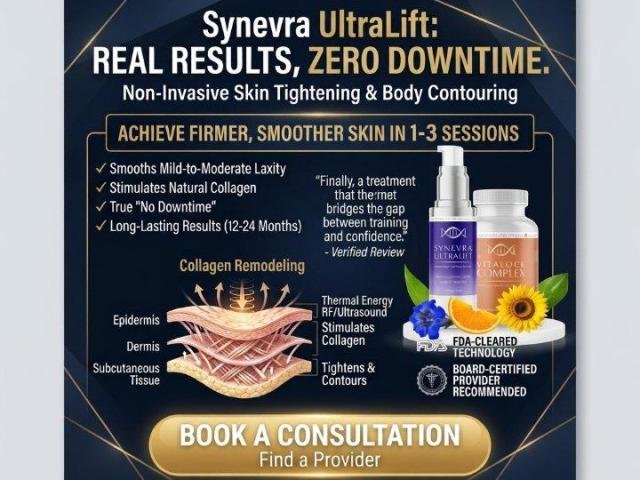
Quick Answer: The Synevra UltraLift is a non-invasive lifting treatment that uses thermal energy to stimulate collagen remodeling in the dermis and subcutaneous layers. It targets mild to moderate skin laxity on the face, neck, and select body areas. It's a good option for adults who want subtle tightening without surgery, but it will not replace a surgical facelift for significant sagging.
Learn more about Synevra UltraLift and see if it's the right addition to your beauty routine.
What Is the Synevra UltraLift and How Does It Work?
The Synevra UltraLift non-invasive lifting treatment is designed to address skin laxity by delivering controlled thermal energy deep into the dermis and, in some protocols, the subcutaneous tissue layer. The goal is to create controlled micro-injury that triggers the body's natural healing response, prompting new collagen and elastin fibers to form over the following weeks and months.
Here's the basic mechanism in plain terms:
-
Thermal energy delivery. The treatment head applies heat to a specific depth in the skin. This heat is high enough to denature existing collagen fibers but controlled so it doesn't damage the surface.
-
Collagen remodeling. Over the next 2 to 6 months, your body replaces the denatured fibers with new, tighter collagen. This is the same process that happens after a minor burn heals, but in a controlled, targeted way.
-
Gradual tightening. You won't see a dramatic change the day after treatment. Most people notice a subtle firming over 4 to 12 weeks, with peak results around 3 to 6 months.
The treatment is performed in a clinic or medical spa by a trained practitioner. A typical session lasts between 30 and 90 minutes depending on the area being treated.

Key Specifications
What to Expect: The Treatment Experience
I want to be upfront: I'm a strength coach, not a dermatologist. What I can tell you is what to expect from the process based on how non-invasive thermal treatments generally work and what practitioners describe.
Before the session. Your provider will assess your skin laxity, discuss your goals, and map out the treatment zones. They may take baseline photos. You'll be asked to remove makeup and apply a conductive gel or topical anesthetic.
During the session. The treatment head glides or stamps across the marked areas. You'll feel a warm, pulsing sensation. Most people describe it as uncomfortable but tolerable, similar to a hot wax strip being removed. There's no pain that requires injection anesthesia.
After the session. Mild redness and slight swelling are normal for a few hours. You can typically return to work the same day. Avoid heavy sweating, saunas, and direct sun for 24 to 48 hours.

Learn more about Synevra UltraLift and see if it's the right addition to your beauty routine.
Coach's Tip
If you're combining the Synevra UltraLift non-invasive lifting treatment with a fitness program, time your workouts carefully. Avoid intense sessions in the treated area for at least 48 hours. The thermal energy creates a mild inflammatory response in the tissue, and adding mechanical stress from heavy lifting or high-impact work too soon can increase swelling. A light walk or upper-body work on non-treated areas is fine.
 Who Is the Synevra UltraLift for?
This treatment is not a one-size-fits-all solution. It works best for a specific range of concerns:
Good candidates:
-
Adults in their 30s to 60s with mild to moderate skin laxity
-
People who want to improve jawline definition or reduce early jowl formation
-
Those who want to tighten arms, underarms, or the lower abdomen without surgery
-
Individuals who want to avoid anesthesia, incisions, and a multi-week recovery
-
People who are not yet ready for a surgical facelift but want a "step up" from topical creams
Not ideal candidates:
-
Individuals with severe skin sagging or significant excess skin (a surgical facelift or neck lift is more appropriate)
-
People with active skin infections, open wounds, or certain autoimmune conditions in the treatment area
-
Pregnant or nursing individuals (most thermal devices are not studied in these populations)
-
Anyone with a pacemaker, implanted metal near the treatment zone, or a history of keloid scarring
If you're unsure whether your level of laxity falls in the "mild to moderate" range, a consultation with a board-certified dermatologist or plastic surgeon is the right first step. They can assess skin elasticity, subcutaneous fat distribution, and muscle tone to tell you whether a non-invasive approach will meet your expectations.
Performance: What Results Can You Realistically Expect?
Here's where I'll be direct, the way I'd be with a client who asks if a supplement will "melt fat." Non-invasive lifting treatments produce subtle changes. They are not a facelift. They are not a thread lift. They are a collagen-stimulation protocol that tightens skin by a small but noticeable degree over several months.
What most practitioners and patient reports suggest:
-
Jawline and chin: A slight sharpening of the angle, reduced softness under the chin.
-
Cheeks and nasolabial folds: Mild lifting of the midface, softening of the fold between nose and mouth.
-
Neck: Reduced banding and slight tightening of the platysma area.
-
Arms and abdomen: A firmer feel, slight reduction in the "wobble" of loose skin.
The effect is best described as "looking more rested and a few years younger" rather than "looking like you had surgery." If your goal is a dramatic transformation, the Synevra UltraLift non-invasive lifting treatment will likely disappoint. If your goal is to maintain a firmer appearance, delay the need for surgery, or complement a healthy lifestyle, it can be a reasonable option.
Research on non-invasive skin tightening in general supports modest improvements in skin elasticity and thickness. A systematic review published in the Journal of Cosmetic Dermatology found that radiofrequency and ultrasound devices produced statistically significant but clinically modest improvements in skin laxity scores, with effects lasting 6 to 18 months on average.
Common Mistake
Expecting immediate, dramatic results. The single most common reason patients are unhappy with non-invasive lifting is that they walk out of the clinic expecting to look different that day. The collagen remodeling process takes months. If you go in expecting a 10-year reversal in 90 minutes, you will be let down. Set your expectations at "subtle firming over 3 to 6 months, lasting roughly a year or more."
Pros and Cons
Alternatives to Consider
If the Synevra UltraLift non-invasive lifting treatment doesn't fit your budget, goals, or anatomy, here are other options in the non-surgical and minimally invasive space:
-
Ultherapy (HIFU). Uses focused ultrasound to heat the SMAS layer, the same layer a surgical facelift targets. Results can be slightly more pronounced but the treatment is more uncomfortable and expensive.
-
Radiofrequency microneedling (e.g., Morpheus8, Potenza). Combines microneedling with RF energy. Good for texture, pores, and mild laxity. More downtime (24–72 hours of redness).
-
Thread lifts. Minimally invasive; absorbable threads are inserted to physically lift tissue. Results last 12–18 months. Requires a trained injector.
-
Surgical facelift / neck lift. The gold standard for significant laxity. Involves incisions, general or local anesthesia, and 2–4 weeks of recovery. Results last 10+ years.
-
Topical retinoids and sunscreen. Not a "treatment" in the clinic sense, but the single most evidence-based way to slow collagen loss and protect existing skin. A daily broad-spectrum SPF 30+ and a prescription retinoid form the foundation of any anti-aging plan.
There is no single "best" option. The right choice depends on the degree of laxity, your budget, your tolerance for downtime, and your long-term goals. A good practitioner will be honest about what will and won't work for your specific anatomy.
Learn more about Synevra UltraLift and see if it's the right addition to your beauty routine.
Safety and What to Watch For
Non-invasive thermal treatments are generally safe when performed by a trained, certified practitioner using a properly maintained device. However, they are not risk-free:
-
Common, mild side effects: Redness, swelling, warmth, and tenderness in the treated area for a few hours to a couple of days.
-
Less common side effects: Blistering, temporary numbness, uneven results, or mild pigment changes (more common in darker skin tones).
-
Rare side effects: Burns, scarring, or nerve irritation if the device is misused.
Before you book a session:
-
Confirm the practitioner's credentials and the device's FDA clearance status.
-
Disclose all medical conditions, medications (especially blood thinners), and skin history.
-
Avoid sun exposure, tanning beds, and strong topical retinoids for at least one week before treatment.
-
Ask to see before-and-after photos of patients with a similar skin type and concern.
If you have a history of keloid scarring, active herpes in the treatment area, or a connective tissue disorder, talk to your doctor before proceeding. This article is for general information and is not a substitute for advice from a doctor or physical therapist.

How to Prepare and Maximize Your Results
You can't control the device, but you can control the variables around the treatment. Here's what I'd recommend to a client:
-
Hydrate well. Drink water consistently in the week before and after. Well-hydrated skin responds better to thermal stimulation.
-
Protect your skin. Use a broad-spectrum SPF 30+ sunscreen daily. UV radiation breaks down collagen faster than any treatment can rebuild it. This is non-negotiable.
-
Support collagen production with nutrition. Adequate protein intake (aim for roughly 0.7 to 1 gram per pound of body weight, or 1.6 to 2.2 grams per kilogram) provides the amino acids your body needs to build new collagen. Vitamin C is also a cofactor in collagen synthesis.
-
Exercise consistently. Resistance training and general physical activity support circulation, hormonal balance, and overall tissue health. TheHHS Physical Activity Guidelines for Americans recommend at least 150 minutes of moderate aerobic activity and two days of muscle-strengthening work per week for adults.
-
Sleep. Aim for 7 to 9 hours per night. Growth hormone release during deep sleep supports tissue repair, including the collagen remodeling triggered by the treatment.
-
Avoid smoking and excessive alcohol. Both accelerate collagen degradation and impair healing.
-
Follow aftercare instructions. Your provider will give specific guidance, but generally: no hot saunas, hot tubs, or intense exercise in the treated area for 48 hours; gentle skincare; no retinoids or exfoliating acids for 3 to 5 days.
Synevra UltraLift vs. Other Non-Invasive Options: A Quick Comparison
This table is a general framework. Exact specs, depths, and pricing for the Synevra UltraLift should be confirmed directly with the manufacturer or a certified provider.
Is the Synevra UltraLift Worth It? My Honest Take
As a coach, I tell clients that the best "treatment" for how you look and feel is a combination of strength training, adequate protein, sleep, sun protection, and stress management. No device replaces that foundation.
That said, the Synevra UltraLift non-invasive lifting treatment can be a reasonable addition to that foundation for people with mild to moderate laxity who want a subtle, gradual improvement without surgery. It's not a magic fix, and anyone who sells it as one is overselling. But for the right candidate, in the right hands, it can deliver a noticeable firming that helps you feel more confident in your 40s, 50s, or 60s.
It's worth it if:
-
You have mild to moderate skin laxity, not severe sagging
-
You want to avoid surgery and anesthesia
-
You're realistic about the degree of change
-
You can commit to 1–3 sessions and a 3–6 month wait for peak results
-
You're already protecting your skin with sunscreen and a solid skincare routine
It's not worth it if:
-
You're expecting a surgical facelift result
-
You have significant excess skin or fat
-
You can't afford the full course of sessions
-
You want results "by Friday"
Learn more about Synevra UltraLift and see if it's the right addition to your beauty routine.
FAQ
Is the Synevra UltraLift safe for older skin?
Non-invasive thermal treatments are generally safe for adults in their 50s and 60s, but older skin has less collagen reserve and may respond more slowly. A board-certified dermatologist should assess your skin thickness and elasticity before treatment to confirm you're a suitable candidate.
How many Synevra UltraLift sessions do I need?
Most protocols call for 1 to 3 sessions spaced 4 to 8 weeks apart, depending on the treatment area and your degree of laxity. Your provider will recommend a specific plan after a consultation.
What does Synevra UltraLift feel like during treatment?
Most people describe a warm, pulsing, or snapping sensation. It's uncomfortable but not painful. A topical numbing cream is typically applied beforehand. There is no injection or cutting involved.
Does Synevra UltraLift work for jowls?
It can provide mild tightening in the lower face and jawline area, which may soften early jowl formation. However, if jowls are caused by significant tissue descent or excess skin, a thread lift or surgical option may be more effective. A practitioner's assessment is key.
How long do Synevra UltraLift results last?
Results typically last 1 to 2 years, depending on your skin's natural aging rate, sun exposure, and lifestyle factors. Maintenance sessions every 12 to 18 months can help sustain the effect.
Can I do my normal workout after a Synevra UltraLift session?
Light activity is fine the same day. Avoid intense training, heavy sweating, and high-impact exercise in the treated area for 48 hours. After that, resume your normal routine. Stay hydrated and protect the area from sun.
Final Verdict
The Synevra UltraLift non-invasive lifting treatment sits in a specific niche: it's for people who want a gentle, gradual tightening without the commitment of surgery. It's not for everyone, and it won't deliver dramatic results. But for the right candidate with realistic expectations, it's a low-risk, low-downtime option that can complement a healthy lifestyle and a solid skincare routine.
Before you book, get a consultation. Bring your questions. Ask to see photos. Confirm the device's clearance status and the practitioner's training. And remember: the best results come from pairing any treatment with the fundamentals—sunscreen, protein, sleep, movement, and patience.
This article is for general information and is not a substitute for advice from a doctor or physical therapist.

Sources
-
U.S. Department of Health and Human Services. Physical Activity Guidelines for Americans, 2nd edition. 2018.https://www.hhs.gov/physical-activity-guidelines/
-
American College of Sports Medicine (ACSM). ACSM's Guidelines for Exercise Testing and Prescription, 11th edition. Wolters Kluwer, 2021.
-
Journal of Cosmetic Dermatology. Systematic review of non-invasive skin tightening devices (radiofrequency, ultrasound).
-
U.S. Food and Drug Administration. 510(k) Premarket Notification database for non-invasive aesthetic devices.
-
Mayo Clinic. "Skin tightening: Non-surgical options."
-
Cleveland Clinic. "Non-surgical facelift: What to expect."
-
Journal of the American Academy of Dermatology. Collagen synthesis and the role of vitamin C and protein in dermal remodeling.
Learn more about Synevra UltraLift and see if it's the right addition to your beauty routine.
Useful information
- Avoid scams by acting locally or paying with PayPal
- Never pay with Western Union, Moneygram or other anonymous payment services
- Don't buy or sell outside of your country. Don't accept cashier cheques from outside your country
- This site is never involved in any transaction, and does not handle payments, shipping, guarantee transactions, provide escrow services, or offer "buyer protection" or "seller certification"
Related listings
-
 Synevra UltraLift – Real Results, No Downtime | Book Now: An Honest ReviewHealthy Skin Glow - Jacksonville (Florida) - November 23, 2026 49.00 $
If you've been searching for a way to tighten skin and reshape your body without cutting into yourself, you've probably come across the name Synevra UltraLift. The promise is simple: visible firming and contouring with zero days off work. But does th...
-
 CaviArgan Anti-Aging Facial Moisturizer Review: Does This Argan Oil & Caviar Retinol Cream Deliver?Healthy Skin Glow - Hempstead (New York) - November 11, 2026 49.00 $
If you've been scrolling through skincare aisles or online stores trying to find one jar that handles hydration, fine lines, and evening cell turnover without a ten-step routine, the CaviArgan Anti-Aging Facial Moisturizer – Organic Argan Oil &...
-
 SynoGut Digestive Health Support – Advanced Gut Health & Probiotic Supplement: A Coach's Honest ReviHealthy Skin Glow - Phoenix (Arizona) - November 10, 2026 49.00 $
If you've been dealing with occasional bloating, irregular digestion, or that unsettled feeling after meals, you've probably seen SynoGut Digestive Health Support pop up in your feed. This advanced gut health and probiotic supplement promises to supp...